REVIEW · BEIJING
Chinese Calligraphy Class for Small Group
Book on Viator →Operated by Hutong Calligraphy Class · Bookable on Viator
Calligraphy class can sound like sitting quietly. This one is different because you get hands-on brush time plus a mini lesson on Chinese thinking, all in a small group. You start in central Beijing near Wangfujing, then learn the basics of posture, brush use, and key strokes, and you leave with your own finished writing.
I especially like two things: the teaching style is patient and beginner-friendly, and you’re not just tracing characters. You also practice a short “life awakening” routine tied to yin-yang ideas, so the class feels like more than a craft project.
One drawback to plan for: this is a short session, and 30 minutes can feel rushed if you want lots of practice. If you care about getting a really clean result, aim for the longer time slots.
In This Review
- Key things I’d bet on before you book
- A Friendly Hour Of Calligraphy In Central Beijing
- Why This Small-Group Lesson Feels Personal
- The Hutong Calligraphy Lesson: Standing, Posture, Strokes, Then Practice
- Step 1: A short standing routine with yin-yang ideas
- Step 2: Posture and brush basics before you draw characters
- Step 3: Practice time (with tea) so it clicks
- Choosing The Right Time Slot: 30, 45, 1, 1.5, Or 2 Hours
- If you want to try it
- If you want real momentum
- If you love hands-on learning
- Your Souvenir: What You Take Home (And How To Use It)
- Getting There: Hilton Wangfujing Meet Point And A Local Venue Setup
- How This Fits Into A Beijing Day (And Who Should Book)
- Great fit for
- What to expect if you’re very time-crunched
- If you want more than “just writing”
- Price And Value: Why $20 Can Feel Like More
- Should You Book This Beijing Calligraphy Class?
- FAQ
- How long is the Chinese calligraphy class?
- Where do we meet for the class?
- Is this class good for beginners?
- What’s included in the price?
- Do we take home what we make?
- How many people are in the group?
Key things I’d bet on before you book
You’ll get personal attention in a group capped at 15.
Beginner basics come first: posture, brush handling, and foundation strokes.
Your lesson mixes calligraphy with short philosophy moments (yin-yang and inner peace).
You get materials and leave with your own calligraphy piece as a souvenir.
Tea is part of the experience, with hot tea appearing in multiple sessions.
You can choose morning, afternoon, or evening times to fit your sightseeing.
A Friendly Hour Of Calligraphy In Central Beijing
This class takes place in Beijing, in an easy-to-reach area around Wangfujing, with the meeting point at the entrance of Hilton Beijing Wangfujing. That location matters because Beijing days can get busy. When your cultural activity is right in the city center, you can slot it in without losing half a day to transit.
The vibe is relaxed but focused. You’re not expected to already know how to hold a brush or how Chinese strokes should look. Instead, the session builds from basics toward a final piece you can take home. It’s also priced to feel doable for a single “try something new” experience, with a $20 per person rate that includes the class ticket and the supplies you use.
You can also read our reviews of more tours and experiences in Beijing

Why This Small-Group Lesson Feels Personal
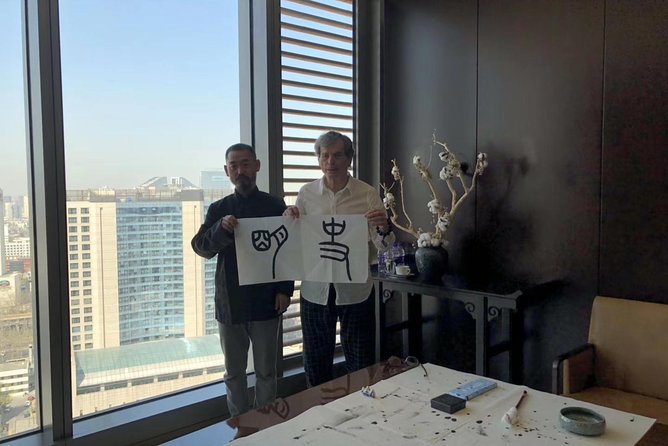
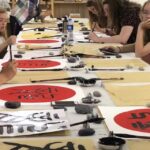
The big advantage here is the group size: a maximum of 15 travelers. In calligraphy, tiny details matter—how straight your wrist is, how you angle the brush, how much pressure you use. In a small group, the teacher can correct you before you lock in bad habits.
The second advantage is the way the instructors teach. In past sessions, instructors such as Richard, David, and Robert Lee have been described as attentive and patient, especially for first-timers. More than one person noted that the teacher explains techniques clearly and stays encouraging while you practice.
And there’s a bonus that sounds simple but changes the whole mood: many sessions include tea. People have mentioned hot tea right in the middle of the experience. If you tend to get stiff during classes, the pacing plus tea can make it feel like a calm cultural break.
The Hutong Calligraphy Lesson: Standing, Posture, Strokes, Then Practice
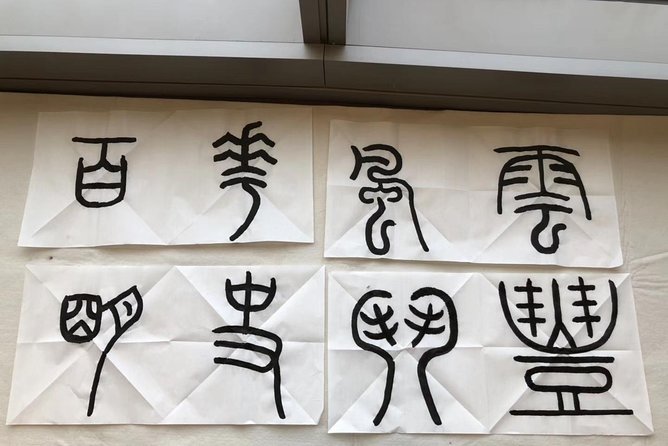
You’ll meet up at the Hilton Beijing Wangfujing entrance area, then head into the calligraphy session in a local setting tied to hutong culture. The lesson itself has a clear flow, and it’s built to help you go from awkward to functional quickly.
Step 1: A short standing routine with yin-yang ideas
The class begins with an “immersion” style standing exercise. It’s framed as a way to find inner peace and to shake off impatience. Even if you’re not into philosophy, the purpose is practical: it helps you slow down your body and get stable before you start writing.
This matters because calligraphy is as much physical control as it is mental focus. If your shoulders are tense and your grip is tight, your strokes will look nervous. That opening routine sets you up for better lines later.
Step 2: Posture and brush basics before you draw characters
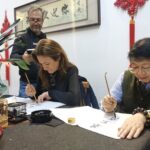
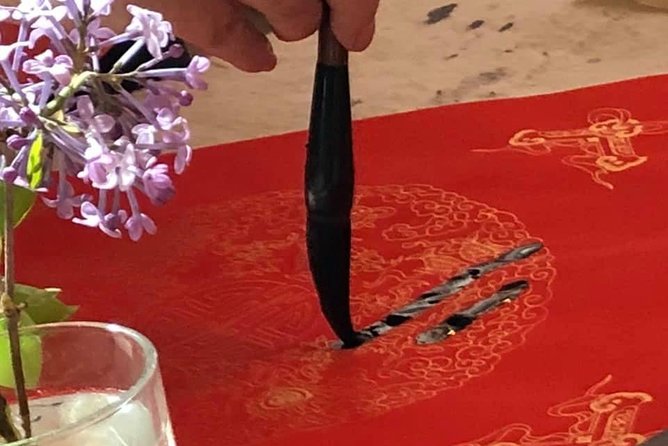
Next comes the practical core: correct posture for calligraphy practice. You’ll learn how to use the writing brush, plus the basis strokes—the fundamental “building blocks” you’ll reuse even if your final character is your first attempt.
More than one beginner-focused description highlights that the teacher gives you time and attention, rather than expecting instant results. If you’ve ever felt embarrassed in craft classes, this is one of the activities where you can relax, because the teacher’s focus is on helping you do it right.




Step 3: Practice time (with tea) so it clicks
After you learn the strokes, you practice. The session includes a teacher-led practice phase and a moment of tea during the experience. That tea part isn’t just a refreshment. It’s also part of the pacing: you get a break between learning and doing, so the strokes start to feel repeatable.
In multiple accounts, people also mentioned the teacher taking time to help them build a final product and offering extra guidance while practicing. That’s where the “small-group” advantage shows up again.
Choosing The Right Time Slot: 30, 45, 1, 1.5, Or 2 Hours
One-hour calligraphy sounds short, and it is. Still, there’s a big difference between the options, and I’d choose based on what you want to walk away with.
If you want to try it
A 30-minute class can work if your goal is simply to understand how it feels to write with a brush and learn the basics. One caution: some people felt 30 minutes wasn’t enough to get comfortable, especially if you want to practice more than once before your final piece.
If you want real momentum
For most visitors, I’d target 1 hour or 1.5 hours. People specifically advised doing the hour because it gives you more practice time and a better sense of what “good strokes” look like. If you want your final character to look intentional rather than like a first sketch, give yourself the extra time.
If you love hands-on learning
If you want to slow down, refine your grip and posture, and produce something you’d actually want to frame, pick 2 hours. Longer sessions are where you can repeat strokes, adjust pressure, and feel your control improve. That’s also a good pick if you’re bringing family members who learn at different speeds.
Your Souvenir: What You Take Home (And How To Use It)
The experience is designed so you leave with a calligraphy memento. The class includes calligraphy supplies to use during the session, and the teaching focuses on letting you finish something you can keep.
People have described leaving with finished pieces such as canvases and decorative items, including examples like a hanging red ornament. What you get can vary by session and format, but the consistent idea is the same: you don’t just learn; you produce.
Practical tip: if you plan to carry it through the rest of your trip, ask the teacher how it’s handled at the end. You’ll likely want it protected from smudging and bumps on the way to your hotel. If you’re traveling with a backpack, consider how you’ll pack it before the class starts.
Getting There: Hilton Wangfujing Meet Point And A Local Venue Setup
Meeting point is straightforward on paper: the Hilton Beijing Wangfujing lobby entrance at 王府井东街8号 (postcode 100006). Then the activity ends back at the meeting point.
In real life, the one logistics issue to watch is that the exact venue entrance can be a little tricky. Some people found the pin or directions landing on the street rather than at the door. A heads-up: the arts center location can share an entrance with a mixed martial arts club, and there are restaurants on either side. If you’re walking in the area, look carefully at building numbers and entrances rather than relying only on the first address you see.
Another small win: the session is near public transportation, so you can combine it with nearby sightseeing without needing a car.
How This Fits Into A Beijing Day (And Who Should Book)
This class works best when you want a short cultural activity that feels personal. It’s not a museum lecture. It’s not a performance. It’s practice-based, and the teacher keeps you moving from basics to a finished result.
Great fit for
- First-timers who want a calm introduction to Chinese calligraphy without pressure
- Anyone who likes hands-on crafts but also wants a little cultural context
- Couples and solo travelers who want a small-group activity with a clear end product
- Families with kids, as long as children are accompanied by an adult
What to expect if you’re very time-crunched
If you only have half an hour, you’ll still learn something, but don’t expect mastery. Think of 30 minutes as the spark, not the whole firework.
If you want more than “just writing”
The “life awakening” part adds meaning. You’ll hear about yin-yang theory concepts like inner peace and calm focus. It won’t replace a philosophy book, but it can make your strokes feel less random.
Price And Value: Why $20 Can Feel Like More
At $20 per person, you’re paying for structured instruction, a small group, and supplies included. For Beijing, that combo is usually the sweet spot: you get both cultural learning and a tangible souvenir without committing to a full-day tour.
Here’s what makes the value feel real:
- Supplies are included, so you’re not hunting for materials afterward
- You get teacher feedback, which is the part most “DIY” options skip
- You can choose the length, so you’re not forced into a time slot that doesn’t match your comfort level
- The session is built to end with something you can take home, not just a demonstration
If you’re comparing it to other short activities, the key is that this one has real skill-building built into the time. Even if your first character isn’t perfect, you’ll understand the mechanics behind good strokes.
Should You Book This Beijing Calligraphy Class?
Yes, if you want a small-group, beginner-friendly experience you can fit into a central Beijing schedule. It’s especially worth it if you care about leaving with a piece of work you made yourself, not just photos.
If you’re the type who hates rushed instructions, don’t default to the shortest option. Choose 1 hour or 1.5 hours for the best chance at a result that looks satisfying. And if you’re traveling with kids, go in expecting a guided practice session where patience matters.
I’d also book it if you like cultural context. The short yin-yang / inner peace framing adds a thoughtful layer, and tea keeps the tempo human rather than classroom-like.
FAQ
How long is the Chinese calligraphy class?
You can choose different lengths when booking, including 30 minutes, 45 minutes, 1 hour, 1.5 hours, or 2 hours.
Where do we meet for the class?
The meeting point is at the entrance of Hilton Beijing Wangfujing Hotel Lobby, at Wangfujing Dong Street 8, Dongcheng District, Beijing (100006). The activity ends back at the meeting point.
Is this class good for beginners?
Yes. The class teaches the basics first, including correct posture, how to use a writing brush, and foundation strokes, and it’s designed for most travelers to participate.
What’s included in the price?
The price includes an admission ticket and a calligraphy class of your chosen length, plus calligraphy supplies to use during the class, along with instruction from an art teacher.
Do we take home what we make?
You should leave with a calligraphy memento. The goal of the class is to help you practice and finish a piece you can take home.
How many people are in the group?
The group size is capped at a maximum of 15 travelers, which supports more personal guidance.