REVIEW · BEIJING
4-Hour Small Group Tour to Forbidden City with Entry Tickets
Book on Viator →Operated by Discover Beijing Tours · Bookable on Viator
The quickest way into the Forbidden City matters. This 3–4 hour small-group walk uses a prebooked entry setup and aims for smoother access than you’ll get going it alone, and I love that you’re not swallowed by a huge crowd. The guide’s talk on court life and dynastic politics is the real payoff, not just the architecture. One consideration: if you pick the Tian’anmen Square add-on, security checks can stretch into a lot of waiting and standing in the cold or heat.
I especially liked the way the tour guides you through the big set-pieces: Meridian Gate, the major halls, and then the gardens where you exit with a different feeling than you get at most sightseeing exits. You also get stories tied to the Ming and Qing dynasties right where it matters, so details like the emperor’s role and ceremonial spaces make more sense as you walk.
You’ll want to plan around one strict rule: bring your passport, and arrive on time. The tour starts promptly, and if you’re late, you may miss the Palace Museum entry process.
In This Review
- Key highlights to know before you go
- A prebooked path into the Forbidden City you do not want to fight
- Meeting at the edge: where your morning really starts
- The palace walkthrough that makes Ming and Qing make sense
- Meridian Gate and the ceremony-centered halls
- Hall of Preserving Harmony and the emperor’s rhythm
- Palace of Heavenly Purity: the emperor’s working and living spaces
- A point I appreciated: you get photo time
- Imperial Garden exit: end location that helps you keep going
- Optional add-on: Tian’anmen Square or Jingshan Park views
- Option 1: Tian’anmen Square after the Forbidden City
- Option 2: Jingshan Park after the Forbidden City (Coal Hill)
- Price and logistics: why $15 can work (and when it might not)
- Walking reality check: terrain, weather, and who this fits
- What guides like Jimmy and Maria do well in the palace
- Should you book this Forbidden City small-group tour?
- FAQ
- Do I need a passport for this tour?
- How long is the tour?
- What’s included in the price?
- Where do I meet the guide?
- Can I visit both Tian’anmen Square and Jingshan Park?
- What happens if Tian’anmen Square closes?
- Is the tour suitable for people with mobility impairments?
Key highlights to know before you go
- Prebooked entry tickets that help you skip some of the hassle at the gates
- Small group size (max 15) for easier questions and a calmer pace
- Guided story stops at the palace’s major ceremony and living halls
- End in the Imperial Garden, so you can continue exploring right away
- Choose your add-on: Tian’anmen Square or a short climb at Jingshan Park
A prebooked path into the Forbidden City you do not want to fight
The Forbidden City is popular enough that the main problem is not seeing it. It’s getting in without losing your whole morning to lines and confusion. This tour includes Forbidden City admission tied to your booking, and you use your prebooked ticket to enter.
You’ll also be handed a mobile ticket. That means fewer paper problems and faster checking, as long as you show up prepared and on time. Most importantly, this is guided entry focused on moving you through the palace core efficiently, which is what you want when you only have about half a day.
There’s one non-negotiable rule: you must bring your actual passport. The tour explicitly warns that entry can be refused without it. So toss your passport in a day bag you can reach quickly, and double-check you booked with the correct passport name and number.
You can also read our reviews of more tours and experiences in Beijing
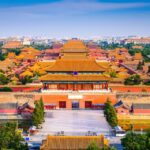
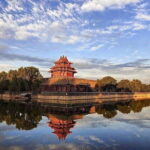
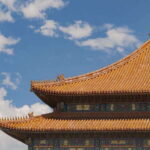
Meeting at the edge: where your morning really starts

This is not a “hotel pick-up and be whisked away” kind of tour. You make your own way to the meeting area near Beijing Urban Planning Exhibition Hall or Donghuamen. The tour guide meets you there and then you head toward the Forbidden City entrance.
There’s a short first stop (about 10 minutes) at Beijing Urban Planning Exhibition Hall before the main sights, and then (if you chose that option) you continue toward Tian’anmen Square. Even if you’re itching to start walking, treat that early part as your warm-up. It helps you understand the geography: Tian’anmen Square sits at the city’s political center, while the Forbidden City is the world built for imperial rule.
Arrive about 10 minutes early. The tour runs punctually, and missing the group can mean you don’t get to join later for the Palace Museum portion. That’s not just annoying; the Forbidden City entry process is regulated and time-based.
The palace walkthrough that makes Ming and Qing make sense
Inside the Forbidden City, the tour is set up to start with context, not just scenery. You enter, then your guide brings you to a quiet seating area for an intro to the palace and how the Ming and Qing dynasties shaped court life and power.
After that, you move through the big ceremonial and symbolic spaces. Here’s what each key stop gives you, and where it can feel tricky:
Meridian Gate and the ceremony-centered halls
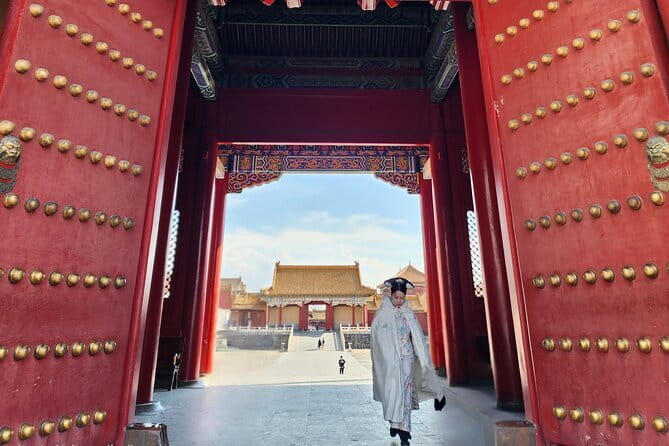
You’ll spend time seeing the major showpieces, including the buildings that define the palace’s hierarchy. You walk past the most notable structures and the surrounding chambers during stops like the Hall of Great Harmony (Taihe Dian).
This is one of the best parts of the tour because you get guided explanations while you’re still in “walkable context.” Without that, the Forbidden City can feel like a lot of similar-looking courtyards and hallways. With it, the spaces start to sound like roles in a play: ceremony, authority, order.
A possible drawback: these areas are crowded in peak times and the tour is structured with timed stops. So keep expectations realistic. You’ll see the major sites, but this is not a slow, linger-at-every-corner museum day.
Hall of Preserving Harmony and the emperor’s rhythm
At Hall of Preserving Harmony (Baohedian) you’ll see multiple connected ceremony spaces described as part of the same broader function—think Supreme Harmony and Central Harmony as parts of the emperor’s ritual schedule and preparation moments.
You’ll usually get the explanation while you’re close to what those halls represent. That makes it easier to understand why the design is so rigid and why the daily rhythm of the court mattered so much.
You can also read our reviews of more city tours in Beijing
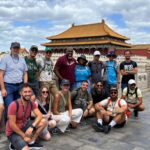
Palace of Heavenly Purity: the emperor’s working and living spaces
Then you shift from ceremonies into the emperor’s living and governing quarters at Palace of Heavenly Purity. This includes halls like Heavenly Purity (described as the emperor’s bedroom and office) and other associated spaces tied to imperial couples and symbolism.
This section tends to be a favorite because it adds human scale to a place often presented as purely grand. You start thinking about who lived here, not just who ruled.
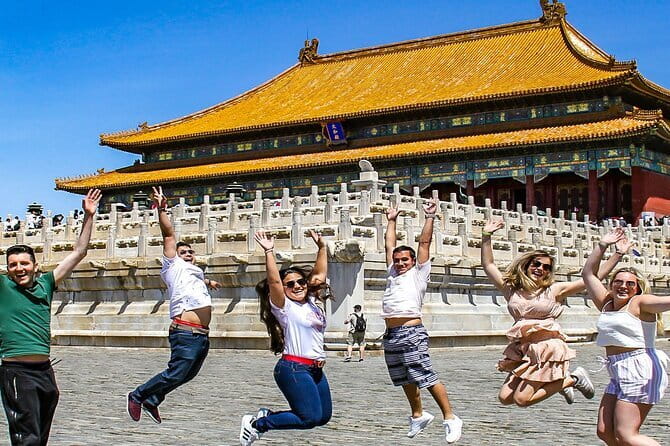
A point I appreciated: you get photo time
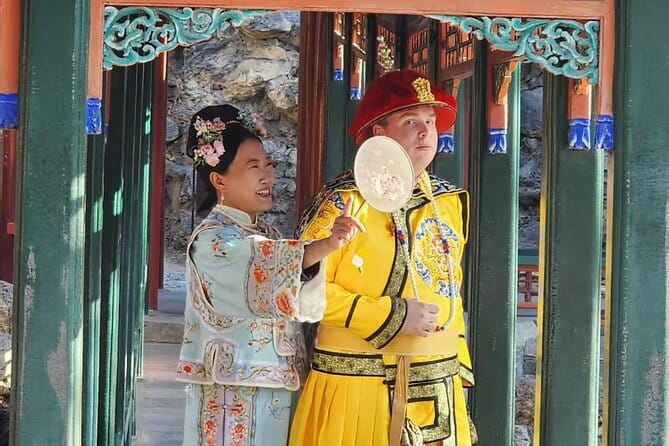
In the real world, you need moments to stop, frame shots, and catch your breath. The tour’s pacing gives those small windows between structured segments, and the guide is there to point out where views and angles work best.
Imperial Garden exit: end location that helps you keep going
Your tour ends in the Imperial Garden of the Palace Museum (north side). That matters more than it sounds. Many guided tours dump you back near the main entry or at an easy exit point with nothing nearby. Here, ending in the garden places you in a calmer zone where you can choose what to do next.
If you want more time in the Forbidden City, the tour says you can continue exploring on your own after the guided portion. Your guide will also suggest where to go next and where you can focus your own time.
This is also a nice “mental reset.” After walking through major ceremonial and residential sections, the garden feels like a different chapter. Even if it’s not your usual travel style, it’s a helpful landing spot.
Optional add-on: Tian’anmen Square or Jingshan Park views
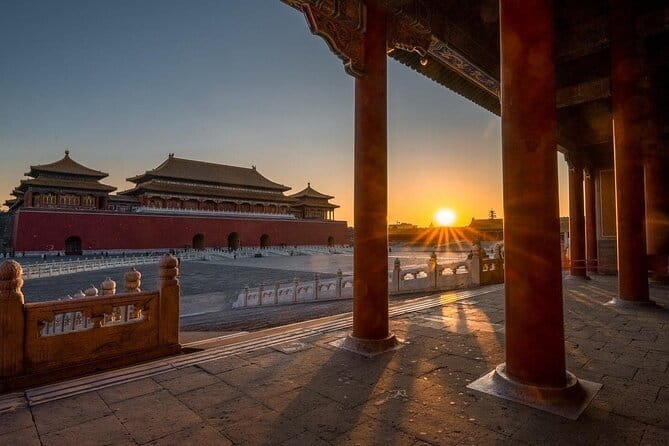
You get a real fork in the road, and your choice changes the feel of the day.
Option 1: Tian’anmen Square after the Forbidden City
If you choose the Tian’anmen add-on, you’ll spend about an hour at Tian’anmen Square. The tour describes it as enormous—around 440,000 square meters (109 acres).
In practice, the key experience here is the scale and the political geography. Your guide points out significant buildings and explains its history, including why the space is treated as a national stage.
But here’s the trade-off: Tian’anmen Square has strict security checks. The tour notes that waiting could be over an hour, and it can lead to heat-related or cold-related discomfort. If that happens, you might use a bus route that passes by the square as an alternative, only if the group agrees.
Also, Tian’anmen Square might close due to government activity. If that happens, you skip the square.
So choose this option if you want the political heart of Beijing in the same half-day as the imperial heart—and you’re willing to tolerate possible waiting.
Option 2: Jingshan Park after the Forbidden City (Coal Hill)
If you choose the Jingshan option, you skip Tian’anmen Square and instead go to Jingshan Park for about 30 minutes, including the climb to the summit for panoramic views across Beijing, including a view of the Forbidden City.
This is a great choice if you want a “big picture” moment that’s easier on your schedule. It’s also simpler logistically: you’re not dealing with the same level of square-specific security procedures.
Practical tip: wear grippy shoes and bring a layer. The climb is short, but Beijing weather can swing hard, and wind at a viewpoint can be sharp.
Price and logistics: why $15 can work (and when it might not)
At $15 per person, this tour is priced in a way that feels almost too good—until you understand what’s included. The tour includes a professional guide and the Forbidden City entrance fee. If you pick the Tian’anmen option, that entry ticket is included too. If you pick the Jingshan option, the Jingshan entry is included.
So you’re paying for time with a guide plus entry into the biggest draw in town. That’s usually the expensive combo in Beijing: admission fees plus the cost of not getting lost.
The logistics are the part you should take seriously:
- You’re responsible for getting to the meeting point.
- You need your passport.
- The tour is punctual and timed.
- The day includes walking (about 4 hours of it), so you’re not getting a sit-down, tram-around experience.
If you love the Forbidden City enough to want slower exploration, you’ll likely add extra self-guided time after the tour ends in the Imperial Garden. The best value here is when you want a guided “greatest hits” first pass, then continue at your pace.
Walking reality check: terrain, weather, and who this fits
The tour is described as operating in all weather conditions. That means you should dress like it’s a city hike: layers, water, and shoes that work on uneven stone.
It covers about 4 hours of walking, and the route includes varied terrain such as stairs and underground passages. Because of that, it’s not recommended for travelers with physical or visual impairments or mobility restrictions.
If that doesn’t describe you, you’ll probably be fine, especially if you come with the right expectations. This is a structured walking tour. You’ll see a lot, but you’ll also be moving through crowds and timed entry areas.
What guides like Jimmy and Maria do well in the palace
One of the reasons this tour keeps scoring so high is how the guide handles the story-to-space connection. The tour experience is designed around explanations tied to what you’re standing in front of.
I’ve seen guides named in this lineup such as Jimmy, Maria, Mina, Miko, Mike, Sophie, Vivian, Allen, Jay, Tony, John, and Andy. While each guide has their own style, the pattern is consistent: they keep you oriented, explain what you’re looking at, and make sure you know where to go next so you don’t feel swept up.
A couple of things you can do to get the most out of that:
- Ask your guide about where to take photos in each main courtyard before you stop moving. It saves time and helps you avoid awkward angles.
- If you’re sensitive to temperature, tell your guide early. Guides often adjust pacing and help you manage comfort during waiting periods, especially around security checkpoints.
- Stay flexible about Tian’anmen. If the square closes, you’ll skip it. If waits become too long, you may use alternatives to avoid extended time standing.
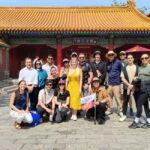
This is where small-group touring matters. With a max group size of 15, you’re not lost in a sea of people. Your guide can answer questions and guide pacing more actively.
Should you book this Forbidden City small-group tour?
Book it if you want:
- A guided first visit to the Forbidden City with story context for the Ming and Qing dynasties
- Faster entry using prebooked tickets and a small-group setup
- A half-day plan that ends in the Imperial Garden, so you can keep exploring without backtracking
Skip (or at least think twice) if:
- You strongly dislike waiting in security lines, and you’re counting on Tian’anmen being smooth and fast
- You need a very low-walking or step-free route
If your goal is to understand what you’re seeing—not just check off buildings—this tour is a smart, good-value way to do it.
FAQ
Do I need a passport for this tour?
Yes. The tour notes that you must bring your actual passport, and you may be refused entry without it.
How long is the tour?
It runs about 3 to 4 hours, with walking time described as around 4 hours.
What’s included in the price?
You get a professional guide, Forbidden City entrance fee, and depending on your option: Tian’anmen Square entry ticket or Jingshan Park entry ticket.
Where do I meet the guide?
You meet your guide at Beijing Urban Planning Exhibition Hall or Donghuamen. The meeting point is near Xi Cheng Qu, at 景山景山西街44号南门 (north-south gate area as listed).
Can I visit both Tian’anmen Square and Jingshan Park?
No. The tour offers two options, and if you choose Tian’anmen Square you will not visit Jingshan Park, and if you choose Jingshan Park you will not visit Tian’anmen Square.
What happens if Tian’anmen Square closes?
The tour notes Tian’anmen Square might close without advance notice due to government activity. If that happens, you’ll skip the square.
Is the tour suitable for people with mobility impairments?
It’s not recommended for travelers with physical/visual impairments or mobility restrictions due to varied terrain, including stairs and underground passages.