REVIEW · BEIJING
Beijing: Bell and Drum Towers Entry Ticket—Historic Landmark
Book on GetYourGuide →Operated by PANDA HAPPY JOURNEY IN CHINA · Bookable on GetYourGuide
Time in Beijing has two voices. The Bell and Drum Towers were the city’s main timekeepers, calling everyone to move with a dusk drum and a morning bell, and the scale here is seriously impressive. I like that this ticket keeps things simple: you get access to both towers and a self-guided English PDF guidebook, so you can go at your pace without waiting around.
My second favorite part is the big, physical proof of history. The Drum Tower once held 25 drums, and the Ming Yongle-era bell is famously massive, weighing 63 tons, earning the nickname King of Ancient Bells. You’ll get great photo angles as you compare the north-south layout and architecture from different viewpoints.
One heads-up: the drum demonstration you might see from the top is not guaranteed and the exact timing can vary on site. Also, since there’s no live guide included, you’ll rely on that PDF and what you can read on the signs.
In This Review
- Key highlights you’ll feel right away
- Why the Bell and Drum Towers mattered (and still do)
- Your 4-hour game plan at a realistic pace
- Bell Tower: home of the King of Ancient Bells
- Drum Tower: 25 drums, and the climb that might pay off
- The English PDF guidebook: how to use it without losing time
- What the ticket really gets you (and why it’s good value)
- Photography, timing, and what to wear
- Who this experience fits best
- Should you book this ticket?
- FAQ
- What is included in the Bell and Drum Towers ticket?
- Is there a live tour guide included?
- How long should I plan for the visit?
- Is the visit self-guided?
- Can I see a drum performance?
- What language is the guidebook?
- Do I need ID to enter?
- Do I get to skip the ticket line?
- Endnote: quick decision
Key highlights you’ll feel right away

- Two iconic towers, one ticket: explore the Bell Tower and Drum Tower at your own rhythm.
- Real imperial scale: the Yongle bell’s 63-ton weight and the Drum Tower’s 25-drum past are the main wow-factor.
- Climb for a shot at drumming: you may witness a short, roughly 5-minute drum performance from the Drum Tower top.
- English PDF guidebook included: it helps you make sense of what you’re seeing as you walk.
- Central Beijing access: convenient for history stops without a long detour.
- Skip the ticket line: you spend more time inside and less time in queues.
Why the Bell and Drum Towers mattered (and still do)

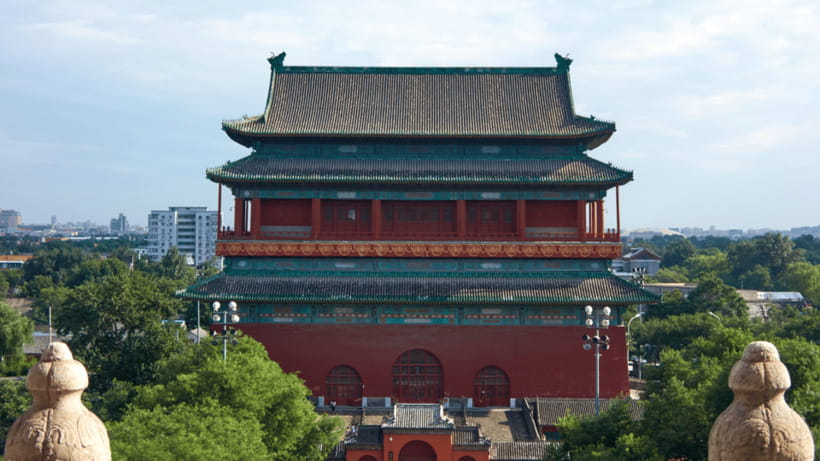
Beijing’s old centerline design is easier to understand when you stand near these towers. They sit at the northern end of the city’s central axis, where the daily city rhythm used to be announced in sound. In the Ming and Qing eras, the system was basically straightforward: a dusk drum signaled the day winding down, and a morning bell marked the start.
That’s why the complex feels more than just decorative. These weren’t random monuments. They were practical technology for a huge city, turned into architecture. You’re not just looking at stone and wood; you’re looking at a time system built into the city’s plan.
And the structure tells its own story. This Bell Tower and Drum Tower pairing has a distinctive north-south layout, so as you move between them you can feel how the city once operated like a coordinated machine.
You can also read our reviews of more tours and experiences in Beijing



Your 4-hour game plan at a realistic pace
This is a self-guided visit designed around about 4 hours, so you can see both towers without feeling rushed. The order is up to you, but the easiest flow is usually: start with one tower, read the PDF prompts as you go, then finish with the Drum Tower so you can time your climb and stay nearby if the demonstration starts.
Here’s a practical way to spend your time:
1) Arrive and get oriented
You’ll enter both sites with your ticket and skip the ticket line. Once inside, take a minute to locate the main viewing areas before you start climbing or moving deeper into the complex.
2) Walk the Bell Tower circuit
Expect explanations and displays focused on the bell itself and the historic idea of timekeeping through sound. If you’re into photography, this is where you start capturing the tower profile and interior details.
3) Move to the Drum Tower and climb
Plan some extra time here. The Drum Tower top is where you might catch a drum performance, but the schedule can vary onsite. Even if you miss the moment, the views from higher up and the sense of scale in the Drum Tower are still worth the climb.
4) Finish with the complex as a whole
Before you leave, do one final loop so you can compare what you saw in each tower. The north-south design makes more sense once you’ve seen both sides.
The good news: because the visit is self-guided and you have an English PDF guidebook, you’re not stuck following a group that’s moving too fast or too slow for your attention span.
Bell Tower: home of the King of Ancient Bells

The Bell Tower is where the story gets big and dramatic fast. The Yongle-era bell from the Ming Dynasty is the headline: it weighs 63 tons and is often called the King of Ancient Bells. That kind of scale is hard to grasp until you’re standing close enough to see just how physically present it is.
What I think makes this Bell Tower stop valuable is the way it connects craft to daily life. You’re seeing imperial workmanship, but it’s also tied to something ordinary: people needed a reliable way to measure the day. The bell was part of how the city kept order when time wasn’t on your phone.
As you walk, pay attention to how the Bell Tower is framed by the complex design. The architecture and layout reinforce the idea of sound carrying across the city. Even without a performance happening right then, you can understand the purpose by watching how visitors and sightlines move through the space.
If you’re a photographer, the Bell Tower gives you clean shapes and strong vertical lines, especially from viewpoints that let you include both towers in the same scene. Spend a little time composing, not sprinting.
Drum Tower: 25 drums, and the climb that might pay off

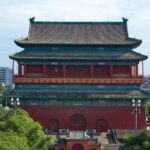
The Drum Tower is the sister monument that makes the pairing click. Historically, it housed 25 drums, and that detail changes the way you read the space. This wasn’t a single instrument for a single sound. It was an organized system—built to be heard, repeated, and understood.
The biggest draw here is the climb to the top. You have a chance to see a short drum performance—about 5 minutes—when it’s scheduled. The timing isn’t fixed in the info you get, so don’t treat this like a guaranteed showtime. Instead, think of it as a bonus reward for planning a little patience.
Even if the performance doesn’t happen during your climb, don’t skip the top area if your legs can handle it. The climb is part of the experience. From up there, the complex feels more complete, and you’ll understand the north-south layout better than you would from the ground.
Practical tip: once you start climbing, plan to stay put for a few minutes rather than immediately rushing back down. If the drum moment starts while you’re nearby, you’ll catch it.
The English PDF guidebook: how to use it without losing time
Because there’s no live guide included, the PDF guidebook is your main tool for turning the towers from impressive buildings into a clear story. Use it like a checklist.
Here’s the method that works well in places like this:
- Read one short section before you enter a specific area.
- Look for the items the guidebook points out (like the bell/drum references and the layout ideas).
- Then return to the guidebook briefly to confirm what you just saw.
This keeps you from getting stuck staring at your phone the entire time. Also, it helps you avoid that common self-guided problem: you’re technically seeing things, but nothing clicks.
If you’re the type who likes facts (dynasties, purpose, scale), this will feel satisfying. If you prefer more free wandering, the guidebook still helps you understand what you’re looking at when you slow down.
And yes, it’s English, which makes a difference. The experience provider also communicates in practical ways; one thing you can plan around is that Panda Happy Journey in China uses WhatsApp for communication (handy if you run into ticket questions).
You can also read our reviews of more historical tours in Beijing





What the ticket really gets you (and why it’s good value)

For about $13 per person, you’re paying for:
- entry to both the Bell Tower and the Drum Tower
- an English PDF guidebook
- skip-the-ticket-line convenience
- around 4 hours of self-paced time
That pricing makes sense because the main thing you’re buying is access to two major landmarks, not just one. Many ticketing options in Beijing charge you for a single site, and you end up paying twice if you want to see both halves of the story. Here, you get the full pairing.
Also, skip-the-line helps more than people think. When you’re traveling, time inside counts, but time waiting outside quietly steals your energy. With this ticket setup, you spend that energy where it belongs: inside the towers.
One more value point: the complex covers a lot of space and is protected as a historic site, listed as 12,597 square meters. Even if you feel like you’ve seen enough pretty buildings, this area is big enough that you’ll likely find angles and details you’d miss if you rushed.
Photography, timing, and what to wear

This is a practical indoor-and-outdoor mix, and you’ll want to dress for walking and climbing. The info here doesn’t spell out weather rules, so I’ll keep it simple: wear comfortable shoes and bring a layer if the air is cool.
Timing-wise, you want enough margin around the Drum Tower top in case the drum display starts. Because the performance timing can vary, your best strategy is to give yourself time on that tower rather than treating it like a quick staircase.
Photography advice that usually works:
- Take wide shots first, including both towers when possible.
- Then switch to details: inscriptions/signs, architectural textures, and interior instrument displays.
- Finish with one final wide shot before you leave to capture the place as a whole.
If you’re visiting with family or friends, this kind of site works well for mixed interests. One person can focus on craft and design; another can chase the drum moment; you can all still end up seeing the same overall story.
Who this experience fits best
This ticket is especially good for:
- history lovers who want imperial-era context without paying for a full live guide
- people who like self-guided plans and a clear learning tool (the English PDF)
- photographers who want a pair of iconic towers and strong architectural angles
- travelers who like cultural meaning over flashy souvenirs
It’s also a smart stop if you’ve already done major Beijing highlights and you still want something that feels old-school and specifically Beijing. The Bell and Drum Towers are tied to the city’s daily rhythm, not just royal aesthetics.
If you hate climbing or you’re short on time, the Drum Tower top is the only real physical ask. You can still enjoy the Bell Tower, but you’ll miss the chance at the drum performance.
Should you book this ticket?

Yes—if you want an efficient, self-guided way to see Beijing’s most recognizable timekeeping landmark pair. The ticket price is low enough that you’re not forced into a long day, yet you get both towers, the English PDF guidebook, and skip-the-line entry.
Book it if:
- you’re curious about how the city used to measure time
- you like architectural history tied to everyday life
- you’re willing to give the Drum Tower top a little waiting time for the short drum moment
Skip it if:
- you need a guaranteed live performance on a fixed schedule
- you’re hoping for a live tour guide with in-the-moment explanations (there isn’t one included)
If you’re planning with flexibility, the experience includes free cancellation up to 24 hours in advance and a reserve-and-pay-later option, which is useful when your Beijing schedule is still a work in progress.
FAQ
What is included in the Bell and Drum Towers ticket?
The ticket includes entry tickets for both the Bell Tower and Drum Tower, plus an English PDF guidebook for Bell and Drum Towers.
Is there a live tour guide included?
No. A live tour guide and guide are not included.
How long should I plan for the visit?
Plan for about 4 hours.
Is the visit self-guided?
Yes. You have the entry ticket plus the English PDF guidebook, and you explore at your own pace.
Can I see a drum performance?
You may see a drum performance from the Drum Tower top, but the exact time can vary depending on the onsite schedule.
What language is the guidebook?
The guidebook included with the ticket is in English.
Do I need ID to enter?
Yes. Bring a passport or ID card.
Do I get to skip the ticket line?
Yes. Skip the ticket line is included.
Endnote: quick decision
If you want a focused Beijing history stop with two major towers and an included English guide, this is an easy yes. Just give yourself a little patience at the Drum Tower top for the chance at the short drumming moment.