REVIEW · BEIJING
Beijing Historic City Guided Walking Tour + Calligraphy Creation
Book on Viator →Operated by Free Tours China · Bookable on Viator
Beijing feels personal on this walking loop. In about 3.5 hours, you trace the city’s imperial story and its modern side by foot, with stops that range from a centuries-old merchants’ hall to art streets where calligraphy is a real part of daily life. You’ll also get time for street-food tasting and storytelling that ties old place-names to how people live now.
I especially liked the way the walk is built around hutong neighborhoods, not just big photo spots. And I really enjoyed the calligraphy component at Liulichang, where the whole experience turns from museum-style facts into something you can make with your own hand, guided by locals like Hao and Kris in different groups.
One thing to plan for: this tour ends by Tiananmen Square, but it does not go inside. If your main goal is the formal Tiananmen experience, you’ll need a separate reservation.
In This Review
- Key highlights worth planning for
- A 3.5-hour loop that links imperial Beijing to daily life
- Price and tips: the $5 booking is only the reservation
- Stop 1: Huguang Guild Hall and the merchant history behind the walls
- Stop 2: Hutong walking time—where the city’s old layout still matters
- Stop 3: Liulichang Street and turning a lesson into calligraphy
- Stop 4: Yangmeizhu Byway—old city, new creativity
- Stop 5: Dashilan Street and the long-running commercial beat
- Stop 6: Qianmen Walking Street, ending near Tiananmen Square
- Group size, pace, and what the shared format changes
- How to get the most out of the walk
- Who should book this tour
- Should you book the Beijing Historic City Walk + Calligraphy Creation?
- FAQ
- How long is the walking tour?
- What is the meeting point?
- Where does the tour end?
- Do we enter Tiananmen Square during the tour?
- Is there a calligraphy creation activity included?
- How much is the booking fee?
- Is the tour tips-based?
- How big is the group?
- Are the tour stops admission tickets included?
- Can I cancel and get a refund?
Key highlights worth planning for
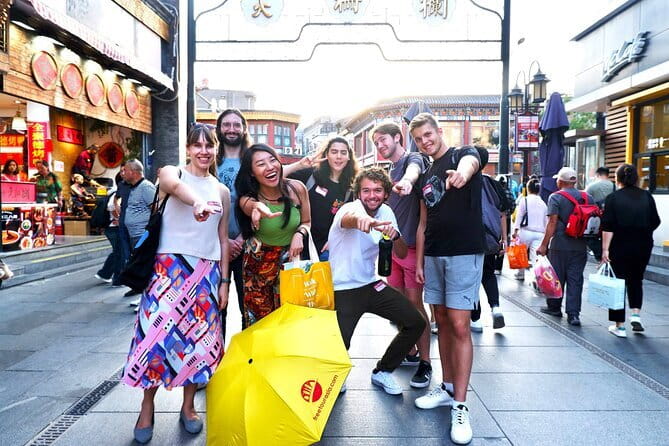
- Huguang Guild Hall (built 1807): a merchant-world setting with an opera stage focus
- Hutong foot time: a real alley walk, not a quick roadside glance
- Liulichang calligraphy energy: shops and the chance to create your own character
- Street-food tasting breaks: small bites that fit the route
- Yangmeizhu Byway + Dashilan: a compare-and-contrast day of old commerce and newer creative lanes
- Qianmen finish near Tiananmen: easy to continue on your own, since the group won’t enter
A 3.5-hour loop that links imperial Beijing to daily life
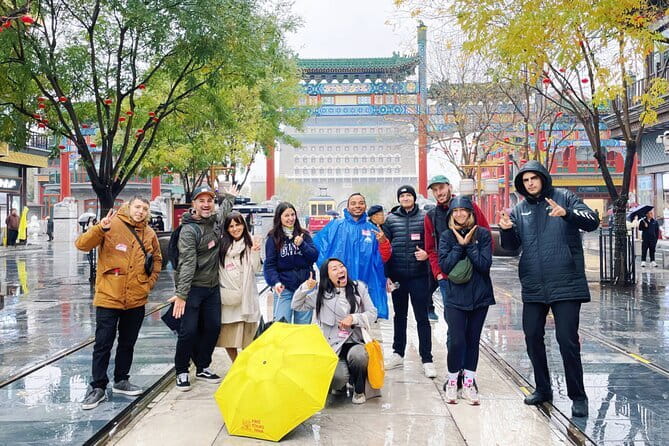
This is the kind of Beijing tour that helps you get your bearings fast. Instead of circling only the famous monuments, you walk between places that show how the city has changed—while still keeping its old bones visible in the streets.
The route is timed so you’re not stuck in one style of scenery for too long. You’ll start with a historic guild hall tied to regional merchants, then shift into hutong lanes where everyday life and small businesses shape the mood. Later, you move into Beijing’s shopping-and-art streets around Liulichang, Dashilan, and Qianmen.
If you like history told in human terms—who lived here, why certain buildings exist, how neighborhoods formed—this format is a good match. And if you like getting your hands involved, the calligraphy creation angle gives the day a practical payoff instead of turning it into a pure walking lecture.
You can also read our reviews of more walking tours in Beijing


Price and tips: the $5 booking is only the reservation
The headline price is $5.00 per person, but it’s important to understand what that means. That fee is there to reserve your spot. The tour itself runs on a tips-based model, and the operator suggests a tip of 160–200 RMB (about 20–25 USD/EUR) for the guide.
So the real budgeting math is simple: add the suggested tip to the $5 fee. If you treat the $5 as a full ticket, you’ll be surprised later. If you treat it as a low-cost way to lock in a high-value neighborhood guide, it makes more sense.
This is also where the reviews make sense. Multiple guides described as patient, organized, and story-driven show up in people’s memories. When you’re paying mostly in tips, you’re paying for the quality of the guide’s explanations and pacing—not for a fixed entrance-ticket-heavy program.
Stop 1: Huguang Guild Hall and the merchant history behind the walls
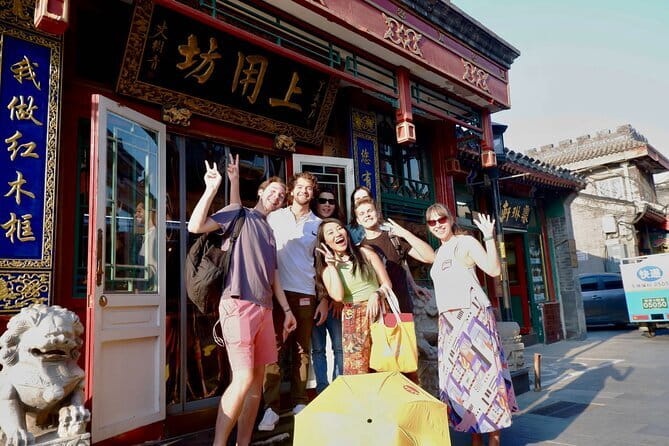
You begin at Huguang Guild Hall, at Hu Fang Lu in Xicheng District. The hall dates back to 1807, and it’s tied to influential merchants and officials from Hubei and Hunan provinces. Even if your Chinese reading skills are limited, the setting gives you a quick sense that Beijing wasn’t only shaped by emperors and courts.
What I like about starting here is that it gives you a lens. You’re not just collecting landmarks—you’re learning what kinds of people built networks, hosted performances, and funded the cultural infrastructure that later neighborhoods grew around.
There’s also a practical element: the stop is described as free admission and lasts about 20 minutes. That makes it a solid opener. You get oriented, you understand the day’s theme, and then you transition into street-level life right after.
Stop 2: Hutong walking time—where the city’s old layout still matters
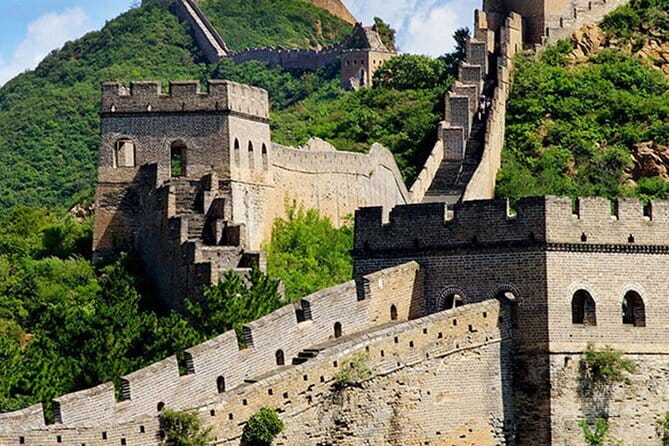
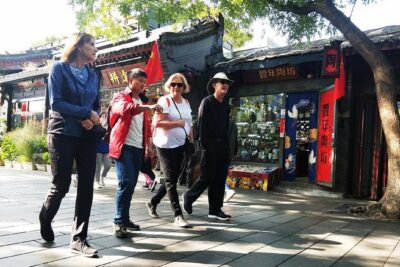
From the guild hall, the tour turns into a hutong walk. You’re on foot through narrow alleys where traditional lane life and local commerce tell the story better than any brochure.
This section is about 1 hour, and it’s where the tour shifts from “important building” history to “how people actually move and live” history. In hutongs, the street width, the turns, and the way people use doorways and storefront edges explain a lot about old Beijing urban planning.
One more real-world point: this hutong time is where the guide’s pacing matters most. In colder weather, people noted that guides kept the group moving. That’s not trivia—it affects whether you have a pleasant walk or a grumpy slog.
Stop 3: Liulichang Street and turning a lesson into calligraphy
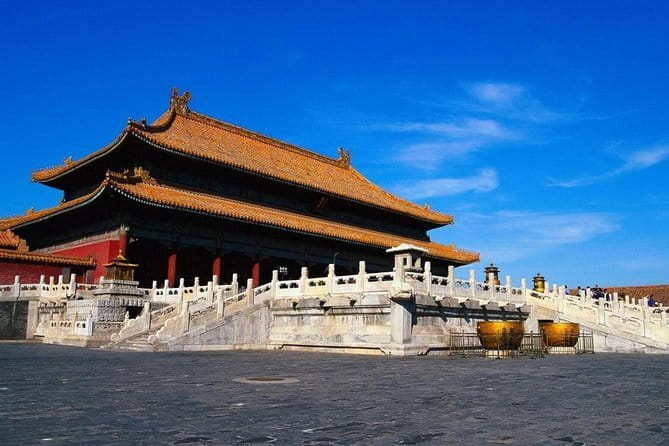
Next you head to Liulichang Street, known for antiques and artsy shopping. The route description highlights shops selling traditional calligraphy and related items, and this stop is about 40 minutes.
This is the best part of the day for anyone who wants Beijing culture you can take home. The tour’s title includes calligraphy creation, and this is where that theme clicks into place. Even if you’ve never held a brush in your life, the street’s focus on calligraphy helps set expectations. The goal is not perfection—it’s participation.
Also, Liulichang is a great place to look slowly. You’ll often see how styles differ across shop signs and scrolls. That’s the sort of thing you miss when you’re only rushing between monuments.
If you enjoy the “I made this” feeling, set aside mental space for a hands-on moment here. It turns the tour from a route into an experience.
You can also read our reviews of more guided tours in Beijing



Stop 4: Yangmeizhu Byway—old city, new creativity
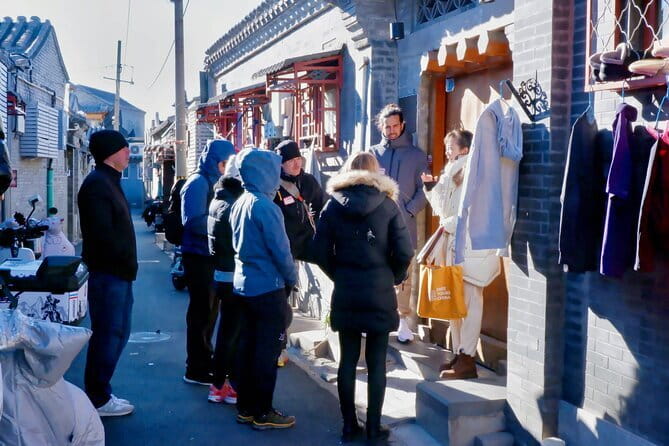
After Liulichang, you move to Yangmeizhu Byway for about 20 minutes. This is where Beijing starts showing a different face: trendy alley life with boutique shops, art studios, and cafes.
I like this stop because it keeps the tour honest. Beijing isn’t frozen in historical cosplay. The same city that preserves guild halls and traditional lanes also creates new spaces where young businesses experiment with style and design.
Even though it’s a short stop, it works as a contrast. Hutong lanes teach you one kind of Beijing structure. Yangmeizhu Byway shows you how people reshape those ideas for modern tastes.
Stop 5: Dashilan Street and the long-running commercial beat
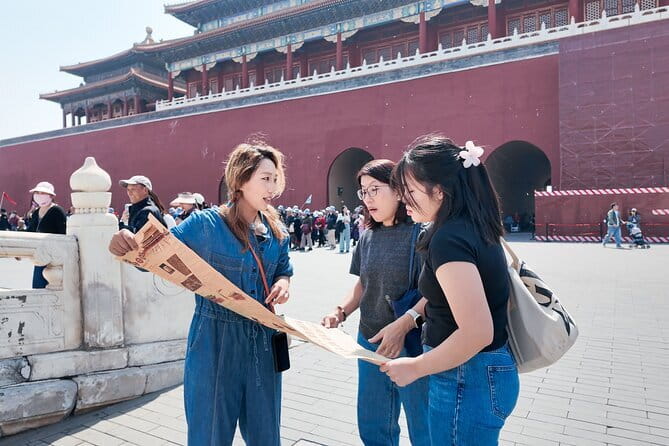
Then the tour hits Dashilan Street, about 20 minutes. It’s described as Beijing’s oldest and most lively commercial hub, set up as a pedestrian-friendly street.
This is where you get a break from alley turns and back-and-forth crossings. It’s also where the guide’s job is hardest in a good way: you need context fast, because commercial streets change quickly.
If you like shopping streets, snack stops, and people-watching, this segment fits well. And since the tour includes street-food tasting time somewhere along the way, this area is a natural place for those small bites to land.
Stop 6: Qianmen Walking Street, ending near Tiananmen Square
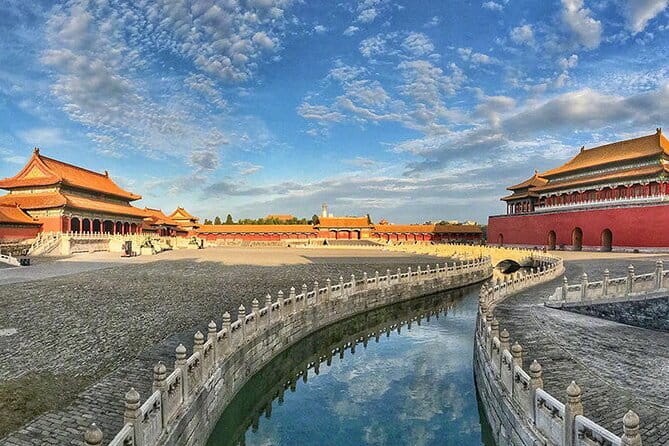
The final stop is Qianmen Walking Street, about 20 minutes. It sits just south of Tiananmen Square, so you get that famous area in your peripheral vision without doing a formal visit.
The key detail: the tour ends in front of Tiananmen Square, but you won’t enter the square with the group. If you want Tiananmen Square itself—photos from certain angles or the full official experience—you’ll need to make your own plan and reservation at least a day ahead.
Finishing here is actually convenient. Qianmen is well connected, and the end point is near Qianmen Metro Station (Line 2 & 8, south of Tiananmen Square). That makes it easier to continue on your own rather than being stuck far from transport.
Group size, pace, and what the shared format changes
This is a shared group tour, and each booking is limited to 6 guests. That’s a good size for a walking experience because you’re not packed shoulder-to-shoulder the whole time.
At the same time, the overall maximum is 50 travelers, so you may feel moments of crowding at busier streets like Qianmen. The difference is that the tight group of 6 helps with listening and question time.
In practical terms, plan for continuous walking. The duration is about 3 hours 30 minutes, and the route mixes indoor-free street stops with short museum-style explanations. Wear shoes you’d trust for uneven sidewalks and lots of turns.
If you’re traveling in cooler months, bring layers. The reviews mention cold weather and how the guides kept people moving—so dress for movement, not for standing still.
How to get the most out of the walk
Here’s how I’d make this tour pay off, even if it’s your first time in Beijing.
- Bring a simple goal: Pick one thing to learn at each stop—building purpose, hutong layout, calligraphy style, or street function.
- Leave space to ask questions. With a small group size per booking, your questions matter more than on huge tours.
- Keep your expectations aligned: you’re not doing a full monument day. You’re doing a city-under-the-city day.
- If calligraphy is a priority, don’t treat it like a bonus. It’s part of the main idea, and you’ll enjoy it more if you mentally slow down.
And if you’re hungry, this tour’s route is designed to include street-food tasting. Just go in with an empty stomach and a flexible sense of timing. Street food works best when you’re not rigid about schedules.
Who should book this tour
This works best for you if:
- You want Beijing beyond the single big-sights route.
- You enjoy small street moments: lanes, workshops, commercial streets, and the meaning behind them.
- You like guided storytelling, especially when it connects people to buildings and neighborhoods.
- You’re curious enough to try calligraphy, even if you think you won’t be good at it.
It might not be the best fit if:
- Your top priority is a full, guided Tiananmen Square visit. This tour ends nearby and does not enter.
- You prefer very quiet, low-traffic sightseeing all day. Some segments are busy by nature because they’re shopping and street zones.
Should you book the Beijing Historic City Walk + Calligraphy Creation?
Yes, if you want a guided path that makes Beijing feel understandable quickly. The mix of Huguang Guild Hall, hutong lanes, Liulichang calligraphy culture, and the Qianmen area gives you a strong “old meets new” picture in just a half day.
I’d book it especially if calligraphy is on your wish list. It’s not just watching; it’s creating. And the tips-based model only feels risky if you ignore the suggestion. Treat the recommended 160–200 RMB tip as part of the real price, and the value becomes very clear for a 3.5-hour, local-guided day.
FAQ
How long is the walking tour?
It runs for about 3 hours 30 minutes.
What is the meeting point?
The tour starts at Huguang Guild Hall, 3 Hu Fang Lu, Xi Cheng Qu, Beijing 100052.
Where does the tour end?
It ends near Qianmen, in front of Tiananmen Square area. The listed end point is Zhengyangmen / Qian Men Da Jie, near Qianmen Metro Station (Line 2 & 8, south of Tiananmen Square).
Do we enter Tiananmen Square during the tour?
No. The tour ends in front of Tiananmen Square, but it does not include entry.
Is there a calligraphy creation activity included?
Yes. The tour includes calligraphy creation as part of the experience.
How much is the booking fee?
The booking fee is $5.00 per person, and it is used to reserve your spot.
Is the tour tips-based?
Yes. The booking fee is only for reservation, and the tour operates on a tips-based model. The suggested tip is 160–200 RMB (about 20–25 USD/EUR).
How big is the group?
It’s a shared group limited to 6 guests per booking, and the overall maximum for the activity is 50 travelers.
Are the tour stops admission tickets included?
The stops listed in the itinerary show admission tickets as free.
Can I cancel and get a refund?
Yes. You can cancel up to 24 hours in advance for a full refund.