REVIEW · BEIJING
Beijing City Walk: Explore Hutongs Life and Old Beijing
Book on Viator →Operated by BEIJING BOTRIP TOUR HOLIDAY COMPANY CO., LTD. · Bookable on Viator
Beijing hutongs are best on foot. This 2.5-hour guided city walk connects Qianmen, Dashilan and Sanlihe Hutong, then heads toward Nanluoguxiang and the Houhai canal area, finishing with a pause at the Bell and Drum Towers. Hutongs feel more understandable when you’re moving street by street, not reading about them from a bus window.
I really like the small group size (up to 15) and the comfort setup: an English-speaking guide, plus a headset when the group is over 10. I also like how the experience can turn into more than just photos, with hands-on moments that some guides bring in—calligraphy practice, local snacks, and even playful culture detours like Peking Opera outfit try-ons and a shoe museum stop.
One thing to plan for: the tour needs good weather, and in winter it can feel cold during canal-side and lane walking. Wear warm layers and expect lots of short stops in busy storefront streets.
In This Review
- Key things I’d watch for before you go
- Why this hutong walk works better than trying alone
- Stop 1: Qianmen Walking Street, Dashilan, and Sanlihe Hutong (the “old Beijing” starter pack)
- Stop 2: Nanluoguxiang toward Houhai—hutong life plus canal-side atmosphere
- Stop 3: Bell and Drum Towers square—lighted views and how time was once managed
- Guides: what the best ones do beyond facts
- Price and value: how $15 pencils out for a 2.5-hour guided route
- Timing: morning, afternoon, or night makes a real difference
- Logistics that help: mobile tickets, transit access, and group comfort
- What to wear and carry so you don’t suffer later
- Should you book this Beijing City Walk?
- FAQ
- How long is the Beijing City Walk?
- How much does the tour cost?
- What’s included with the tour ticket?
- Is admission included to the main sights?
- Does the tour have morning, afternoon, and night options?
- Is tipping required?
- What if the weather is bad?
Key things I’d watch for before you go
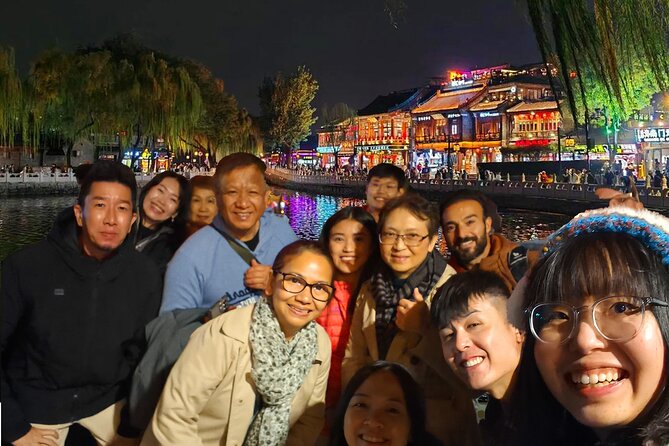
- Up to 15 people: easier pacing and less weaving through crowds.
- Headset included (over 10 guests): fewer missed turns, especially on dark streets.
- Three historic zones in one walk: Qianmen/Dashilan, then Nanluoguxiang/Houhai, then the Bell & Drum Towers area.
- Admission included for some stops: Qianmen and Nanluoguxiang tickets are covered, but Bell & Drum Towers isn’t.
- Flexible timing: you can choose morning, afternoon, or night for a different feel.
Why this hutong walk works better than trying alone
Beijing’s historic neighborhoods can be confusing if you’re winging it. Streets curve, lanes narrow, and landmarks don’t always announce themselves. This tour helps you keep the route straight while still letting you see the everyday details that make hutongs feel real.
The other big win is that the walk is designed as a sequence. You start with a major gateway area (Qianmen), move into older commercial street life (Dashilan), then cut into hutong lanes (Sanlihe). After that, the route shifts toward Nanluoguxiang and the Houhai canal area—often a better stage for night atmosphere—then you end with the iconic Bell and Drum Towers square moment.
Where it can be a little “less flexible” is time. At only about 2.5 hours total, you’re not meant to roam on your own for long. If you want hours of independent wandering, you’ll still need to plan extra time after the tour.
You can also read our reviews of more walking tours in Beijing



Stop 1: Qianmen Walking Street, Dashilan, and Sanlihe Hutong (the “old Beijing” starter pack)
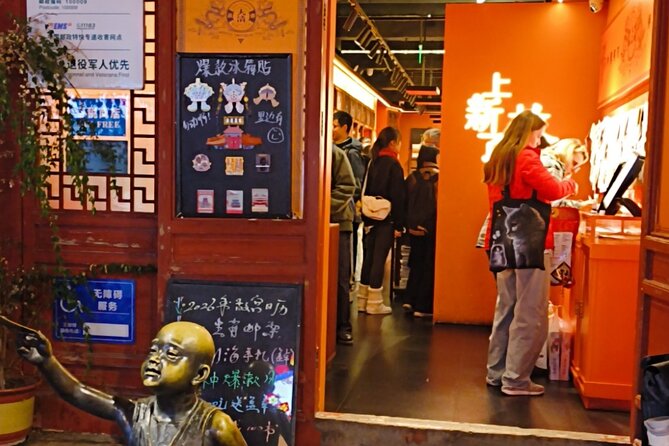
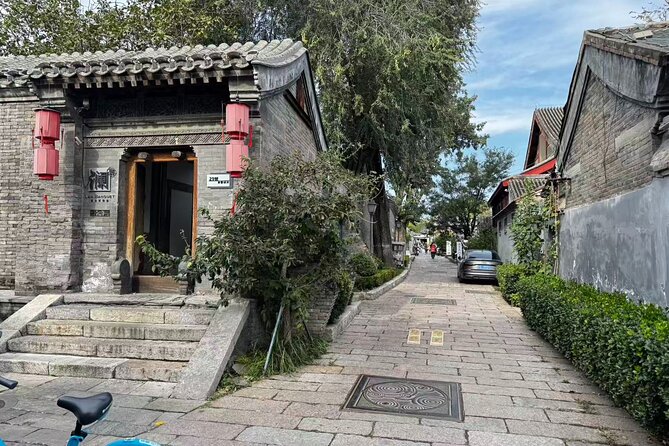
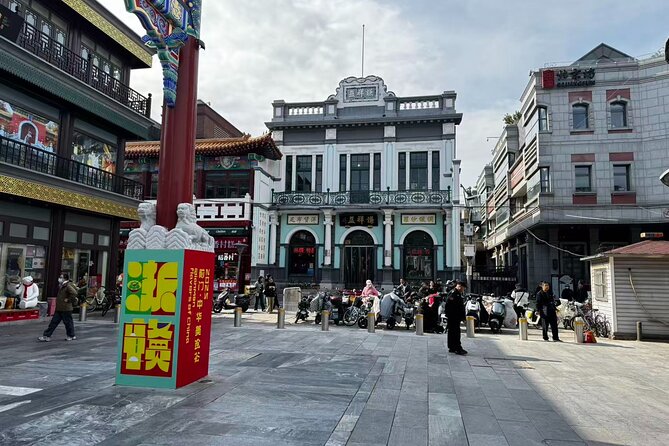
This first stretch sets the tone. You begin at Qianmen Walking Street, then your guide brings you through the Dashilan commercial street area and into Sanlihe Hutong.
Here’s why that order is smart:
- Qianmen is a clear starting point, so you don’t spend your first 20 minutes figuring out directions.
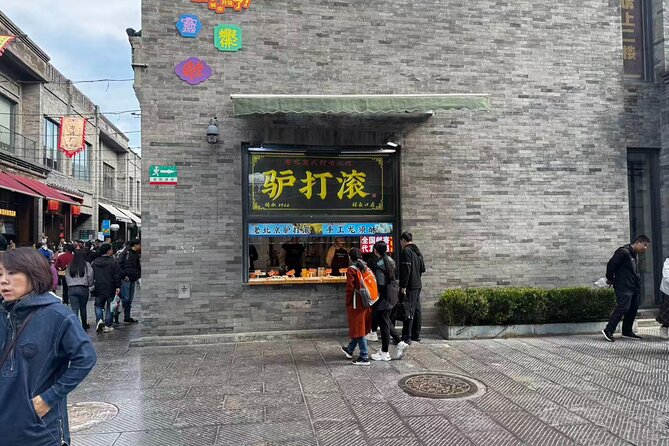
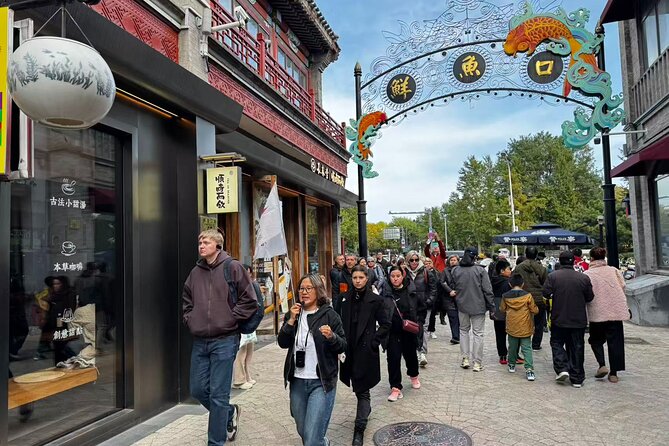
- Dashilan lets you see how historic Beijing handled shopping and street life, with the kind of storefront rhythm that’s hard to notice if you just pass through.
- Sanlihe Hutong feels like the quiet relief valve. Once you turn from the busier commercial lane energy into hutong streets, you get that slower, more local pace.
Expect about 1 hour here, and an admission ticket is included for this section. You’ll likely see lots of small shops and kiosks, plus the snack-and-souvenir world that tends to cluster around well-known pedestrian areas and old streets.
A practical note: some parts of this area can feel crowded depending on your time of day. If you choose a night slot later in the evening, the mood is great, but you’ll want to keep moving and let the group set the rhythm.
Stop 2: Nanluoguxiang toward Houhai—hutong life plus canal-side atmosphere
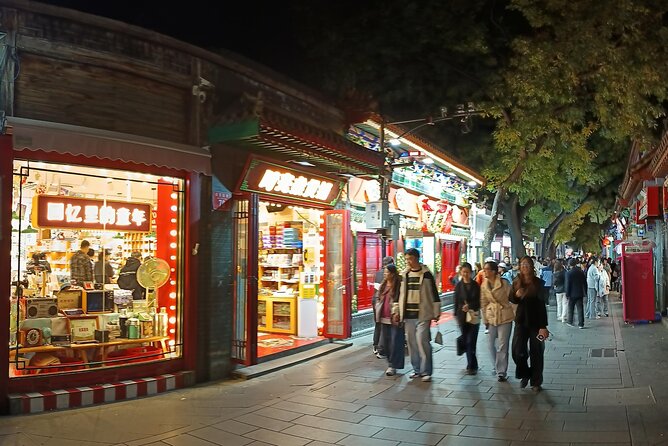
The second highlight is Nanluoguxiang, with a route that often pairs the older neighborhoods with canal-side scenery near Houhai.
This is the part of the tour that fits many people’s idea of Beijing “at street level”: smaller lanes, side shops, snack stops, and conversations with the kind of places you’d miss without a guide. The time also matches the name you’ll see associated with this leg—night city-walk style—because the lighting and evening foot traffic make landmarks and street textures easier to read.
The itinerary description points to a route that starts from the Drum Tower area, then moves through hutong lanes and toward the Houhai area. You’ll spend about 1 hour here, and admission is included for this section as well.
What I like about this leg is that it’s designed to feel like you’re following a living route rather than marching from one monument to another. It’s also where the tour can get playful. In past experiences with guides like Yang and Kevin, the walk has included extra cultural interactions—calligraphy practice, local food/snack stops, and even moments such as trying on Peking Opera outfits. Some versions also include quirky side stops like a shoe museum, which is exactly the kind of thing that turns a standard photo stop into a real story.
Possible drawback: if you’re the type who hates crowds, this is the leg where you’ll feel the most city energy. It’s not a private lane tour. You’re in the older core where people actually go.
Stop 3: Bell and Drum Towers square—lighted views and how time was once managed
The final stop is shorter: about 30 minutes at the Bell and Drum Towers area. The goal here isn’t a long museum visit. It’s the square moment—admiring the towers in illuminated form and listening to the stories behind how they used to govern time for the city.
This is also where the tour helps you interpret what you’re looking at. Without that explanation, the towers are beautiful but still kind of just “two structures in the square.” With the guide’s framing, you understand what made them important in daily life.
One detail that matters for your planning: admission for this stop is not included. So if there’s an inner-area ticket you want, you’ll need to buy it separately.
If you’re doing this at night, this final stop can feel extra satisfying because you’ve already spent most of the walk threading through hutongs. Ending at a landmark that glows ties the whole route together.
Guides: what the best ones do beyond facts
The guides on this walk get praised not just for history, but for keeping the experience fun and balanced. Names that show up in the operator’s guiding roster include Yang, Kevin, Summer Wang, and Eevee.
What stands out across those guide styles is that they treat the walk like a story with scenes:
- They explain enough to make each stop make sense.
- They pace the group so you can actually see shopfronts and lanes, not just shuffle forward.
- They often add cultural extras—calligraphy practice, food/snack tastings, and occasional costume or museum detours.
Also, practical help is part of the package. I’d take that seriously because hutongs can be tricky to exit if you’re relying on taxis or getting back to transit. Some guides—like Kevin and Eevee—have been noted for being helpful about getting a taxi at the end, which can save time when you’re tired and the streets look similar in every direction.
You can also read our reviews of more city tours in Beijing





Price and value: how $15 pencils out for a 2.5-hour guided route
At $15.00 per person for about 2 hours 30 minutes (approx.), this is priced like a budget-friendly city-walk. The value comes from the mix:
- You’re not paying for a single sight. You’re paying for a connected walking route across multiple historic areas.
- You get an English-speaking guide and, for larger groups, a headset so you don’t miss turns or explanations.
- Admission is included for Qianmen and Nanluoguxiang sections (but not the Bell and Drum Towers stop).
In practical terms, you’re paying to reduce friction. Beijing’s hutongs can be hard to navigate, and it’s easy to end up at the wrong lane or miss the exact streets that are most meaningful. For a short time in the city, paying for a guided flow is often cheaper than paying for lost time.
The one financial “gotcha” to remember: tips are not included, and Bell & Drum Towers admission isn’t included. If you’re the type who likes to go inside everything, budget a little extra.
Timing: morning, afternoon, or night makes a real difference
The tour gives you a choice: morning, afternoon, or night. That matters more than people think, especially in hutong areas.
Night works well because:
- Lighting makes landmarks easier to read.
- The route around Houhai can feel more atmospheric.
- You’re likely to find more open street-life energy, including snack stops and kiosks.
Morning/afternoon can be calmer. If you dislike crowds, a daytime slot may feel smoother, but you’ll still be walking through older commercial and residential streets.
Whichever time you choose, plan to bring a little patience. Hutong streets are narrow and busy. The tour’s job is to keep you moving and informed—your job is to keep your pace steady and shoes comfortable.
Logistics that help: mobile tickets, transit access, and group comfort
A few details make this easier than many city-walk tours:
- It uses a mobile ticket.
- It’s near public transportation (so you’re not stuck far from transit if you’re combining it with other plans).
- The group is limited to max 15, which keeps the walk from feeling like a school bus shuffle.
Also, the tour description includes that it’s generally suitable for most travelers. That’s helpful, but I’d still treat it like a walking tour: you’ll want comfortable shoes and expect uneven pavement and lots of turning.
What to wear and carry so you don’t suffer later
This is where you’ll thank yourself later. Even when the route is “just a walk,” hutong streets mean:
- Short bursts of stopping and standing for photos.
- Cold exposure if you’re doing it in winter.
- Lots of storefront browsing and lane crossings.
My advice:
- Dress for the season. In colder months, bring warm layers; winter can get cold fast during canal-side portions.
- Bring a light snack or water if you’re the type who gets hungry between stops. (Food/snack moments can happen on the route, but you shouldn’t rely on it like a full meal.)
- Keep your phone charged and ready for maps. Even with a guide, you’ll want to capture street details and landmarks from multiple angles.
Should you book this Beijing City Walk?
Book it if:
- You want a short, structured way to experience hutong life without getting lost.
- You like guided context that turns landmarks into stories.
- You’d enjoy extra culture moments like calligraphy, snack stops, and occasional playful detours (Peking Opera outfit try-ons or a shoe museum stop show up in past guide styles).
Skip it (or plan something else alongside) if:
- You want long free time to roam at your own speed.
- You dislike crowds, especially on the Nanluoguxiang and Houhai sides.
- You’re mainly after museum-style indoor time. This is more about streets, lanes, and the final illuminated landmark moment.
If you can match your clothing and pace to the season, this tour hits a strong value spot. For $15, you’re buying direction, interpretation, and a route that strings together the parts of old Beijing that make sense when you see them in sequence.
FAQ
How long is the Beijing City Walk?
It runs for about 2 hours 30 minutes (approx.).
How much does the tour cost?
The price is $15.00 per person.
What’s included with the tour ticket?
You get an English-speaking tour guide and a guided tour headset when the group is over 10 people.
Is admission included to the main sights?
Admission is included for Qianmen Walking Street (Stop 1) and Nanluoguxiang (Stop 2). Bell and Drum Towers (Stop 3) does not include admission.
Does the tour have morning, afternoon, and night options?
Yes. You can choose morning, afternoon, or night for a different perspective.
Is tipping required?
Tips are not included.
What if the weather is bad?
The experience requires good weather. If it’s canceled due to poor weather, you’ll be offered a different date or a full refund. You can also cancel for a full refund if you do it at least 24 hours in advance.