REVIEW · BEIJING
Beijing: Lama Temple (Yonghe Temple) Admission Ticket
Book on GetYourGuide →Operated by PANDA144 experience · Bookable on GetYourGuide
Beijing’s Lama Temple is a quiet detour. This fast-track ticket gets you into Yonghe Temple smoothly so you can focus on what matters: the calm, religious atmosphere and the shock of seeing the 18-meter sandalwood Buddha inside the main halls. The one downside is crowding, especially on big holidays, because people come here to pray.
I like how this visit works even if you’re traveling on your own. You get access to the major buildings and exhibitions, but you still walk at your own pace, pausing where the light, incense smoke, and rituals pull your attention. My only caution: you will still go through security checks, and there’s no guided tour or audio guide included.
In This Review
- Key points to know before you go
- Lama Temple in Beijing: what makes it special
- Ticket value: what you get for about $10
- The temple route I’d follow on your own
- 1) Start at the big gates and archways
- 2) Head to the main palace hall area
- 3) The Four Learning Halls (this part is surprisingly fun)
- 4) Don’t miss the exhibition rooms
- 5) Finish by taking your time near the major statues
- The 18-meter sandalwood Buddha: the moment everyone notices
- Architecture lovers: why this complex looks different up close
- Crowds and timing: when the tranquility is real
- Incense, prayer, and respectful etiquette (the practical version)
- Getting there and entering: fast-track helps, security still matters
- What I liked most in real use (and what to watch)
- Price vs. payoff: is this ticket worth your time?
- Who should book this Lama Temple ticket?
- Should you book this Lama Temple Fast-Track Ticket?
- FAQ
- FAQ
- Do I need a passport to visit?
- Is the GetYourGuide QR code the actual ticket?
- Is real-name booking required?
- Does the ticket include skip-the-line security checks?
- Are guided tours or audio guides included?
- What time do I need to enter and when must I leave?
- What items are not allowed inside?
- How long is the visit?
Key points to know before you go
- Fast-track entry helps you spend less time waiting outside the gates
- Real-name tickets are required, so match your passport details exactly
- Tibetan Buddhist temple in imperial settings: it started as a residence, became a palace, then a temple
- Three archways and major halls make it easy to follow a satisfying route on foot
- Incense and everyday prayer are part of the experience, not a staged performance
- 18-meter Maitreya Buddha is the big must-see moment and a Guinness-record centerpiece
Lama Temple in Beijing: what makes it special
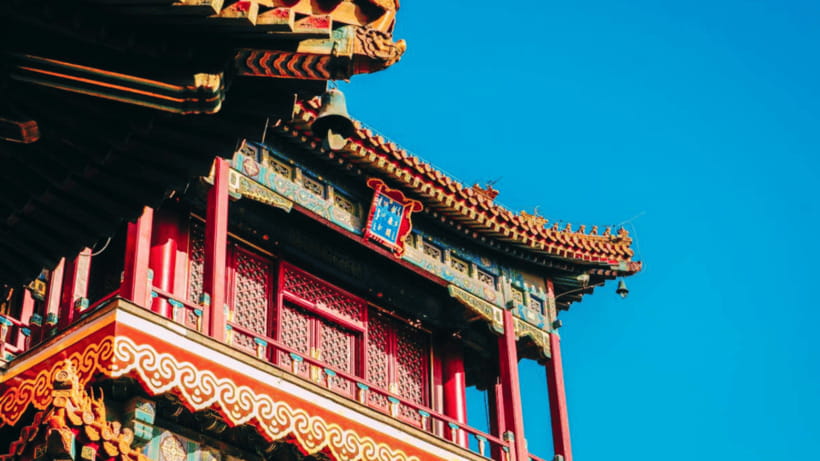
The Lama Temple, also known as Yonghe Temple, is one of those Beijing stops that feels more like stepping into a living place than checking off a monument.
First, the setting. This complex was built in 1694 during Emperor Kangxi’s reign. It originally served as the residence of Yongzheng before he became emperor. Later, it became an imperial palace, and then in 1744, under Emperor Qianlong, it was converted into a Tibetan Buddhist temple. So when you look at the halls and gates, you’re seeing an unusual blend of imperial architecture and Tibetan Buddhist worship.
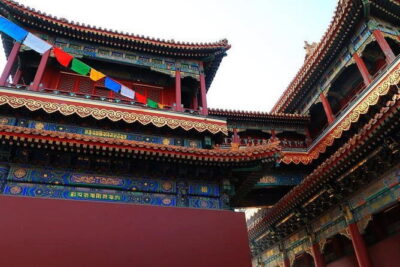
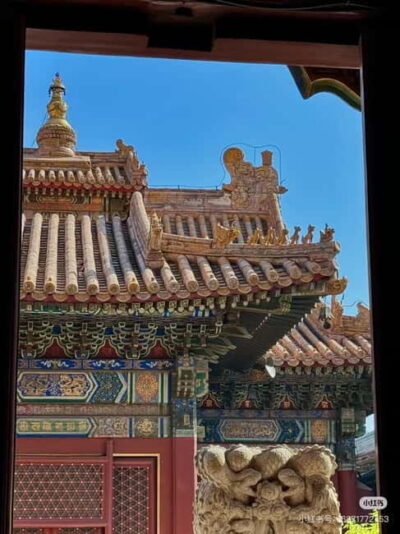
Second, the design language. The complex reflects a mix of Han, Manchu, Tibetan, and Mongolian styles. That’s why the buildings look grand but not uniform. You get color, carvings, and a temple layout that feels intentional for processions, chanting, and daily religious routines.
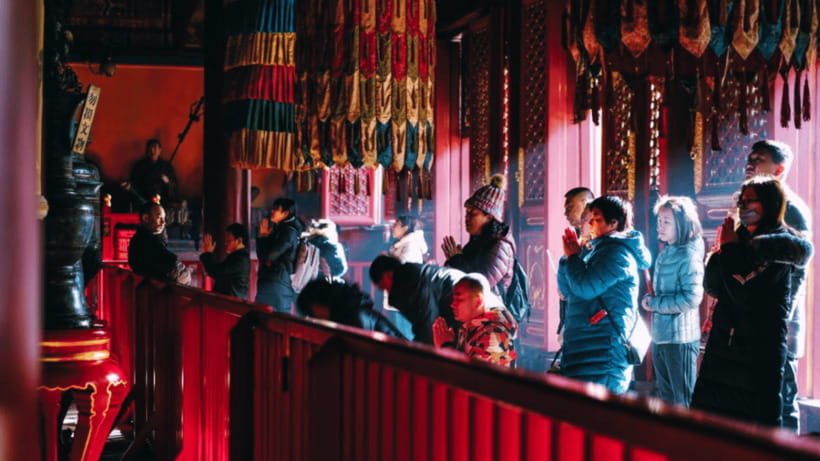
Finally, it’s not just about what you see. People are here for prayer. The smell of incense, the soft movement of worshippers, and the way the space holds the sound of ritual makes it easy to understand why it stays meaningful for locals.
You can also read our reviews of more tours and experiences in Beijing



Ticket value: what you get for about $10
This is one of the better-value Beijing tickets because the price is low, but the access is broad.
For around $10 per person, you get:
- Fast-track entry to the Lama Temple grounds
- Access to the major temple buildings and cultural exhibitions
- A reservation fee included in what you pay
Here’s what you should not expect:
- No skip-the-line for security checks. You’ll still go through screening.
- No guided tour.
- No audio guide.
In other words: this ticket is for people who want to explore the Lama Temple themselves, at their own pace, without paying for a guide. If you like quiet, slow looking, this is a strong match.
The temple route I’d follow on your own
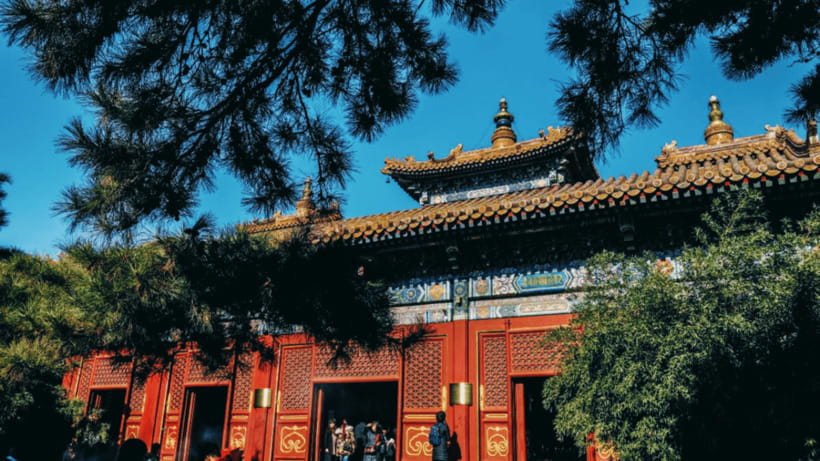
You have a lot of ground to cover, but the good news is the complex is organized enough that you won’t feel lost. Think of it as a sequence of thresholds: gate to hall to smaller specialized rooms to exhibitions.
1) Start at the big gates and archways
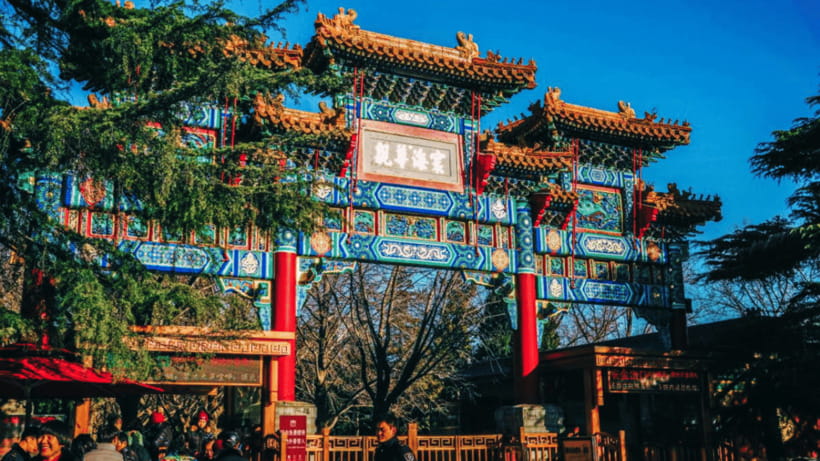
Your visit begins as you move through the complex’s signature entrances. The temple has three intricately designed archways, including the Yonghe Gate. This is a great first stretch to take in the architectural mix and get your bearings fast.
A practical tip: take a few minutes here to pause and watch how the flow of worshippers moves. It’ll help you plan where to stand for photos without stepping into people’s prayer paths.
2) Head to the main palace hall area
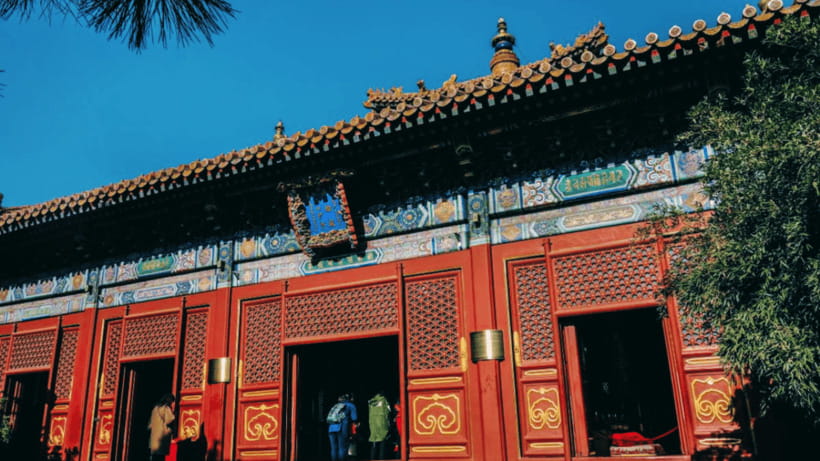
Next comes the larger worship spaces, including the Yonghe Palace Hall. This is where the atmosphere shifts from “touristic curiosity” to something more focused and reverent.
Look closely at the scale and the artwork. You’ll notice a pattern: the space is designed to frame devotion. Even if you don’t know the details, the layout is meant to guide your eyes toward the sacred focal points inside.


3) The Four Learning Halls (this part is surprisingly fun)
One reason I like this temple is it’s not all one big hall. You also get the Four Learning Halls, each with a theme:
- Hall of Medicine Buddha
- Mathematics Hall
- Tantric Hall
- Lecture Hall
It’s a neat reminder that Tibetan Buddhist learning isn’t only spiritual study—it includes medicine, ritual practice, and teachings. If you enjoy symbolism, this set of halls gives you a lot to read and notice without needing a tour guide.
4) Don’t miss the exhibition rooms
The complex also includes three exhibition rooms. These are useful if you want context for what you’re seeing in the halls—especially how the temple’s role changed over time, from palace use to religious function.
5) Finish by taking your time near the major statues
As you move through the main worship areas, keep a slow pace. The best moments here tend to happen when you stop, look up, and let the room settle around you. That’s when the carvings, statues, and ritual details start making more sense.
The 18-meter sandalwood Buddha: the moment everyone notices
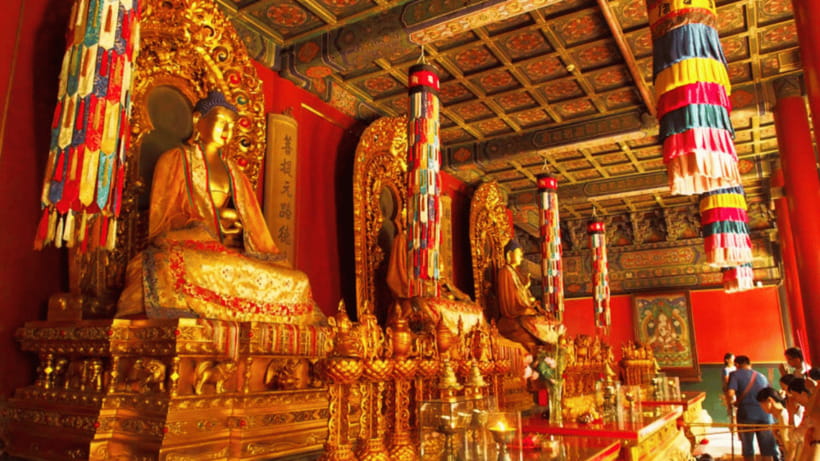
If you only remember one thing from Yonghe Temple, make it the 18-meter-tall sandalwood Buddha (Maitreya). It’s carved from a single piece of sandalwood and has been recognized since 1990 in the Guinness World Records.
Even if you’ve seen big statues before, this one hits differently because of the sheer vertical scale. You’ll likely find yourself craning your neck, not in a rushed way, but because the room architecture pulls you upward.
Here’s what I’d do in the moment: stand where you can see both the figure and the surrounding interior details. That helps you avoid the common mistake of photographing too close and missing how the hall frames the statue.
Architecture lovers: why this complex looks different up close
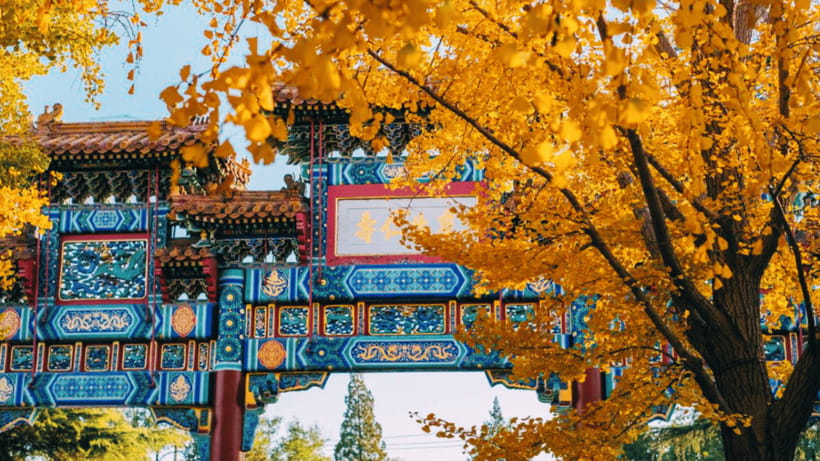
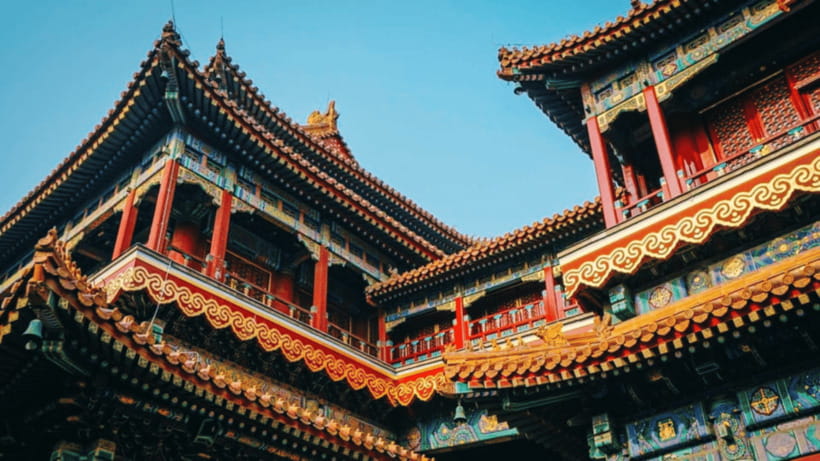
One thing you’ll notice as you walk is the temple doesn’t follow a single “style rule.” It’s a layered mix of traditions and materials, with decorative flourishes that reward slow walking.
The complex is known for:
- Three archways that create strong visual transitions
- Major halls meant for worship and gatherings
- Smaller thematic spaces that focus on learning and practice
- Interiors packed with Buddha statues, thangkas (religious paintings), and precious artifacts
If you like architecture, this is a good place to take your time. The carvings and colors feel intentional, not just decorative. And because people use the space for daily devotion, it doesn’t feel like a museum set.
Crowds and timing: when the tranquility is real
Crowds are the main variable here. The temple can be busy on holidays because it’s a place of prayer, not only sightseeing.
For example, visiting on January 1 can be very crowded, since people come to pray and participate in rituals. That doesn’t make the visit bad. It just changes the feel—from calm viewing to more people-watching as well.
So how do you plan?
- If you want the quietest experience, pick a time when most people are likely working or traveling less.
- If you don’t mind crowds and want energy, go when locals are out and the incense smoke thickens.
Either way, your best strategy is simple: plan for a slow rhythm and don’t treat this like a checklist. The value of Lama Temple is the atmosphere.
Incense, prayer, and respectful etiquette (the practical version)
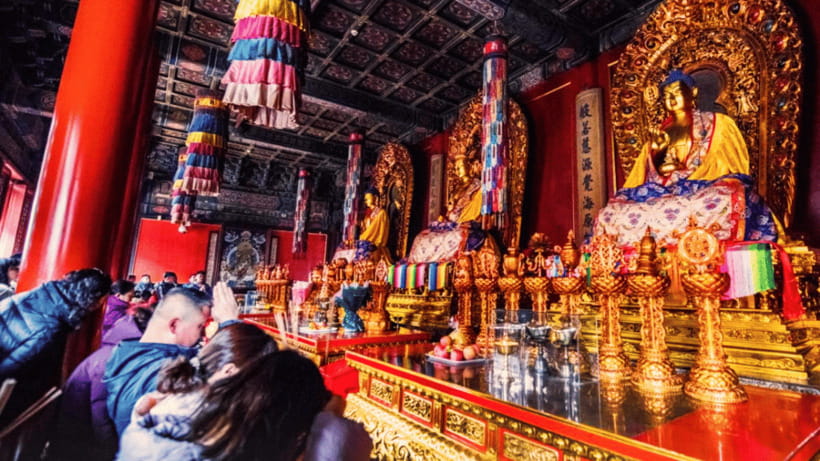
You’ll see locals praying and offering incense. In one visit, I saw how incense smoke can make the interior glow look softer, almost like the temple is breathing.
Keep a few etiquette basics in mind:
- Respect prayer areas. Don’t step into lines where people are kneeling or moving.
- If incense is offered, follow local behavior rather than trying to invent your own version.
- If you’re photographing, pause first, look for signs of where people stand, and avoid blocking anyone’s view.
The temple works best when you treat it like worship space, not a stage. That’s also how you’ll get the best photos without stress.
Getting there and entering: fast-track helps, security still matters
This ticket is designed to make entry smoother, but it doesn’t remove the most basic step: security checks.
Plan for this flow:
1) You show your ticket at the designated entrance channel
2) You pass through security checks
3) Then you enter the temple grounds and start exploring
Also, a booking note that matters in real life: the GetYourGuide QR code isn’t a valid ticket on its own. You’ll need to handle it the way the provider instructs—via WhatsApp communication or by waiting for the confirmation email. And the booking is real-name: you must provide your passport name and passport number, exactly as they appear in your passport.
If you’re the type who hates last-minute admin, do the ID details early. It reduces the odds of stress at the gate.
What I liked most in real use (and what to watch)
Across bookings and experiences, the most praised elements are pretty clear:
- Organized communication in advance (WhatsApp updates are mentioned)
- Quick ticket delivery on the day of visit or shortly after booking
- Smooth entry thanks to the fast-track option
- The temple itself: people love the atmosphere and the standout statues
A recurring practical theme: it helps to book ahead if you’re unfamiliar with how entry and confirmation work. One person described getting the information and ticket with a small guide the day of the visit, which is exactly the kind of support that makes self-exploration easier.
The main thing to watch is expectations. This is not a guided experience with someone narrating history in your ear. If you want that, you’d need to add another layer yourself (guidebook, maps, or just reading signs as you go).
Price vs. payoff: is this ticket worth your time?
At about $10, the math is simple: you’re paying for entry access to one of Beijing’s most iconic Tibetan Buddhist sites, plus fast-track benefits.
You’re not paying extra for:
- a guide,
- an audio device,
- or a private experience.
So the value depends on your style. If you like wandering, stopping, and looking carefully, this ticket is a great deal. If you want a full scripted tour with history explanations at every turn, you may feel like you’re missing structure.
For many visitors, the sweet spot is this: use the ticket to handle entry cleanly, then spend your mental energy on the temple’s atmosphere—especially the large halls and the monumental sandalwood Buddha.
Who should book this Lama Temple ticket?
I’d point this one at:
- First-time Beijing visitors who want one spiritual site that doesn’t feel like a rushed stop
- People who like architecture and art details like thangkas and carvings
- Travelers who prefer self-guided exploration over group logistics
- Anyone who wants a low-cost ticket with access to major areas
I’d think twice if you:
- want a guided narration experience
- dislike crowds and are picky about timing
- need an audio guide for context (since none is included)
Should you book this Lama Temple Fast-Track Ticket?
Yes, I think you should—especially if you’re going on a day when you’d rather not gamble on lines and uncertainty.
Book it if you want fast-track entry, access to the main halls and exhibitions, and the freedom to explore at your own pace. It’s also a strong choice if you’re comfortable handling self-guided navigation with the help you receive by WhatsApp or email confirmation.
Skip it only if you know you won’t enjoy independent museum-style exploration and you need a guide to make history feel alive. For everyone else, this is one of the most reasonable ways to experience the Lama Temple’s blend of imperial and Tibetan Buddhist space, with the world-famous sandalwood Buddha as the unforgettable anchor.
FAQ
FAQ
Do I need a passport to visit?
Yes. The activity specifies that you should bring your passport.
Is the GetYourGuide QR code the actual ticket?
No. The QR code is not a valid ticket. You need to use the confirmation method provided to you (via WhatsApp or the confirmation email).
Is real-name booking required?
Yes. Real-name ticket booking is mandatory, and only the passport-matching details will be accepted at the ticket gate.
Does the ticket include skip-the-line security checks?
No. The fast-track entry helps with getting in, but you still go through security checks.
Are guided tours or audio guides included?
No. Guided tours and audio guides are not included.
What time do I need to enter and when must I leave?
Final entry is one hour before closing, and you must exit 30 minutes before closing.
What items are not allowed inside?
Pets, weapons or sharp objects, and explosive substances are not allowed.
How long is the visit?
Plan on 1 day. You’ll check availability to see the starting times.