REVIEW · BEIJING
Beijing Half Day: National Museum of China In-depth Tour with Subway Transfer
Book on Viator →Operated by Beijing Meitu Travel Agency Co., Ltd. · Bookable on Viator
Museum crowds can be a headache.
This half-day National Museum of China tour helps you turn chaos into a focused walk through Chinese history, with hotel pickup and an English-speaking guide who keeps things moving even when the building is packed. One thing to keep in mind: the museum is enormous, so you’ll hit major highlights rather than seeing everything on your own.
You’re paying $114 per person for more than tickets. You’re buying time, context, and a plan for a museum that otherwise can feel like wandering through a maze of halls.
In This Review
- Key highlights worth your attention
- Why this half-day National Museum plan makes sense
- Meeting at your hotel and getting to the museum (subway vs taxi)
- Stop 1: Ancient China Exhibition Hall (2 hours of real “timeline thinking”)
- Stop 2: Ancient Buddha Statue room (1 hour for art, style, and time)
- What makes the guide part so valuable (and why it shows in the details)
- Tickets and timing: why booking support is part of the real value
- Price check: is $114 worth it for what you get?
- Who this tour fits best (and who might want a different approach)
- Practical tips to make the 4 hours feel effortless
- Should you book this National Museum of China half-day tour?
- FAQ
- What is the duration of the tour?
- When does the guide meet me?
- How do we get to the National Museum of China?
- Is the tour private?
- Are museum tickets included?
- What does the tour cover inside the museum?
- Do I need to speak Chinese to join?
- Is pickup from the hotel included?
- What extra costs should I plan for?
Key highlights worth your attention
- Crowd-smart guiding: When the museum is packed, your guide helps you stay on track.
- A tidy 4-hour hit list: Ancient China highlights plus a second stop for Buddhist sculpture.
- Ticket booking handled for you: You get museum access without wrestling with ticket logistics.
- Convenient pickup and transfer: Meet at your hotel lobby, then head in via subway or taxi.
- Clear English and good pacing: The best guides keep explanations simple and questions welcome.
Why this half-day National Museum plan makes sense
The National Museum of China can feel like a full-day commitment on its own. Even if you love museums, half a day can turn into a strategy game: which halls matter, how do you avoid getting lost, and how do you read what you’re looking at without a lot of effort?
That’s where this tour earns its keep. You don’t just get admission. You get a guide who knows what to point out first, what to connect across centuries, and how to keep your route efficient. The result is that you can experience the museum’s big story—Chinese civilization from prehistoric times through later historical stages—without spending your energy figuring out logistics inside the building.
The other practical advantage is crowd management. The museum is known for busy periods, and more than one guide is praised for keeping groups from wasting time at bottlenecks. That matters because you’re only here about four hours total.
You can also read our reviews of more museum experiences in Beijing



Meeting at your hotel and getting to the museum (subway vs taxi)
You’ll meet your guide at your hotel lobby at 8:30am or 1:00pm. From there, the plan is straightforward: head to the National Museum of China by subway or taxi, depending on your situation and the day’s flow.
Two details make this easier for you:
- Hotel pickup is included, so you’re not hunting for meeting points.
- Single-way taxi transfer is included, which can be a lifesaver when you’d rather not fight transfers with luggage, tired legs, or a tight timeline.
If you like using public transit, you’ll still get that option—this tour doesn’t force a single method. If you prefer comfort and speed, the taxi part helps you keep the morning or afternoon from slipping away.
Stop 1: Ancient China Exhibition Hall (2 hours of real “timeline thinking”)
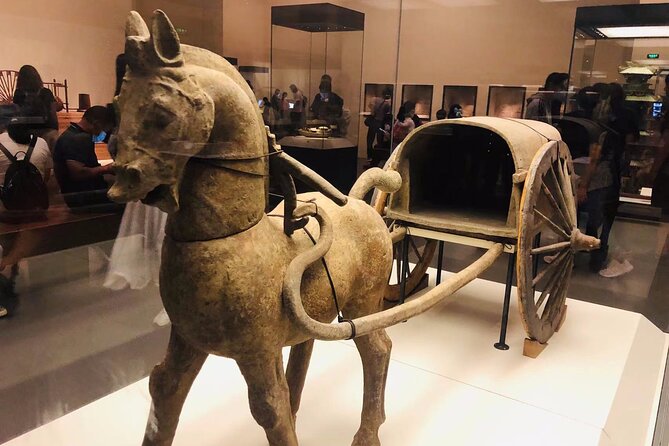
Your main time is in the Ancient China Exhibition Hall, where the museum organizes a sweeping story from very early periods to later dynastic and modern eras. The tour’s pitch is about making “5000 years of civilization” feel concrete, not abstract.
Here’s what you can expect to focus on, based on the kinds of objects highlighted in this experience:
- Prehistoric pieces and unsolved mysteries, including painted pottery jars that help you picture daily life and early artistic patterns.
- Famous ceremonial objects, including the Jade Dragon, often described as China’s first dragon.
- A mix of everyday and extraordinary, like the mention of a refrigerator concept from around 2000 years ago—useful because it shows technology doesn’t pop up from nowhere.
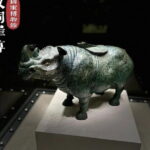
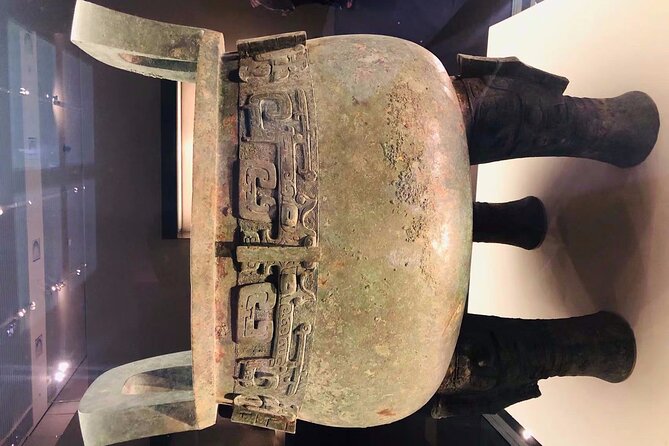
- Major cultural treasures, including the Si Mu Wu Ding (unearthed in 1939 in Henan), which is the kind of name you remember because it’s tied to a specific find spot and time.
- Siyang Fangzun, described with the detail of horn sheep facing the four directions—exactly the kind of image that helps you understand ritual art and symbolism.
- Sanxingdui civilization material, which adds another important layer to China’s early cultural landscape.
Two things I really like about how this stop is framed:
- You’re not just looking at objects—you’re learning how they connect. Your guide turns display labels into a story you can follow.
- The stop includes both “famous names” and “big context.” That balance is what keeps the 2 hours from feeling like a blur.
A possible drawback: because the museum is packed and the exhibits are spread out, you won’t see every single gallery. This is best for visitors who want the big picture and the strongest highlights, not people chasing a full day of exhaustive browsing.
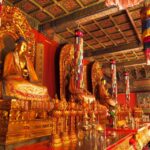
Stop 2: Ancient Buddha Statue room (1 hour for art, style, and time)
After the Ancient China focus, you shift to religious art in the Ancient Buddha Statue exhibition room. This is a smart move for your brain. The first stop is about broad civilization development; the second gives you a narrower lens where art, craft, and changing styles become the main story.
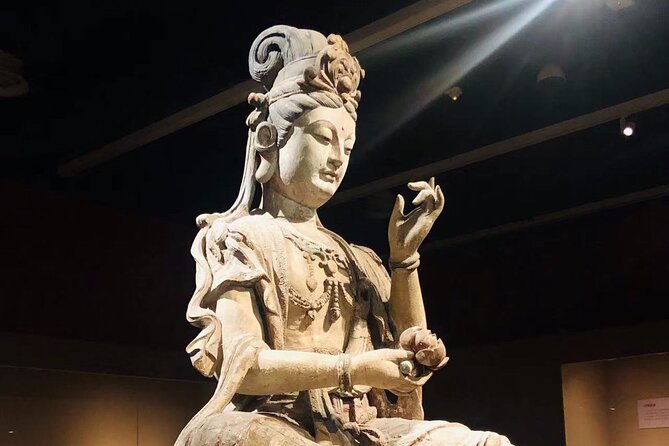
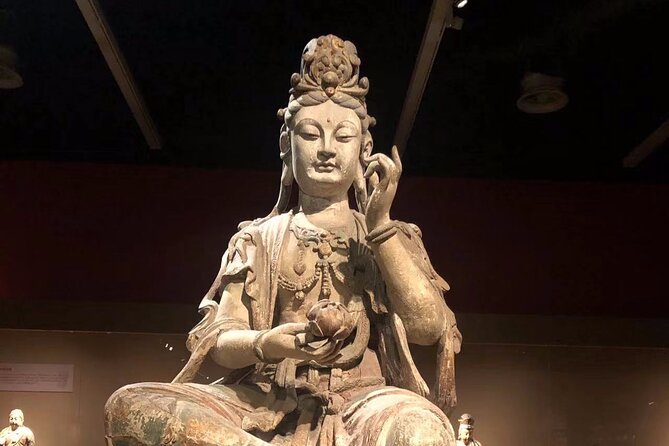
You’ll see Buddha statues from different periods, with special emphasis on a painted wooden Guan yin statue from the Song Dynasty. The description compares its power to the Mona Lisa effect—an attention grab that’s less about the title and more about the face and expression you keep noticing as you get closer.
You’ll also have time to see other highlighted rooms, including something like a food culture exhibition, depending on what your guide fits into the hour. That kind of add-on matters because it reminds you history isn’t only politics and war—it’s also what people ate, how they gathered, and what they valued.
One practical note: religious art galleries can be quieter in tone than big prehistory halls, even when the museum is crowded. So if you want a break from the constant motion of timeline learning, this stop gives you a calmer rhythm.
What makes the guide part so valuable (and why it shows in the details)
This tour is built around your guide, and that’s not marketing fluff. In a huge museum, the guide determines whether you leave with understanding or with a handful of photos and vague impressions.
From the types of guides associated with this experience—names like Mike and Cathy come up repeatedly—you’ll often get three things that improve your visit:
- Clear English explanations that don’t drown you in jargon.
- Good crowd-handling instincts, so you spend time looking instead of waiting.
- A sense of humor and ease, which helps when you’re listening for long stretches.
I also like that guides are described as patient and responsive to questions. That’s important because museums reward curiosity. When you’re allowed to ask why an object is important or how to interpret a symbol, your visit turns from passive to active.
You can also read our reviews of more tours and experiences in Beijing

Tickets and timing: why booking support is part of the real value
The official ticket process for big museums can be tricky, especially if you don’t speak the language or you’re trying to match a specific date. In practice, the museum ticketing situation can be a bottleneck—this tour reduces that stress by including National Museum tickets booking and providing a mobile ticket.
That means your day starts with fewer uncertainties. You’re not trying to solve booking problems right when you want to be sightseeing.
Also, your tour is timed to a simple structure. You’re only here about 4 hours, so the schedule is designed for focus:
- 2 hours in the Ancient China Exhibition Hall
- 1 hour in the Ancient Buddha Statue room
- travel time in between, using subway or taxi with included pickup support
That structure is ideal if you want one museum that delivers a lot without taking over your whole itinerary.
Price check: is $114 worth it for what you get?
At $114 per person, this isn’t the cheapest way into the museum. But it can be good value if you add up what’s included and what it prevents you from doing.
You get:
- Professional English-speaking guide
- Hotel pickup
- National museum tickets booking
- Single-way taxi transfer
- A planned route through the museum highlights
What you’re really paying for is risk reduction and time savings. In a museum this large, the biggest hidden cost is wasting time. If you walk in without a plan, you often spend your half day circling the wrong halls—or you end up seeing fewer major pieces than you expected.
If you’re traveling solo or as a couple, the price can feel steep at first. If you’re a small group and you can benefit from group discounts, it can feel more reasonable. Either way, the guide and ticket support are the difference between a confusing visit and an organized one.
Who this tour fits best (and who might want a different approach)
This experience works best for you if:
- You want a high-impact overview in a short timeframe.
- You care about context—how objects fit into the bigger story.
- You’re visiting during busy periods and don’t want to lose time inside.
It may be less perfect if:
- You’re the type who wants to spend hours in one gallery comparing dozens of displays.
- You’re fine handling ticket logistics yourself and navigating the museum on your own.
If you’re pairing this with other Beijing sights, it’s also a good anchor. A half-day museum visit gives your trip a cultural backbone without crowding out the rest of your schedule.
Practical tips to make the 4 hours feel effortless
A few simple things can improve your experience a lot:
- Wear shoes you trust. The museum is huge, and even a guided route includes walking.
- Bring a small notebook or use your phone notes. Object names like Si Mu Wu Ding are easier to remember if you jot them down.
- Keep expectations realistic. You’ll see major highlights, not every gallery in the building.
- Come ready to ask questions. With guides like Mike and Cathy being praised for clear explanations, you’ll likely get better value if you’re curious out loud.
Should you book this National Museum of China half-day tour?
If your goal is to get the strongest highlights of the National Museum of China in a manageable half day, I’d book it—especially if you want help with ticket booking, hotel pickup, and a guide who can handle crowds.
Skip it only if you’re planning to spend the whole day inside the museum anyway and you’re confident handling tickets and routing on your own. For most first-time visitors, this is one of the more practical ways to make the museum feel like a story instead of a maze.
FAQ
What is the duration of the tour?
The tour runs for about 4 hours.
When does the guide meet me?
You’ll meet your guide at 8:30am or 1:00pm, at your hotel lobby.
How do we get to the National Museum of China?
The guide will take you to the museum using subway or taxi. A single-way taxi transfer is included.
Is the tour private?
Yes. It’s listed as a private tour/activity, with only your group participating.
Are museum tickets included?
Yes. National Museum of China tickets booking is included, and you receive mobile tickets.
What does the tour cover inside the museum?
You’ll visit the Ancient China Exhibition Hall (2 hours) and the Ancient Buddha Statue exhibition room (1 hour), plus other highlighted areas depending on your route.
Do I need to speak Chinese to join?
No. The tour includes a professional English-speaking guide.
Is pickup from the hotel included?
Yes. Hotel pickup is included.
What extra costs should I plan for?
Gratuities are not included. The tour notes that gratuities are recommended.