REVIEW · BEIJING
Beijing Hutongs Walking Tour
Book on Viator →Operated by Roy Li Tours Beijing · Bookable on Viator
Hutongs beat the checklist every time.
This small-group hutong walk gets you out of the main sightseeing lanes and into the courtyard-lined side streets where Beijing’s everyday past still shows up in the walls. You’ll trade the usual “big building only” route for a calmer pace, with local stories that connect lanes, emperors, and even old-school timekeeping to what you’re walking past.
Two things I really like: the tour is run at a relaxed walking pace with personal interaction (the group stays capped at 15), so you can actually ask questions. I also love the way the guide brings landmark moments into focus—like the photo stop at Empress’s Mansion, tied to Puyi’s empress Wanrong—so you don’t just see a gate, you get the context.
One drawback to plan around: you’ll want to arrive on time for the meeting point near Nanluoguxiang (metro line 6 or line 8, exit E). If you’re late, the day can slip, and Bell and Drum Towers sights are listed with admission not included, meaning you may be looking from the outside or around the area rather than paying to go in.
In This Review
- Quick takeaways before you walk
- Hutongs, courtyard lanes, and why this walk hits differently
- The best start: finding the Nanluoguxiang meeting point (fast)
- Bell and Drum Towers area: a strong “context” opener
- Nanluogixiang lane: Yuan Dynasty vibes and the courtyard texture
- Mao’er Hutong: famous lanes, character stories, and picture-worthy moments
- Qianhai–Houhai waterways: seeing the city from the “between” spaces
- Logistics that genuinely affect your day (not the fine print)
- Who should book this hutong walk (and who might not)
- Should you book? My honest call
- FAQ
- Where is the meeting point?
- What time does the tour start and how long is it?
- What does the tour include?
- Where does the tour end?
- How big is the group?
- Is admission to Bell and Drum Towers included?
- Can I use public transportation to get there?
- Is there a cancellation window?
Quick takeaways before you walk

- Max 15 people means a calmer route and more back-and-forth with your English-speaking guide
- Courtyard lanes like Nanluogixiang and Mao’er Hutong show a Beijing that’s easy to miss at speed
- Empress’s Mansion photo stop gives you a clear connection to Puyi’s empress Wanrong
- Bell and Drum Towers area sets the tone at the start, with viewpoints around the Drum Tower area later
- Mobile ticket keeps logistics simple, and the tour finishes near Houhai
Hutongs, courtyard lanes, and why this walk hits differently
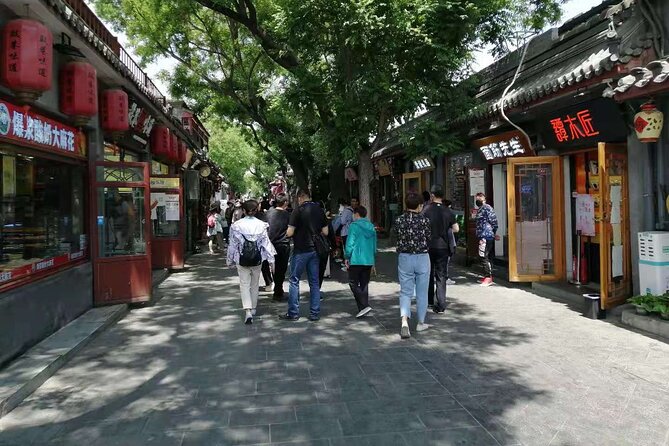
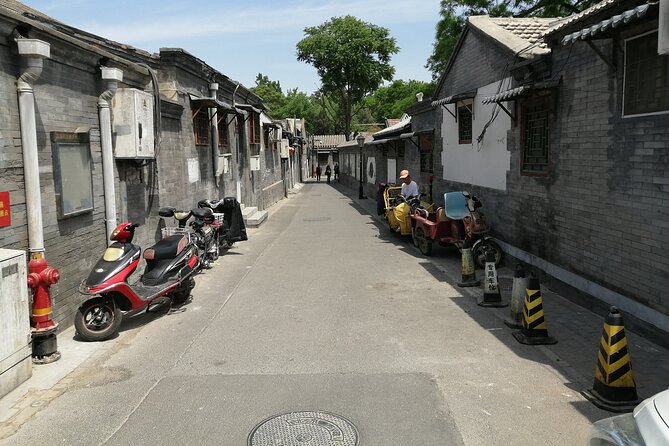
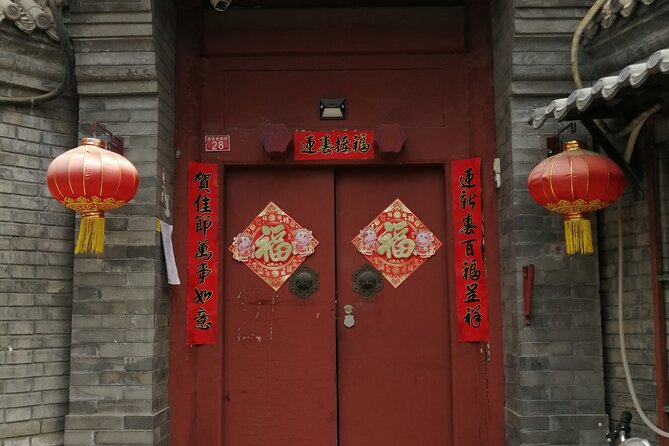
Beijing can feel split into two worlds. One side is grand imperial scale. The other is tight lanes, grey courtyard walls, old trees, and the sense that daily life shaped the city more than any single monument.
This tour is built for that second Beijing. The route centers on hutongs—traditional lanes that function like living corridors between courtyards—so you get a sense of how people actually moved, talked, and lived. You’re not just staring at buildings; you’re learning how the lanes connect to big stories, including the fate of China’s last emperor and the people tied to him.
I also like that the pace is described as laid-back. Hutongs are easiest to enjoy when you’re not sprinting between photo stops. If you’re the type who likes to look closely at doors, courtyards, and street corners, this will match your tempo.
You can also read our reviews of more walking tours in Beijing



The best start: finding the Nanluoguxiang meeting point (fast)
Your tour starts at 10:00 am at South Luogu Lane in the Nanluoguxiang area. The meeting point is at Nan Luo Gu Xiang, Dongcheng District, and the directions point you to Nanluoguxiang metro station: take Line 8 or Line 6, then exit E.
Here’s the practical advice: go into the station with enough buffer that you’re not doing frantic map-chasing at the last second. The day runs on the guide’s schedule, and a late arrival can throw off the whole group flow.
Also note the tour operates as a small-group experience with an English-speaking guide, so getting there early helps you start with the right footing—questions first, walking second.
Bell and Drum Towers area: a strong “context” opener
The itinerary begins with the Bell and Drum Towers area connection. Even if you don’t purchase any entry tickets (listed as admission ticket not included), being in this zone matters because it anchors you to old Beijing’s city structure.
From there, the tour shifts toward Nanluogixiang lane, where the city starts feeling more like a living neighborhood than a museum. That transition is the whole point: you’ll go from iconic skyline landmarks to the maze of lanes that fed the life around them.
One note to keep your expectations realistic: since admission isn’t included, plan on seeing the towers and area views around the sights rather than assuming you’ll go inside.
Nanluogixiang lane: Yuan Dynasty vibes and the courtyard texture
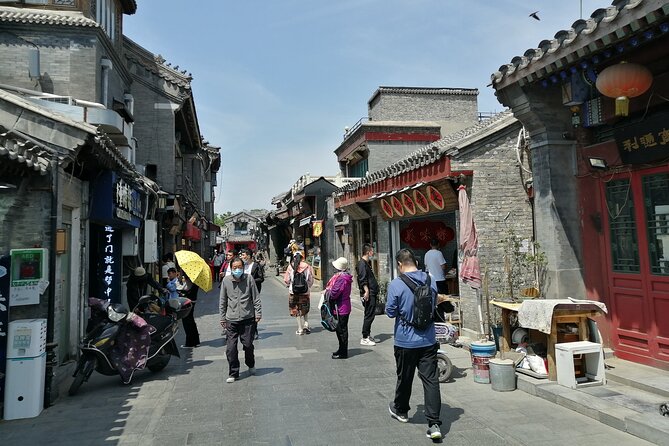
Nanluogixiang is where the tour slows down in a good way. The route describes it as a place that can take you back toward the Yuan Dynasty feeling, with vernacular courtyard houses and the kind of street details that help you picture how Beijing looked before today’s crowds and conversions.
What makes this stop valuable for you is the architecture language. You’ll look at the solid traditional courtyard design—including how the lanes frame homes and how old trees sit alongside grey courtyard walls. It’s the kind of visual pattern recognition that makes the rest of Beijing easier to understand. After this, you’ll start spotting courtyard rhythm on your own.
Practical tip: this is a walking-focused experience. If you’re the type who struggles with uneven sidewalks or crowded lane corners, consider wearing shoes that handle tight spaces and lots of steps without complaining.
Mao’er Hutong: famous lanes, character stories, and picture-worthy moments
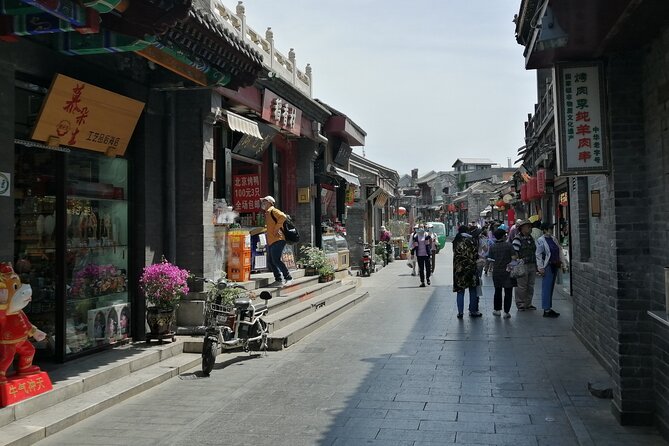
Next comes Mao’er Hutong, described as a lane packed with famous buildings and character stories. Hutongs like this often feel “ordinary” at first glance—until someone gives you the names and the why behind the walls.
This is where the guide’s storytelling style can really change the experience. In one example from the tour’s guide background, Roy uses engagement moments like quizzing the group to keep the stories from turning into a lecture. That’s a smart method for a walking tour, because your attention stays on the street rather than drifting.
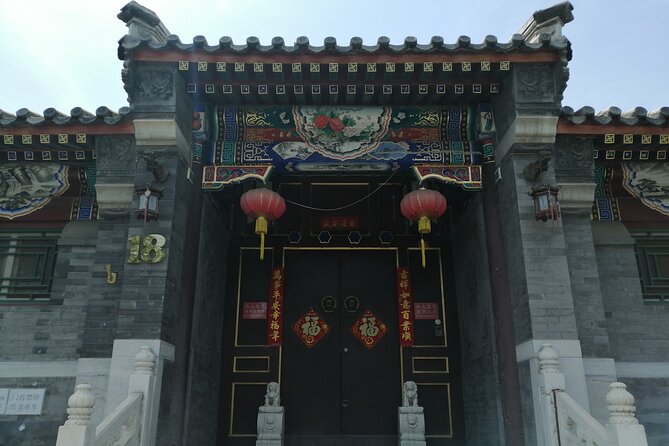
Then you hit the photo spot: Empress’s Mansion, described as the former residence connected to Puyi’s empress Wanrong. The value here is not just taking a photo. It’s standing in a specific place and understanding which chapter of Beijing’s modern imperial endgame it ties to—especially the last emperor’s story, which is hard to grasp from textbooks alone.
If you want the best photos, plan to pause when the guide says to. In hutongs, angles matter because the lane narrows and the courtyard framing can create good composition fast.





Qianhai–Houhai waterways: seeing the city from the “between” spaces
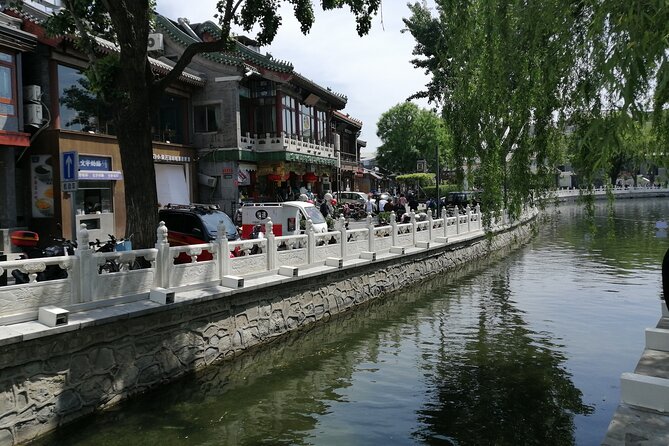
The route continues toward a narrow channel joining Qianhai Lake and Houhai Lake. This matters because hutongs aren’t only about walls—they’re also about connections to water, open space, and where people gathered.
A canal-like channel in this part of Beijing gives you a different kind of view than you’ll get from a major square. You’ll see the city’s layout as a system: lanes feeding activity toward lakes, and landmarks that make navigation easier even when the streets feel confusing.
It’s also a nice reset near the end. After walking tight lanes, water space helps your brain unclench. You start noticing how the neighborhood opens up and how Houhai fits into the bigger picture.
Logistics that genuinely affect your day (not the fine print)
Price for this tour is $30 per person for about 1.5 to 2 hours, and it includes an English-speaking guide plus a mobile ticket. For a hutong-style experience with narration and a guided route, that’s a fair rate—especially with the group capped at 15.
What you’re paying for isn’t entry to a ticketed museum. It’s guidance that helps you interpret what you’re seeing: the lane names, the courtyard design cues, and the stories that connect people from Chinese history to actual street locations.
The pacing also matters. A 1.5–2 hour walk is long enough to feel like you got somewhere, but short enough that you’re not stuck in constant transit all day. If you’re doing a first-day Beijing plan, this kind of guided orientation route can save you time later because you’ll know how to navigate better.
Who should book this hutong walk (and who might not)
This tour is a strong match if you:
- Want courtyard neighborhoods, not just big structures
- Like stories tied to specific streets (emperor-era facts included)
- Prefer a calmer pace with room to ask questions
It may be less ideal if you:
- Need lots of sitting down (this is a walking experience)
- Expect guaranteed indoor access or paid entries at the towers (admission is listed as not included)
- Have a tight schedule and can’t comfortably reach the meeting point on time
If you’re traveling with someone who finds walking tours repetitive, bring them here with a photo-and-stories mindset. The Empress’s Mansion stop and the water-side ending give the walk natural “anchors.”
Should you book? My honest call
If your goal is to get beyond the obvious imperial highlights and understand Beijing through its hutong lanes, I think this is worth booking. The mix of courtyard architecture cues, named lanes like Nanluogixiang and Mao’er Hutong, and story connections tied to Puyi’s world makes the time feel purposeful.
Also, the small group size and English guide are practical wins. It’s not just sightseeing—it’s interpretation, which is where a hutong tour becomes more than a photo walk.
Just do one thing well: arrive early enough at Nanluoguxiang exit E near South Luogu Lane so you can start smoothly at 10:00 am. Then relax and enjoy the pace. This is the kind of Beijing day that rewards slow looking.
FAQ
Where is the meeting point?
You meet near Nanluoguxiang metro area at South Luogu Lane, Dongcheng District. The guidance lists Nanluoguxiang metro station Line 8 or Line 6, exit E.
What time does the tour start and how long is it?
The start time is 10:00 am. The duration is about 1 hour 30 minutes to 2 hours.
What does the tour include?
The tour includes an English-speaking guide. It also uses a mobile ticket. Admission tickets are not included.
Where does the tour end?
The tour ends at Houhai in the Xicheng District, and it notes that the finish is at the Drum Tower area.
How big is the group?
The tour has a maximum group size of 15 people.
Is admission to Bell and Drum Towers included?
No. The tour indicates that an admission ticket is not included.
Can I use public transportation to get there?
Yes. The meeting point is near public transportation, specifically the Nanluoguxiang metro station.
Is there a cancellation window?
There is free cancellation. You can cancel up to 24 hours before the experience’s start time for a full refund.