REVIEW · BEIJING
4-Hour Private Tiananmen Square and Forbidden City Tour
Book on Viator →Operated by Sunflower Tours China · Bookable on Viator
Tiananmen feels bigger with a plan. This private 4-hour tour pairs pickup with an English-speaking guide and reserved entry so you can focus on the sights instead of ticket lines and confusion. One big thing to watch: you need to book at least 8 days ahead for Forbidden City tickets.
I especially liked the way the guide turns the buildings into stories you can follow—so the major halls stop feeling like random rooms. In one of the recent tours, the guide Maggie also went above and beyond by helping with tickets for other activities on the same day, which is exactly the kind of stress-saver that matters when you have limited time.
In This Review
- Key highlights to know before you go
- Why this 4-hour Tiananmen + Forbidden City tour works
- Price and logistics: what $188 buys (and what you’ll still pay)
- Where you meet and how the tour starts
- Tiananmen Square in 20 minutes: scale, symbolism, and crowd sanity
- Entering the Forbidden City: how the route keeps you from getting lost
- Hall of Middle Harmony (Zhonghe Dian): rehearsals before power
- Hall of Great Harmony (Taihe Dian): the biggest hall lesson
- Hall of Preserving Harmony (Baohedian): ceremonies and royal exams
- Palace of Heavenly Purity: from sleeping space to office
- Hall of Union: Empress birthday celebrations and the water clock
- Gate of Heavenly Purity and the emperor’s living logic
- Palace of Earthly Tranquility: Empress life and the wedding-hall angle
- Imperial Garden: the calm reset inside the complex
- The guide experience: where this tour really earns its price
- Timing and pacing: can you comfortably do it all in 4 hours?
- Who should book this tour
- Should you book this tour?
- FAQ
- How long is the 4-hour private Tiananmen Square and Forbidden City tour?
- Is this tour private or shared with other people?
- Where does the tour start and end?
- Does the tour include pickup?
- Are tickets included for Tiananmen Square and the Forbidden City?
- How far in advance do I need to book?
- What is included in the price, and what is not?
- What is the cancellation policy?
- What should I wear for the tour?
Key highlights to know before you go
- Private, English-speaking guidance that helps you understand what you’re seeing (not just where to stand)
- Reserved Tiananmen Square access plus a mobile ticket included
- A set route through the Forbidden City’s key halls within your half-day window
- Stop-by-stop context for ceremonial spaces like the Hall of Middle Harmony and Hall of Great Harmony
- Small details get pointed out, including the Hall of Union water clock and imperial seals
- A helpful guide like Maggie who can support your plans beyond this tour
Why this 4-hour Tiananmen + Forbidden City tour works
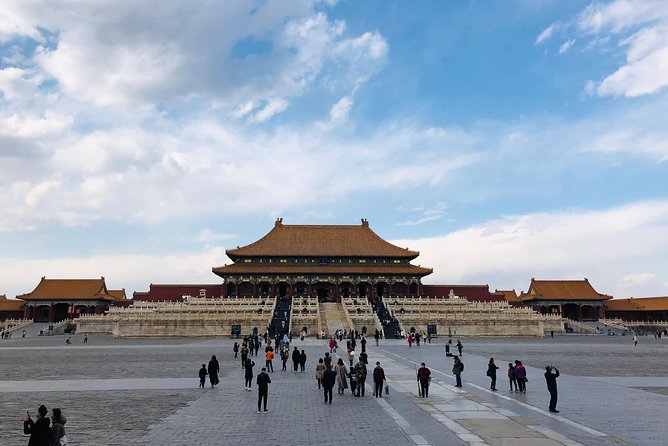
Beijing’s top two sights are also the hardest two to experience smoothly without local know-how. Tiananmen Square and the Forbidden City are massive, busy, and easy to misunderstand if you don’t read Chinese or don’t know how to move through the crowd. This tour helps you do the sensible thing: get a clear plan, then walk it with someone who knows what each stop means.
The best part is that it’s private. That changes the whole feel. You’re not sharing a guide with strangers, and the pacing can be adjusted to your questions and attention level. You’ll also get an English-speaking guide focused on meaning—why a specific hall exists, what it was used for, and what it communicated about power.
There’s also a practical bonus: the tour includes reserved entry and on-site guidance so you’re less likely to waste time at the wrong moment. For a first visit, that’s worth a lot. When your time window is only about half a day, efficiency isn’t “extra.” It’s the point.
You can also read our reviews of more city tours in Beijing

Price and logistics: what $188 buys (and what you’ll still pay)
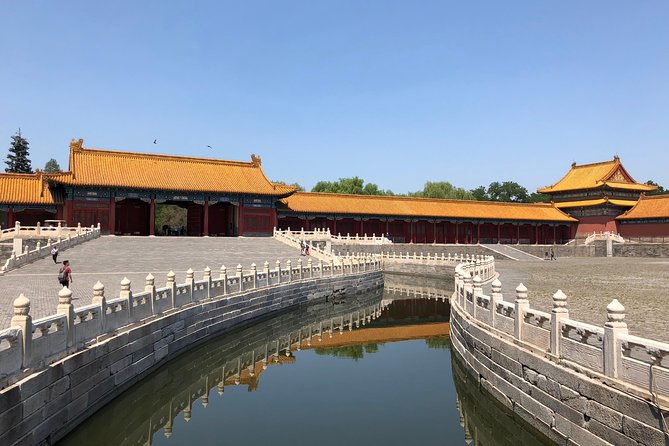
At $188 per person, this isn’t a budget “see it from a bus window” option. But it is priced like a service: you’re paying for a private guide, reserved access, and transport support (at least within a certain zone).
Here’s what the cost covers:
- A private tour with an English-speaking guide
- Reservation for Tiananmen Square
- Entrance fees included for the Forbidden City sites on the route
- Taxi fare within the 4th Ring Road
- A mobile ticket
- Pickup offered, with the meeting point also listed near the Beijing Planning Exhibition Hall
Here’s what you’ll likely handle yourself:
- Taxi fare outside the 4th Ring Road
- Lunch and any personal expenses (there’s even a coffee break mentioned later, and you pay for that)
This is one of those tours where the “value” isn’t just the sights. It’s the risk reduction. If you’ve ever lost an hour to ticketing rules or the wrong line, you already know why this type of pricing can feel fair.
Where you meet and how the tour starts
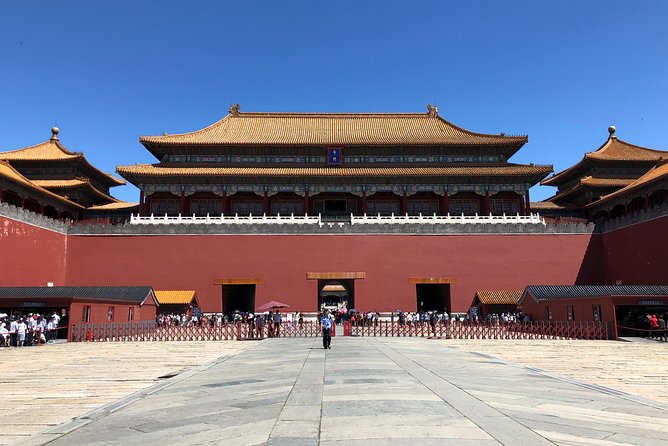
The listed start point is Beijing Planning Exhibition Hall (20 Qian Men Dong Da Jie, Dong Cheng Qu). The tour info also indicates the guide may meet you in your hotel lobby, so you’ll want to confirm what applies to you when booking.
That matters because the Forbidden City and Tiananmen area can be chaotic. Starting from a known place helps you keep your timing tight. You’ll also want to be ready to go quickly when your guide arrives, since the schedule is built around using a limited number of hours.
You should plan your morning or afternoon around comfortable walking. The tour specifically asks for comfortable shoes and a moderate fitness level. You’ll be standing and moving between halls, and you’ll likely do more walking than you think just from looking at the itinerary time blocks.
Tiananmen Square in 20 minutes: scale, symbolism, and crowd sanity
Your Tiananmen stop is about 20 minutes with admission listed as free. That shorter timing can sound rushed, but it’s exactly what works for most first-timers. The square is so huge that trying to “do it all” independently turns into wandering.
With a guide, you get the orientation you need fast—what to notice, where to look, and how the space has been used as a stage for national-level moments. Instead of treating the square like a photo backdrop, you’ll treat it like a place with purpose.
The main drawback is simple: you don’t get long lingering time here. This tour is built to move quickly to the Forbidden City. If you’re the type who wants a long, slow sit-down and people-watch, you may want extra time elsewhere in the day after the tour ends.
Entering the Forbidden City: how the route keeps you from getting lost
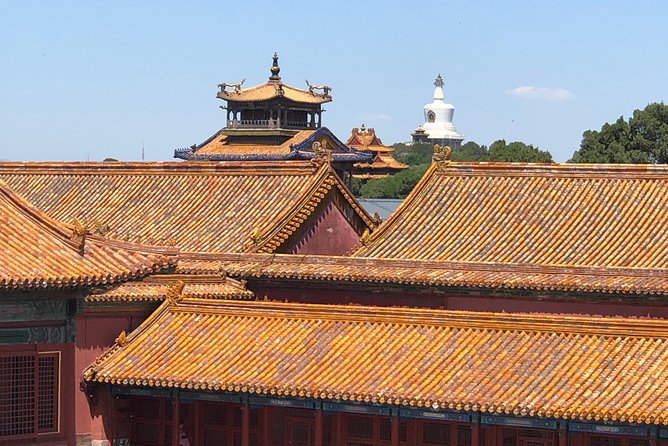
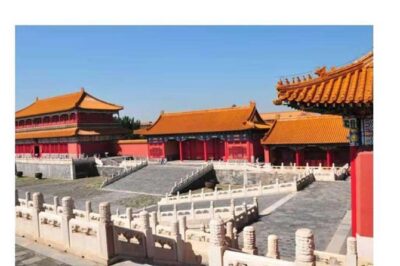
Once you transition into the Forbidden City, the experience shifts. You’ll explore the Palace Museum area and then follow a route through several major halls and chambers. The total time inside adds up to roughly a half-day slice focused on the most important spaces.
What makes this route feel smart is how it stays thematic. You’re not bouncing randomly. You’re moving through ceremonial practice, throne-room symbolism, administrative spaces, imperial residential areas, and finally the garden. That structure helps you connect the dots.
If you’re visiting for the first time, this is the part where an English guide really matters. Many visitors get stuck on visuals alone: gold roofs, big gates, identical-looking buildings. A guide helps you separate them by function and story, so you can actually remember what each stop is.
You can also read our reviews of more private tours in Beijing
Hall of Middle Harmony (Zhonghe Dian): rehearsals before power
Next up is the Hall of Middle Harmony, listed at about 10 minutes. This hall served as a rehearsal room where emperors would practice speeches or rest before ceremonies and presentations.
That detail is small, but it changes how you view the space. You’re not just looking at architecture—you’re imagining the moments before a public display. It gives you a sense that the empire wasn’t only about ruling. It was also about preparation, timing, and presentation.
Potential downside: the stop is short. You’ll see the main highlights, but if you’re a person who loves long, slow photo sessions, you may want to add self-guided time later.
Hall of Great Harmony (Taihe Dian): the biggest hall lesson
Then comes the Hall of Great Harmony, where you’ll spend about 20 minutes. It’s described as the biggest hall in the Forbidden City, with details worth lingering over—especially if your guide points out design elements tied to imperial symbolism.
This is the classic “throne-room” feeling stop. Even if you don’t have a deep background in Chinese court tradition, you can sense how this place was built to project authority.
One practical tip: don’t rush your photos. You’ll have time to step back, look at the scale, and then look again from a different angle while your guide keeps the story clear.
Hall of Preserving Harmony (Baohedian): ceremonies and royal exams
The Hall of Preserving Harmony is listed for about 15 minutes, and it’s described as the second-largest hall in the Forbidden City. It’s also tied to major state activities, including national royal examinations and banquets for the royal family.
That combo is fascinating because it shows a side of imperial power beyond pageantry. Education and assessment mattered. So did ritual hospitality. The hall becomes a snapshot of how the system presented legitimacy: officials were tested, and elites were celebrated.
A small detail to plan around: there’s a coffee break here, but at your own expense. If you’re someone who gets energy dips, it’s smart to use this pause thoughtfully rather than treat it as an optional stroll.
Palace of Heavenly Purity: from sleeping space to office
Next is the Palace of Heavenly Purity, about 20 minutes. It served as the emperor’s sleeping chamber and later became an office in the back court.
That shift—from private life to administration—helps you understand how these spaces weren’t strictly separated. The Forbidden City isn’t only a museum of ceremonies. It’s a map of daily routines, power transitions, and the overlap between comfort and control.
If you’ve ever wondered why certain buildings feel both formal and personal, this stop offers a clear answer.
Hall of Union: Empress birthday celebrations and the water clock
The Hall of Union is a 10-minute stop. It’s described as the place where the Empress’s birthday celebration took place, featuring interesting elements like a water clock and imperial seals.
Even if you don’t know the finer terminology of imperial artifacts, the inclusion of functional timekeeping (the water clock) makes it feel real. It’s not just decoration; it’s about how schedules and authority were managed.
This is the kind of stop where an English-speaking guide can bring props in the mind. It’s easy to look at something and forget it. It’s harder to forget when you understand what it was used for.
Gate of Heavenly Purity and the emperor’s living logic
Then you pass through the Gate of Heavenly Purity for about 10 minutes. After you go through, it connects to the royal sleeping chamber area.
This is more transitional than “grand hall.” But it helps the route make sense because it shows how you move from the symbolic spaces into personal imperial rooms. That contrast—public ceremony versus private function—is one of the things the Forbidden City does best.
Palace of Earthly Tranquility: Empress life and the wedding-hall angle
The tour continues to the Palace of Earthly Tranquility, also about 10 minutes. It served as the Empress’s sleeping chamber, and later it became a wedding hall for the emperor.
That’s another detail that changes your mental image of the place. It’s not only about ruling days and state ceremonies. It’s also about major life events. The building becomes a stage for personal milestones in the machinery of the court.
Imperial Garden: the calm reset inside the complex
Finally, you reach the Imperial Garden inside the Palace Museum area, about 15 minutes. It’s described as an oasis within the Forbidden City, with flowers, trees, plants, pavilions, and rock formations. There’s also a mention of limestone “sculptures,” plus water features.
This part works as a reset. After hours of ceremonial architecture, the garden gives you breathing room. It also helps you remember the Forbidden City isn’t only stone and gold; it includes nature designed into the royal experience.
One practical reality: 15 minutes is short. But it’s also enough to refresh your eyes and end the tour on a softer note.
The guide experience: where this tour really earns its price
A private guide isn’t automatically amazing. The difference here is that the tour sets you up for clarity: English-speaking interpretation, route structure, and help managing what you see in sequence.
The review highlight that stood out to me was Maggie. The note wasn’t just about facts. It was about going above and beyond—providing helpful information and assisting with booking tickets for other activities on the same day. That’s a real-life problem for many people: you plan one big attraction, but then you still need tickets and plans for everything around it.
So ask yourself what you need most. If you want someone to keep your day moving and keep your understanding on track, this setup fits well. If you only want photos and don’t care about context, you might not feel the full value.
Timing and pacing: can you comfortably do it all in 4 hours?
The tour is listed as about 4 hours. In that span, you’ll spend time at Tiananmen Square and then move through multiple Forbidden City stops with short time blocks (often 10 to 20 minutes each).
That schedule is ideal for people who prefer structure. It’s not ideal for people who want to linger for long. The Forbidden City rewards curiosity, but your guide route keeps you from turning the day into wandering.
If you’re sensitive to crowds or slower walking pace, tell the guide what you need. Private tours often adjust more easily than group tours, as long as the core structure still fits the ticket schedule.
Who should book this tour
This tour is a great fit if:
- It’s your first trip to Beijing and you want the two biggest icons handled in one efficient plan
- You don’t speak Chinese and want an English-speaking guide to translate meaning, not just directions
- You prefer a private experience over joining a group
- You want help with the day beyond the main sights (the guide support is a real selling point)
It might be less ideal if:
- You want lots of unstructured time in Tiananmen Square or the Forbidden City
- You’re traveling on a tight budget and don’t value reserved entry and private guidance
Should you book this tour?
I’d book it if your priority is getting the most important parts of Tiananmen Square and the Forbidden City without stress. The biggest reason is the timing logic: a private guide plus reserved access means you can spend your limited hours looking at the places that matter, not fighting for entry.
But book smart. The Forbidden City ticket requirement is time-sensitive—reserve at least 8 days ahead—so don’t leave it until the last moment. If you can plan ahead and you like a guided route with clear explanations, this is a very practical way to experience Beijing’s center of gravity.
If you prefer total freedom and you already feel confident navigating on your own, you may want to spend extra time independently instead. For most first-timers, though, this private half-day mix is a strong use of your day.
FAQ
How long is the 4-hour private Tiananmen Square and Forbidden City tour?
The tour duration is listed as about 4 hours.
Is this tour private or shared with other people?
It is a private tour, and only your group will participate.
Where does the tour start and end?
It starts at Beijing Planning Exhibition Hall (20 Qian Men Dong Da Jie, Dong Cheng Qu) and ends at the Forbidden City area (4 Jing Shan Qian Jie, Dong Cheng Qu).
Does the tour include pickup?
Pickup is offered, and the guide may meet you in your hotel lobby or at the Beijing Planning Exhibition Hall.
Are tickets included for Tiananmen Square and the Forbidden City?
Tiananmen Square reservations are included, and Forbidden City entrance fees are included. Mobile ticket is also included.
How far in advance do I need to book?
You need to book at least 8 days before your travel date for Forbidden City tickets.
What is included in the price, and what is not?
Included: private tour, excellent English-speaking guide, Tiananmen reservation, entrance fee for the sites on the route, and taxi fare within the 4th Ring Road. Not included: taxi fare outside the 4th Ring Road, lunch, and any other expenses not listed.
What is the cancellation policy?
Free cancellation is available. You can cancel up to 24 hours in advance for a full refund. Cancellation closer than that is not refunded.
What should I wear for the tour?
Wear comfortable shoes, and you should have a moderate physical fitness level.