REVIEW · BEIJING
Houhai Hutong Tour: Rickshaw + Prince Gong & Soong Residences
Book on Viator →Operated by Discover Beijing Tours · Bookable on Viator
Riding a rickshaw through Beijing’s quiet lanes is magic. This Houhai Hutong Tour blends a guided walk in Shichahai’s calmer corners with key historic stops like Prince Gong’s Mansion and Soong Ching-ling’s residence, plus a short rickshaw glide through the back lanes around the lake. It’s the kind of route that helps you see how Beijing’s old neighborhoods actually work.
I love two things most. First, the guide (Mike gets praised for this) brings Beijing down to human scale, with stories that explain what you’re looking at instead of just listing sights. Second, you get real value because entrance tickets are included for Prince Gong’s Mansion and the Soong Ching-ling residence, not something you have to budget for separately.
One consideration: Prince Gong’s Mansion entry isn’t guaranteed during peak periods, even though the tour includes it when possible. If tickets don’t work, you’ll visit the Drum Tower (Gulou) or another nearby alternative. Also, hotel pickup is included, but you’re responsible for getting back to your hotel after the tour.
In This Review
- Key Things to Know Before You Go
- Why Houhai Hutongs Beat the Usual Beijing Shuffle
- Price and What You Really Get for $129
- Lotus Lane and Huoshen Temple: Start With the Right Mood
- Outside the Bell and Drum Towers: Central Axis Without the Crush
- Prince Gong’s Mansion (Gong Wang Fu): Courtyards That Explain Qing Power
- Soong Ching-ling’s Former Residence: A Garden Estate With Meaning
- Yinding Bridge: The White Marble View Stop You’ll Actually Remember
- Yandaixie Street: 232 Meters of Old Beijing Pedestrian Life
- The Hutong Stroll: How to Read the Neighborhood
- 20 Minutes by Rickshaw Through Houhai Back Lakes
- Logistics That Matter: Pickup, No Drop-Off, and Ticket Chances
- Who This Tour Suits Best
- Should You Book This Houhai Hutong Tour?
- FAQ
- How long is the Houhai Hutong Tour?
- Is hotel pickup included?
- Where does the tour take you?
- Is this a private tour?
- How long is the rickshaw ride?
- Are entrance fees included?
- What else do you see besides the two residences?
- Is food and drinks included?
- What if Prince Gong’s Mansion tickets are unavailable?
- Does the tour run in all weather?
Key Things to Know Before You Go
- Hotel pickup from within the 3rd ring road means less stress before you even start sightseeing.
- Prince Gong’s Mansion + Soong Ching-ling’s residence are both ticketed highlights, which boosts value for $129.
- Rickshaw ride through Houhai back lanes is short (about 20 minutes) but timed well for getting the feel of hutongs.
- You’ll see major Central Axis landmarks like the Bell and Drum Towers from the outside, without the crowds.
- Yinding Bridge is a quick but photogenic stop tied to famous historic scenery.
- Yandaixie Street (about 232 meters) gives you an old-school pedestrian lane with a distinct tobacco-pipe layout.
Why Houhai Hutongs Beat the Usual Beijing Shuffle
Beijing can feel like two cities. One is the grand, famous-axis version. The other is the older street-life version, where life happens in alleyways, courtyards, and lakefront lanes.
This tour leans hard into the second one. You start around Shichahai, a waterside area where the streets feel tighter and slower than the headline attractions. Instead of rushing from gate to gate, you build context as you go. That matters because hutongs are easier to understand when you’ve already learned how the streets and courtyards connect.
You can also read our reviews of more tours and experiences in Beijing.

Price and What You Really Get for $129
At $129 per person for 3 to 4 hours, this isn’t a bargain-tour price. But it’s also not a “pay extra for nothing” kind of deal.
Here’s what you’re paying for, in practical terms:
- A professional guide who leads a private route (so you’re not sharing commentary with a big bus group).
- Hotel pickup (within the 3rd ring road) plus one-way transportation toward Shichahai.
- A 20-minute rickshaw ride through the back-lane areas around the lake.
- Entrance fees included for Prince Gong’s Mansion and Soong Ching-ling’s former residence.
The big value play is the entrance fees and the guide time. If you tried to copy this itinerary on your own, you’d still spend a chunk on tickets and you’d lose the “what you’re seeing and why it matters” explanation that’s consistently praised in the guide feedback.
Lotus Lane and Huoshen Temple: Start With the Right Mood
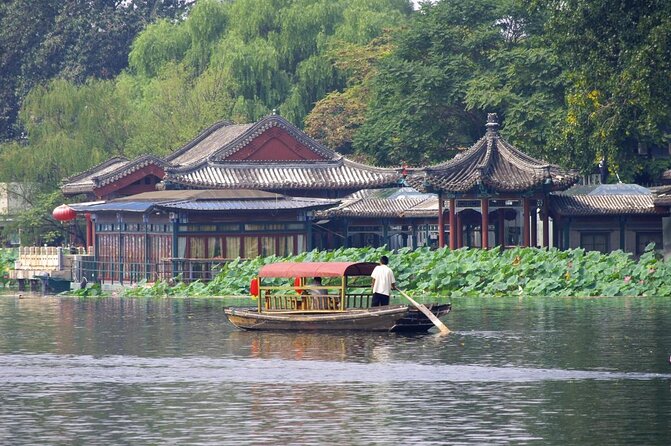
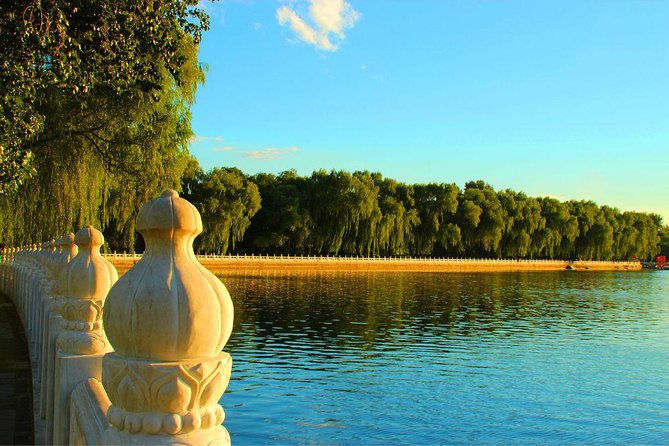
Before you even hit the big named mansions, you’re set up to look in the right direction. The early part of the walk focuses on the Shichahai area—Lotus Lane with its local shopfront feel and the calm presence of Huoshen Temple, described as a tranquil ancient shrine.
This first segment is a sneaky win. When you start here, you’re not immediately thrown into palace-scale architecture. You get oriented to the texture of old Beijing first: narrow streets, courtyard walls, and the sense that the lake isn’t just a view—it shapes the neighborhood.
What to watch for: slow down on side streets. The point isn’t only the main road. It’s noticing where the alley turns and how the street edge holds shop life.
Outside the Bell and Drum Towers: Central Axis Without the Crush
En route, you stop to admire the Bell and Drum Towers from the outside. These towers sit on Beijing’s Central Axis, a UNESCO World Heritage Site tied to how the city used to mark the day with ritual timekeeping.
This is a smart move for most people. Full Central Axis tourism can become a photo sprint. Here, you get the landmark connection—so you understand the larger city plan—while still keeping the day focused on hutong life.
If you’re the type who likes context, this is one of those moments that pays off later, because it frames why courtyard cities and imperial infrastructure existed side by side.
Prince Gong’s Mansion (Gong Wang Fu): Courtyards That Explain Qing Power
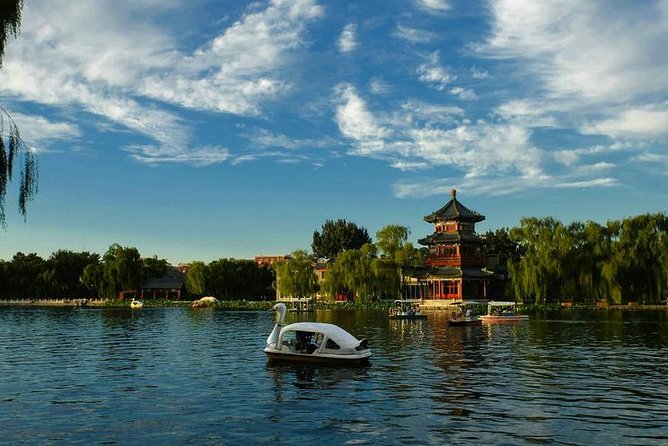
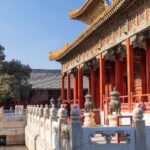
Next comes Prince Gong’s Mansion, billed as the largest and best-preserved Qing-dynasty noble residence. It’s also often described with the idea that it tells a lot about Qing-era history—partly because it’s not just a single building. It’s a whole estate layout with a hierarchy you can feel in the way courtyards and halls connect.
The tour includes about an hour here, plus your guide’s framing so the carvings and architectural details don’t feel like random decoration.
Practical expectations:
- Expect a lot of walking inside the complex.
- Bring patience for photo timing; the courtyards are very popular.
- If you’re sensitive to crowds, it’s still likely calmer than the major headline lines, but you’ll want to stay flexible.
Important note: during peak tourist seasons, Prince Gong’s Mansion may require advance reservation. The tour plans for this. If entry doesn’t work, you’ll be rerouted to the Drum Tower (Gulou) or another nearby scenic option so your itinerary doesn’t collapse into a short walk.
Soong Ching-ling’s Former Residence: A Garden Estate With Meaning
After the imperial-scale mansion, the mood shifts at Soong Ching-ling’s Former Residence—the former home of China’s state honorary president. This stop is described as a serene garden estate that was once a royal garden of the Ming and Qing dynasties.
What I like about this placement on the route is contrast. You get formal noble grandeur first, then you slow down into a quieter, more reflective space. The gardens and buildings here aren’t just pretty for photos. They feel designed for calmer movement and pauses.
You’ll have about an hour, and that’s usually the right amount of time for a site like this: long enough to appreciate layout and atmosphere, not so long that you start zoning out.
Yinding Bridge: The White Marble View Stop You’ll Actually Remember
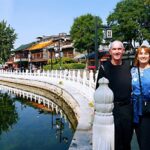
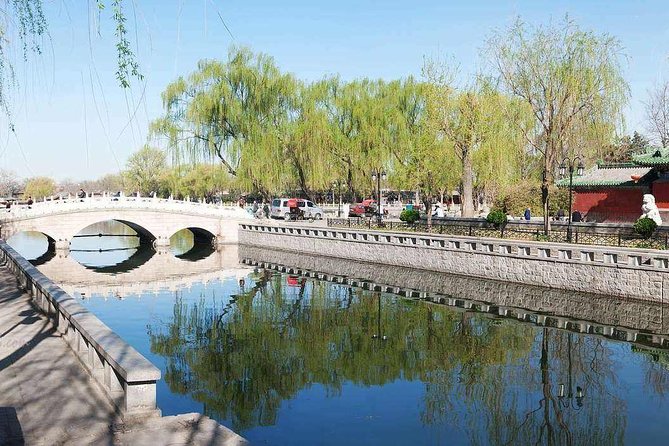
You’ll pass by Yinding Bridge, a white marble bridge shaped like an inverted silver ingot. It’s tied to the old “Eight Scenic Spots of Yanjing,” with the idea that Emperor Qianlong admired the sunset over the waters from this kind of vantage point.
This isn’t a long stop. It’s a pause. But it’s one of those details that makes the day feel specific to Beijing rather than generic old-town strolling.
If you’re taking photos, watch the light. Bridge views look best when you’re not rushing and when the water isn’t fully backlit.
Yandaixie Street: 232 Meters of Old Beijing Pedestrian Life
The tour then moves to Yandaixie Street, a 232-meter ancient alleyway named among China’s top historical and cultural streets. The layout is often described as shaped like a tobacco pipe, and historically it served as an upscale commercial area for nobles.
This stop works for two kinds of travelers:
- If you love street texture, you’ll enjoy the feel of an old commercial lane rather than just a museum corridor.
- If you like design history, the “tobacco pipe” layout is a neat clue about how the street’s proportions guided movement and activity.
Expect it to be shorter than the mansion stops. That’s fine—Yandaixie is more about atmosphere and orientation than marathon sightseeing.
The Hutong Stroll: How to Read the Neighborhood
Before the rickshaw ride, you take a leisurely walk through the hutongs—narrow alleys formed by the traditional siheyuan courtyard-house layout.
This is the part that makes the rickshaw ride worth it. If you only did the ride, you’d notice streets. If you also do this short stroll, you start to understand street logic: where people move, how courtyards sit behind walls, and how the alley network keeps life connected.
A good guide turns these alleys from scenery into a map. This is where Mike-style storytelling tends to land—making you feel like you’re not just visiting, you’re learning how the city is built.
20 Minutes by Rickshaw Through Houhai Back Lakes
Then comes the showpiece movement: about a 20-minute rickshaw ride through the Houhai back lanes. You glide past siheyuan and ancient alleyways, and you get a “real local transport” feeling without spending half the day in a vehicle.
The timing is deliberate. It’s short enough to stay fun, but long enough that you’ll feel the speed difference between walking and transport in tight lanes.
A couple of tips:
- Dress for weather. The tour says it operates in all weather, so you’ll be outdoors during parts of the day.
- Plan on some bumps. This is part of the hutong experience. Treat it like a slow roll, not a city bus ride.
Logistics That Matter: Pickup, No Drop-Off, and Ticket Chances
Here’s how the logistics usually shape your comfort level:
- Pickup is included for hotels within the 3rd ring road. If your hotel is outside that zone, you may need to confirm how pickup works.
- The tour includes transport one-way to Shichahai Lake. After the tour, drop-off is not included, so you’ll plan your own ride back.
- It’s a private tour, meaning only your group participates, which makes pacing easier and explanations more tailored.
- You’ll receive a mobile ticket, and you get confirmation at booking time.
The biggest moving variable is still Prince Gong’s Mansion entry. Since it can require reservation, peak times can change the schedule. The tour’s backup plan is the Drum Tower or another nearby scenic spot, which is reassuring if you’re visiting during a busy season.
Who This Tour Suits Best
This one fits best if you:
- Want hutong atmosphere without planning your own route.
- Like guides who explain what you’re seeing, not just where to stand for photos.
- Prefer a mix of architecture (Prince Gong), reflective garden space (Soong Ching-ling), and street-life alleys (Yandaixie + hutong lanes).
- Are okay with walking plus one rickshaw ride, all within about 3 to 4 hours.
If you’re the type who wants a strict lineup of the most famous sites only, you might find parts of this tour feel more “neighborhood” than “headline.” If you’re after Beijing’s daily texture, you’ll be in the right place.
Should You Book This Houhai Hutong Tour?
Book it if you want a guided hutong experience around Shichahai that connects major historic sites with the alley streets between them. The best reason to choose this is the combination of included entrance fees, a private guide, and a rickshaw segment that doesn’t overstay its welcome.
Skip it only if you strongly need Prince Gong’s Mansion at all costs and you’re traveling during peak season with no flexibility. The backup visit helps, but it’s still not the same as locking in the mansion time you planned.
If your goal is to understand how old Beijing feels on foot and by rickshaw—and to leave with better context than you started—this is a solid choice.
FAQ
How long is the Houhai Hutong Tour?
It runs about 3 to 4 hours.
Is hotel pickup included?
Yes. Hotel pickup is included for hotels within the 3rd ring road.
Where does the tour take you?
The route centers on Shichahai, including Prince Gong’s Mansion, Soong Ching-ling’s Former Residence, Yinding Bridge, Yandaixie Street, and a rickshaw ride through Houhai back lanes.
Is this a private tour?
Yes. It’s a private tour/activity, and only your group participates.
How long is the rickshaw ride?
The rickshaw ride is about 20 minutes through the Houhai back lanes.
Are entrance fees included?
Yes. Entrance fees are included for Prince Gong’s Mansion and Songqingling Residence (Soong Ching-ling’s Former Residence).
What else do you see besides the two residences?
You’ll have a stop to admire the Bell and Drum Towers from the outside, you’ll pass by Yinding Bridge, and you’ll visit Yandaixie Street. The tour also includes a stroll through hutongs.
Is food and drinks included?
No. Food and drinks are not included.
What if Prince Gong’s Mansion tickets are unavailable?
During peak seasons, entry may require advance reservation. If the tour can’t visit Prince Gong’s Mansion, they arrange a visit to the Drum Tower (Gulou) or another nearby scenic spot as an alternative.
Does the tour run in all weather?
Yes. The tour operates in all weather conditions, so you should dress appropriately.