REVIEW · BEIJING
Summer Palace Ticket with optional Guided Tour
Book on Viator →Operated by Catherine Lu Tours · Bookable on Viator
Four sights, two hours, one royal mood. The Summer Palace ticket with an optional guided tour is a practical way to see the site’s top highlights without getting lost in the scale, and the Long Corridor alone makes the visit feel special. I like that the tour keeps a tight route, so you spend time looking at details instead of hunting for them.
My other favorite part is the guided option, which can include pickup and a fixed meeting spot, making the day smoother. The one thing to watch: you’ll need passport details for ticketing, and the tour ticket doesn’t include the Tower of Buddhist Incense—so if you want it, plan to buy separately at the tower entrance.
In This Review
- Key Highlights to Know Before You Go
- Why the Summer Palace Works in Just Two Hours
- Price and What the $8 Ticket Really Includes
- Meeting Point Near Transit: Easier Than You Think
- Guided Tour Option vs. Ticket Only: Pick Based on Your Style
- Stop 1: Hall of Benevolence and Longevity (Built, Burned, Rebuilt)
- Stop 2: Kunming Lake (Where Most of the Park Lives)
- Stop 3: Hall of Happiness and Longevity (Cixi’s Everyday Palace)
- Stop 4: Long Corridor (728 Meters of 14,000+ Paintings)
- What to Expect From the Pace and Route
- Language, Group Setup, and Your Ticket QR Code
- Who This Tour Suits Best
- Should You Book the Summer Palace Ticket With Optional Guide?
- FAQ
- What is the duration of the Summer Palace experience?
- Does the $8 ticket include a guide?
- Is the ticket a combo ticket or an entrance-only ticket?
- Is pickup available?
- Where do we meet the group?
- How many people are in a group?
- Do I need to provide passport information?
- What should I know about the Tower of Buddhist Incense?
- What is the cancellation policy?
Key Highlights to Know Before You Go
- Small group size (max 15): easier pace and more chance to ask questions.
- Entrance ticket only, not a combo: you’re paying for entry, not bundled extras.
- Two-hour route: four major stops, with enough time to actually look.
- Mobile QR ticket: convenient if you want to travel light.
- Long Corridor details: 728 meters long, with four-season octagonal pavilions and 14,000+ painted scenes.
Why the Summer Palace Works in Just Two Hours
The Summer Palace is famous for a reason: it’s huge, scenic, and full of architectural clues that explain how power, art, and landscape design worked together. The trick is deciding what to see without turning the visit into a marathon. This tour’s short, focused circuit is built for that. You get a sequence of buildings and spaces that link the story from governance to living quarters to the showpiece promenade.
What makes this experience feel good for your day is that the stops aren’t random. They’re chosen so you can understand the site as a whole. You start with a major hall tied to administration and ceremonies, then move to the lake that dominates the grounds, and end with the Long Corridor, where the palace turns decoration into a kind of visual storytelling.
If you have limited time in Beijing, this format helps you leave with clear mental images: lake, hills, Cixi’s quarters, and the corridor’s painted world. And if you’re traveling with someone who dislikes slow, open-ended sightseeing, this route keeps things moving.
You can also read our reviews of more tours and experiences in Beijing


Price and What the $8 Ticket Really Includes
At about $8 per person, this is one of those deals that works because it separates entry from everything else. The ticket you book is an entrance ticket, not a combo ticket. That matters because it explains what you should expect on arrival: you’ll be paying for access to the palace area tied to your guided or self-guided visit, not bundled museum add-ons.
The optional guided tour adds value in a very practical way. A guide helps you understand why specific buildings look the way they do, why they were rebuilt, and what you should notice as you walk. If you’re the type who enjoys history but doesn’t want to spend an hour reading signs, the guided option is often the best use of your time.
Also keep in mind there are group discounts, and you can get a mobile ticket. Together, those details suggest this is meant to be an easy, budget-friendly way to experience the palace without complex planning.
Meeting Point Near Transit: Easier Than You Think
The meeting point is at East Gongmen Post And Telecommunication Office (Yi He Yuan Lu, Ha Dian Qu, 100091). It’s listed as near public transportation, which is exactly what you want when you’re trying to start your day without a taxi hunt.
The tour uses a fixed meeting location, so you’re not wandering around the entrance area waiting for someone to appear. You’ll also know the visit is capped at 15 travelers, which helps keep the logistics manageable.
One more practical detail: you’ll need the full info required for ticketing. That means full name, passport number, and birth date. If you’re traveling with friends or family, make sure you submit the exact passenger details on time so everyone’s ticket QR code lines up with the right person at the gate.
Guided Tour Option vs. Ticket Only: Pick Based on Your Style
You have two ways to do this:
- Ticket only: no guide, no pickup. You explore on your own once you have your entrance access.
- Guided tour option: a guide-led group visit, with pickup offered as part of that option.
If you like to move independently and you’re comfortable reading signs, the ticket-only option can work well. The Summer Palace is visually impressive even without commentary, and the route includes major landmarks you can recognize quickly.
If you want less stress and more meaning, choose the guided option. This is especially helpful for the first stop and the buildings tied to imperial administration. Those details are much easier to grasp when someone gives you the main storyline while you’re standing in the right place.
And here’s a detail worth noting: in one guide-led group, Jenny was specifically praised for being knowledgeable and charismatic. While you can’t count on any one guide name for every departure, the point is clear: when you do get a strong guide, the palace becomes far more than photo ops.
Stop 1: Hall of Benevolence and Longevity (Built, Burned, Rebuilt)
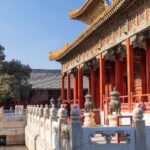
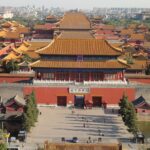
This first stop sets the tone because it ties beauty to power and public life. The Hall of Benevolence and Longevity has a documented timeline that makes your walk feel like more than scenery. It was built in 1750, burned down in 1860 by English and French troops, and was rebuilt in 1888 by Empress Dowager Cixi.
So when you stand there, you’re not just looking at an impressive hall. You’re seeing how a major seat of court life endured destruction and returned in a new form. The hall also served roles in government administration—hosting greetings and receiving foreign envoys—so it connects directly to how the Qing court interacted with the outside world.
Why it’s a smart first stop in a short itinerary: you need context early. By the time you move toward the lake and the residential-style spaces later, you’ll already understand that this palace was built for both ceremony and governance.
The only drawback is pacing. Because the visit is short overall, you won’t have a slow, museum-style experience in this hall. If you like long stops and lots of reading, arrive ready to focus and then move on when the group does.
You can also read our reviews of more guided tours in Beijing




Stop 2: Kunming Lake (Where Most of the Park Lives)
Next up is Kunming Lake, and it’s a big deal because it takes up about 75% of the park. Even if you don’t memorize every number, you’ll quickly feel the logic: this is a lake-centered palace environment, not a building-centered one.
What’s interesting is how the lake’s story connects to Beijing’s geography. Kunming Lake originally was much smaller, functioning as a water source near Beijing. Over time it became a man-made lake through expansions. That transformation helps explain why the Summer Palace reads as both natural and engineered.
Kunming Lake is where your senses catch up. You see reflections, open water views, and the way the palace’s major halls relate to the landscape. It’s also the part of the tour where you can get some of your best “setup” for photos—because the lake gives you a sense of scale for the rest of the grounds.
In a short guided route, this stop works best if you treat it like a visual reset. Pause, take in the breadth, and then keep walking with the lake in mind. That way, when you reach the Long Corridor later, you’ll understand why a long promenade matters in a palace designed around water and views.
Stop 3: Hall of Happiness and Longevity (Cixi’s Everyday Palace)
Then you move into the living-space side of the Summer Palace with the Hall of Happiness and Longevity. This is described as Empress Dowager Cixi’s living quarters, and that single fact changes how you see the complex.
Instead of thinking only about ceremonial halls, you’re now looking at a home base. The stop also has a strong location advantage: it faces Kunming Lake and backs onto Longevity Hill. That relationship matters. It means the architecture is arranged to frame views—lake front in front, hill behind—so daily life and political life share the same scenic stage.
In practical terms, this stop helps you understand why the Summer Palace feels so intentional. It isn’t just a pretty garden. It’s designed for a specific ruler’s movement through space: from water views to hill views, from outdoor walks to enclosed living areas.
The drawback for some people is that this stop is still part of a fast circuit. You might find yourself wanting more time to sit and absorb the layout. If you’re hoping for a long, leisurely exploration, plan to add extra time on your own after the guided group ends.
Stop 4: Long Corridor (728 Meters of 14,000+ Paintings)
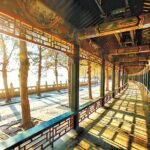
The final standout is the Long Corridor, and it’s one of those places where the scale sounds unbelievable until you’re actually walking it. The corridor is 728 meters long and features four octagonal gazebos representing the four seasons. That seasonal design turns a walkway into a structured experience—you’re not just moving from one building to another.
Then there are the paintings. The description notes over 14,000 paintings on the beams and ceilings, depicting scenes. Even without studying every detail, the density of artwork is what hits you. It’s like the palace gave the corridor a job: keep your eyes busy and reward attention while you move.
Why this stop is included at the end: by the time you reach it, you’ve already seen governance, landscape, and Cixi’s living area. Now the palace shifts to spectacle. The Long Corridor is where decoration becomes narrative, so you finish with something that feels distinctly Summer Palace rather than “another impressive palace hall.”
Practical tip: because the corridor is long, don’t treat it like a single photo line. Pause at a gazebo, look up, and then keep going. That helps you avoid the common problem of getting halfway through and realizing you missed the best ceiling details.
One more important note: the Tower of Buddhist Incense is not included in this ticket format. If you want it, you can purchase a separate, inexpensive ticket at the tower’s entrance. Build that choice into your own timing.
What to Expect From the Pace and Route
This experience runs for about 2 hours and is designed around four stops, each with an estimated time window. That means you’ll spend enough time to see what matters, but not enough time to drift.
A helpful way to think about it: you’re doing a “greatest hits” route. The palace is too large for a complete first-time visit in two hours. So the value here is clarity. You’ll leave knowing which parts were most important and why.
Because the tour has a maximum of 15 travelers, the pace usually stays manageable. You also get a fixed meeting point and a group flow, which helps if you’re not feeling confident with Beijing transit or entrance procedures.
If you’re sensitive to crowds, go in expecting them. The Summer Palace is popular. A small group tour can make crowds feel less chaotic because someone’s managing the route and timing.
Language, Group Setup, and Your Ticket QR Code
You can request a language when booking. The requirement is simple: note your language request during your purchase. That’s your cue to set expectations early. If you don’t request a language, you should plan for whatever language the group is set up with.
Ticketing is done through a mobile ticket (QR code). Confirmation comes at booking, and in one smooth experience, the QR code was received a few days before the visit. That’s great for planning because you’re not waiting until the last minute to confirm entry.
One more admin point that matters in real life: you’ll need to provide passenger details—full name, passport number, and birth date—and they suggest sending a scanned copy of the passport front page for ticketing. It’s not romantic, but it’s what keeps the entry process clean.
Who This Tour Suits Best
This tour format is a strong fit if you:
- want a budget-friendly entrance without committing to a full-day palace marathon
- like clear structure and a short route with big payoffs
- prefer a guide if you want context for rebuilding stories and key palace functions
- are traveling in a small group and appreciate manageable group size
It’s also a good option if you’re pairing the Summer Palace with other Beijing sites later the same day. The 2-hour duration keeps your schedule from getting tangled.
If you’re the type who wants to wander every side path and sit for long breaks, you might feel rushed. In that case, ticket only may still be fine, but you’ll need to choose your own pacing and possibly add extra time to fully enjoy the grounds.
Should You Book the Summer Palace Ticket With Optional Guide?
I’d book it if you want the smartest first look at the Summer Palace. The route hits the core elements: a major hall with a clear rebuilt-and-repurposed story, a lake that dominates the park, Cixi’s living complex, and the Long Corridor with its serious amount of artwork. For the money, that’s a lot of sightseeing clarity.
Choose the guided tour if you value context and hate the stress of figuring things out on the fly. Choose ticket only if you’re confident navigating and you’d rather spend your time reading on your own.
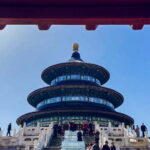
My one caution for your decision: don’t assume you’re seeing everything. The Long Corridor is included, but the Tower of Buddhist Incense isn’t part of this ticket. If that tower is on your must-see list, plan for an extra stop using a separate ticket.
If you’re aiming for an efficient, meaningful visit without spending a whole day, this is a very practical way to do it.
FAQ
What is the duration of the Summer Palace experience?
It’s listed as about 2 hours (approx.).
Does the $8 ticket include a guide?
No. If you book only the entrance ticket, it means no guide service and no pickup.
Is the ticket a combo ticket or an entrance-only ticket?
It’s an entrance ticket only, not a combo ticket.
Is pickup available?
Pickup is offered with the guided tour option. Pickup is not included if you choose ticket only.
Where do we meet the group?
The meeting point is East Gongmen Post And Telecommunication Office at Yi He Yuan Lu, Ha Dian Qu, Beijing (100091).
How many people are in a group?
The tour/activity has a maximum of 15 travelers.
Do I need to provide passport information?
Yes. You need participants’ full name, passport number, and birth date for ticket booking, and they suggest sending a scanned copy of the passport front page.
What should I know about the Tower of Buddhist Incense?
It is not included with this ticket. You can purchase a separate, inexpensive ticket at the tower’s entrance.
What is the cancellation policy?
You can cancel for a full refund up to 24 hours before the experience starts. Changes within 24 hours aren’t accepted.