REVIEW · BEIJING
Discover Old Beijing: Hutong Walking Tour & Calligraphy
Book on GetYourGuide →Operated by AUTHENTIC TRAVEL CHINA · Bookable on GetYourGuide
Beijing changes fast, but this walk keeps you grounded in old streets. I like two things most: the chance to make your own Chinese calligraphy and the way you move through Hutongs with real neighborhood stories.
You’ll start at the Huguang area, then wind through courtyards, a snack stop, and old-school streets before finishing along the big historic pedestrian zone. One thing to watch: the pricing can feel steep if you expected a pure tip-based free walking tour style.
The best part is the human scale. You’re not just looking at buildings; you’re hearing how people lived, how the neighborhoods held on, and what changed as Beijing modernized. Guides like Carrie and Shery focus on how hutongs work as a whole system, not just a pretty maze.
Plan for logistics. The meeting place is easy once you know it, but the metro station can be chaotic, and arriving late can mean missing the start. If you’re worried about that, show up early and take the tour at a relaxed walking pace.
In This Review
- Key Points You’ll Care About
- Where the Tour Starts (and How to Find the Yellow Umbrella)
- Huguang Guild Opera Theatre: Your 30 Minutes of Beijing Context
- Hutong Walking: Narrow Lanes, Everyday Details, and Real Stories
- The Courtyard Secret Stop: Why It Feels Different From a Street View
- Yangmeizhu Byway and Dashilar Areas: Street Culture You Can Actually Taste
- Daguanlou Cinema: Beijing’s Film-Era Story in 20 Minutes
- Qianmen Pedestrian Street and Near-By Landmark Views
- Calligraphy Studio Stop: Make It Yourself, Take It Home
- Snack Breaks, Welcome Gifts, and the “Meet People” Factor
- Price and Value: Is $25 a Smart Spend?
- Who This Tour Suits Best
- Should You Book This Hutong Walk with Calligraphy?
- FAQ
- How long is the Discover Old Beijing Hutong Walking Tour?
- What language is the tour guide?
- Where do I meet the guide?
- What if I use Google Maps and it shows the wrong location?
- Is there a calligraphy workshop, and do I take something home?
- Do I get any snacks on the tour?
- What’s included besides the guide?
- Is the tour price $25 per person?
- Can I cancel and get a refund?
- Can I reserve now and pay later?
Key Points You’ll Care About
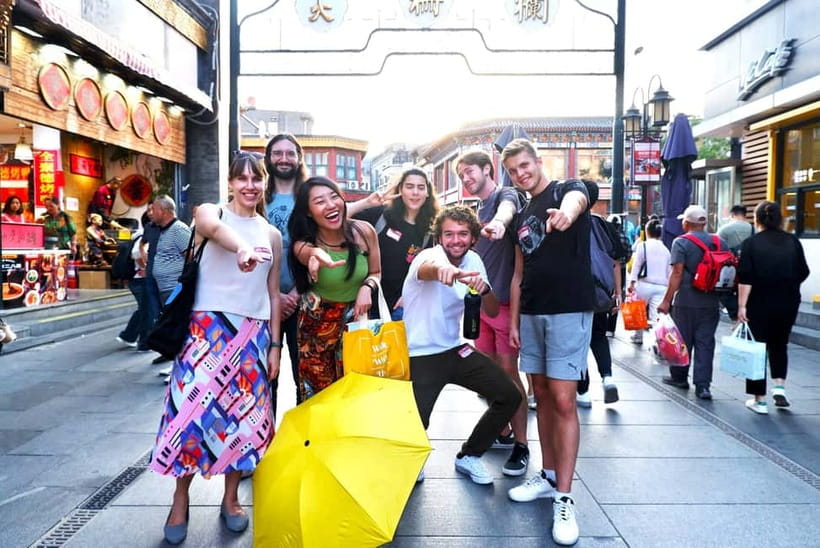
- Calligraphy you create and take home as a souvenir, made during a dedicated studio stop
- Hutong courtyard visit inside an authentic-looking courtyard space, not just a photo pass
- Snack breaks built into the walk, so you taste street food along the way
- Old streets plus modern Beijing connections explained with stories from locals who lived there
- Daguanlou Cinema and other classic downtown spots give you a different slice of Beijing than the big sights
Where the Tour Starts (and How to Find the Yellow Umbrella)
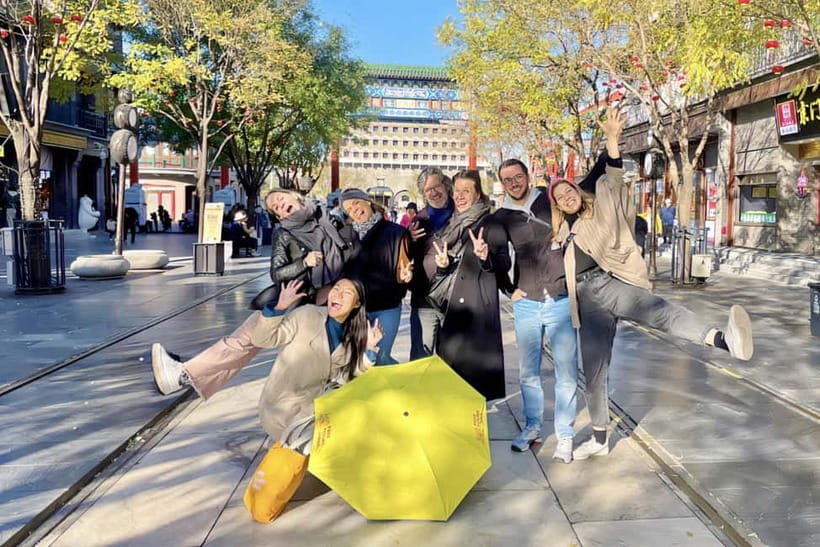
You’ll meet at Hufangqiao Metro Station (Line 7), Exit D (South-West Exit). After you exit, head straight to the main road, turn right, then walk about 60 meters east to the green space at the intersection.
Look for the yellow umbrella. If you’re getting directions on your phone, skip them; Google Maps can be unreliable in China, and the tour expects you to follow the written directions instead. For taxis, the reference point is the corner of Hufang Road and Luomashi Avenue, by the Huguang Guild Opera Theatre.
One practical tip: arrive 5–10 minutes early. The guide waits up to 20 minutes at the meeting point for the opening speech, but they can’t slow things down for late arrivals.
You can also read our reviews of more walking tours in Beijing


Huguang Guild Opera Theatre: Your 30 Minutes of Beijing Context
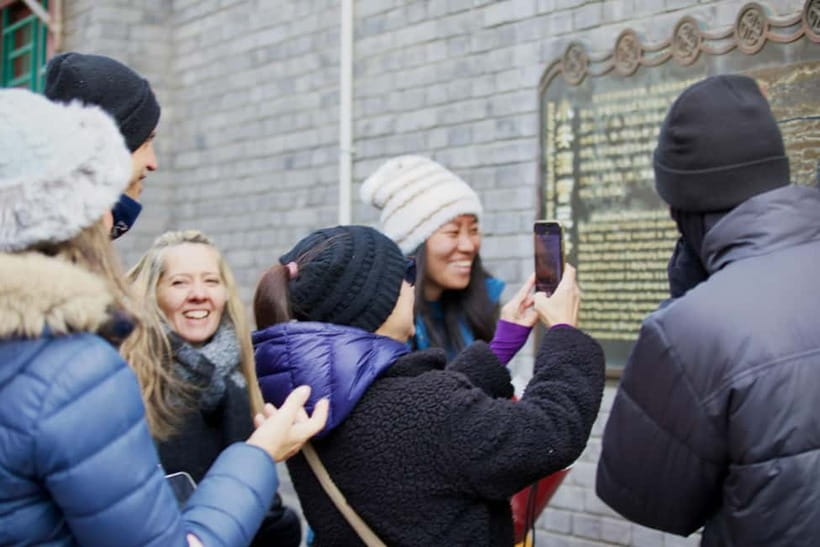
The tour begins at 北京湖广会馆 (Huguang Guild Opera Theatre), and that first block sets the tone. You get a short guided introduction that helps you read what comes next: why these old city spaces matter, and how culture and community were organized in earlier Beijing.
Even if opera isn’t your thing, this stop gives you something useful. It frames the hutong neighborhoods you’ll walk into as living areas tied to trades, families, and local institutions, not as museum scenery.
This is also where you get the energy for the rest of the walk. You’ll be with your English-speaking guide and the group, and the start feels like a “meet the neighborhood” moment rather than a long lecture.
Hutong Walking: Narrow Lanes, Everyday Details, and Real Stories
After the theatre introduction, the tour shifts into the hutongs—the compact lanes that shaped daily life in old Beijing. You’ll get about 30 minutes of guided hutong walking, with the kind of street-level storytelling that makes the city click.
One of the most memorable parts is that you’re not only seeing architecture. You’re hearing how people survived, adapted, and stayed connected even as their surroundings changed. Guides describe what it felt like to live there, how courtyards functioned, and why some streets matter more than others.
You’ll also pass highlights like the narrowest hutong and a local antique shopping street style area. This is the part where you start noticing the small cues: doorway layouts, lane width, and how foot traffic flows. It’s the difference between seeing Beijing and understanding how it moves.
If you’re into photography, pay attention here. The hutong lanes naturally create frames for photos, and you’ll have enough time to pause when your guide tells you to.
The Courtyard Secret Stop: Why It Feels Different From a Street View
A standout moment is the secret stop, where you visit an authentic-feeling Hutong courtyard. It lasts around 20 minutes, which is short on paper but satisfying in reality because courtyards aren’t just pretty spaces. They show you how people organized daily life around shared walls, light, and practical movement.
This is the stop that makes the walking tour worth doing. From the outside, hutongs can look like corridors between walls. Inside a courtyard, you see the scale and function: where people used space, how rooms connect, and why privacy and community had to coexist.
If you want a “wow” moment that isn’t a distant landmark, this is it. The best approach is simple: walk slowly, take a few photos if you’re allowed, and listen while your guide explains what you’re looking at.
Yangmeizhu Byway and Dashilar Areas: Street Culture You Can Actually Taste
Next you move through downtown local-life zones, including the Yangmeizhu Byway and Dashilan areas. These sections are guided for a total of about 60 minutes, split between street context and neighborhood atmosphere.
What I like about this part is that it connects the cultural dots. Hutongs are one layer, but Beijing also runs on street markets, shopfronts, and side streets where daily routine happens.
You’ll get a snack break at a local hutong street market. This matters because food turns a walk into an experience. Instead of treating the city like a sightseeing checklist, you’re tasting small bites as you go, which makes the neighborhoods feel alive.
If you’re picky, no stress. The goal here is to keep the pace comfortable for a 3.5-hour tour, not to turn lunch into a full event. Bring cash if you want extra snacks beyond what’s included, since the tour includes snack breaks but doesn’t spell out an exact menu.



Daguanlou Cinema: Beijing’s Film-Era Story in 20 Minutes
Then comes Daguanlou Cinema, guided for about 20 minutes. This is one of the tour highlights because it points at a side of Beijing that most first-timers skip: how the city shaped entertainment, not only imperial power or modern politics.
You’ll hear context that links the place to the bigger story of China’s cinema and how downtown cultural spaces evolved. Even if you don’t know Beijing’s film history already, this stop gives you enough background to appreciate why people would care about this particular venue.
It’s also a nice mental reset. After lanes and markets, a film-related stop feels like a different door into the same city.
Qianmen Pedestrian Street and Near-By Landmark Views
As you head toward Qianmen Pedestrian Street (about 40 minutes of guided time), the walk opens up. Qianmen is a classic “walk-and-look” area, and it’s where old Beijing becomes more recognizable to most visitors.
From here, the tour is designed to cover major nearby highlights like Zhengyang Gate & Arrow Tower and a view from outside Tiananmen Square. You’re not going inside the big-ticket sites here, but you do get the perspective that helps you connect the downtown blocks to the political-symbol landmarks.
This is a good moment to slow down and think. If hutongs taught you how daily life worked, Qianmen and the near-by landmark views help you understand how Beijing’s public face built itself over time.
Calligraphy Studio Stop: Make It Yourself, Take It Home
One of the best parts of this tour is the dedicated calligraphy studio experience. It’s set up as a special surprise stop, and the goal is straightforward: create your own Chinese calligraphy artwork and take it home as a lifelong memory.
This is not just a demo where you watch someone write. The structure is built around you making the artwork. Even if your Chinese is basic, calligraphy works as a visual souvenir because it gives the city a personal connection.
Practical advice: bring your patience for a short studio session. Your guide will help set the tone and keep things moving so you still fit everything into the full 3.5-hour route.
Also, be ready for the fun social side. You’ll see other travelers trying the strokes, asking questions, and comparing results after the session. It’s a natural icebreaker.
Snack Breaks, Welcome Gifts, and the “Meet People” Factor
This tour includes welcome gifts and a China survival guide. Those little add-ons sound minor until you’re actually in Beijing and you realize how much you’ll appreciate a few local tips.
You’ll also take snack breaks during the walk. For many visitors, this is what keeps a city tour from feeling like nonstop standing around. It gives you a chance to recharge and chat with your guide and fellow walkers.
The tour also encourages meeting other travelers, so it’s a good choice if you’re in a solo trip mode or you just want a friendly group rhythm.
Price and Value: Is $25 a Smart Spend?
At $25 per person for about 3.5 hours, this tour isn’t competing with bargain museum entry. It’s priced like an experience tour that includes a real guide, multiple guided segments, snack breaks, and a hands-on activity.
Here’s how I’d think about value:
- You’re paying for a guided walk that stitches together hutongs, downtown streets, and landmark context.
- You’re getting snacks included, which matters when you’re out for hours.
- You’re getting calligraphy, and you take your work home.
One caution: a few people have raised that the tour can feel expensive if they expected a pure tip-based free walking tour style. If you come in thinking it’s basically free with an optional tip, adjust your expectations. If you come in wanting structure plus a take-home activity, the price makes more sense.
Who This Tour Suits Best
This works especially well if you:
- Want a guided hutong experience without spending hours planning routes
- Like cultural context more than big monument-only sightseeing
- Want an activity you can physically take home, not just photos
- Prefer walking tours with short guided chapters rather than one long lecture
It might feel less exciting if you’re looking for a high-energy, action-heavy tour. One guide can only do so much in 3.5 hours, and some people want more drama in the storytelling. If that’s you, think of this as a thoughtful city walk with moments of surprise.
Should You Book This Hutong Walk with Calligraphy?
I’d book it if you want Beijing in layers: hutongs for how people lived, downtown streets for how the city presents itself, and calligraphy for something personal you can keep. It’s also a good fit if you want a guided experience that handles the “where do I go next” problem for you.
Skip it only if you strongly dislike walking, or if you expect a purely casual tip-based free tour vibe. Also, if you hate studio-style activities at all, the calligraphy stop is the core attraction here, so make sure it’s your kind of souvenir.
If you’re on the fence, here’s my simple test: would you be happy paying for a guided walk plus a take-home workshop? If yes, this tour is a solid choice.
FAQ
How long is the Discover Old Beijing Hutong Walking Tour?
It lasts about 3.5 hours.
What language is the tour guide?
The tour is guided in English.
Where do I meet the guide?
Meet at Hufangqiao Metro Station (Line 7), Exit D. After exiting, go to the main road, turn right, walk about 60 meters east to the green space at the intersection. Look for the yellow umbrella.
What if I use Google Maps and it shows the wrong location?
Google Maps doesn’t work reliably in China for this area, so you should disregard the map pin and follow the written meeting instructions instead.
Is there a calligraphy workshop, and do I take something home?
Yes. You’ll visit a calligraphy studio where you create your own Chinese calligraphy artwork and take it home.
Do I get any snacks on the tour?
Yes. There are snack breaks included, including street food and drinks along the way.
What’s included besides the guide?
The tour includes local English-speaking guide services, welcome gifts, and a China survival guide.
Is the tour price $25 per person?
Yes, the listed price is $25 per person.
Can I cancel and get a refund?
You can cancel up to 24 hours in advance for a full refund.
Can I reserve now and pay later?
Yes. You can reserve now & pay later.