REVIEW · BEIJING
Beijing Night Walking Tour
Book on Viator →Operated by Roy Li Tours Beijing · Bookable on Viator
Night lights change the whole city. This Beijing Night Walking Tour is built for an easy, guided stroll through the landmarks you’ve probably only seen in daylight—then connects them to street-level life, with an English guide along for the story. I like that the route focuses on classic spots you can actually walk up to, not just stare at from a bus.
Two highlights for me are the chance to get photo time at Zhengyangmen Gate and the way the guide helps you understand what you’re seeing as part of how people live and move through Beijing at night. One thing to consider: you’ll need to bring your passport for the tour, and you’ll meet at Zhushikou via Metro, so plan to arrive a bit early.
In This Review
- Key Highlights (What Makes This Tour Worth Your Time)
- How the 7:00 pm Route Connects Tiananmen, Qianmen, and Dashila
- Where the tour ends (and why it matters)
- Finding Roy Li at Zhushikou Station (and Why Your Passport Matters)
- Small group size means more attention
- Tiananmen Square After Dark: Photo Angles and Context You Can Use
- A helpful mindset for this stop
- Qianmen Street and Zhengyangmen Gate: Street-Level Beijing You Can Actually Touch
- What to do with this time
- Xian Yu Kou Food Street Archway: A Quick Lesson in Neighborhood Energy
- Note on food on this tour
- Dashila Street and the National Theatre of China: From Old Commerce to Modern Culture
- Why this pairing makes sense
- Price and Value: What $70 Buys You in the Real World
- What’s not included (so you don’t get surprised)
- Small Group Walking, Metro Access, and What to Bring
- Service animals
- Should You Book This Beijing Night Walking Tour?
- FAQ
- How much does the Beijing Night Walking Tour cost?
- What’s the duration of the tour?
- What time does the tour start?
- Where do I meet the guide?
- How do I find the guide?
- What’s included in the tour price?
- Do I need to bring a passport?
- Is food and drink included?
- What’s the cancellation policy?
Key Highlights (What Makes This Tour Worth Your Time)
- English guide, Roy Li Tours Beijing style: clear explanations built around what you’re walking past.
- Night-photo stop at Zhengyangmen Gate (Front Gate) during the Qianmen stretch.
- Food street context near Xian Yu Kou: you’ll see the archway area and learn how that neighborhood functions.
- Dashila Street walking segment: old commercial street energy, handled on foot.
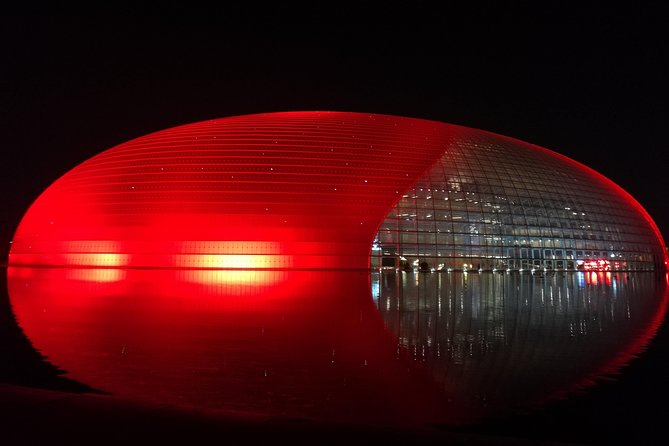
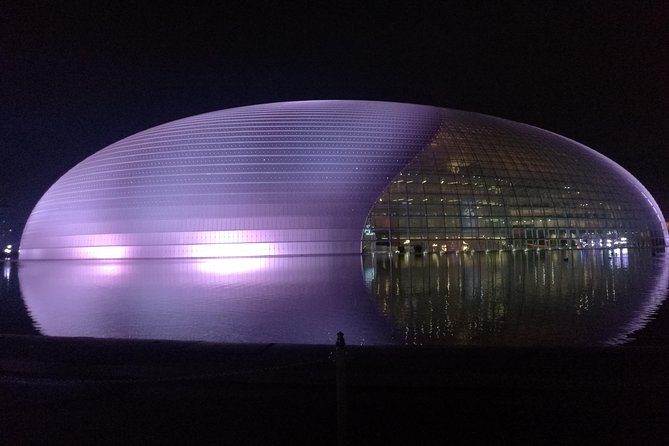
- National Theatre of China (NTC) stop in the route, tying culture to the city center.
- Small group cap (max 15): more room for questions and a calmer pace than big coach tours.
How the 7:00 pm Route Connects Tiananmen, Qianmen, and Dashila
This tour runs at 7:00 pm, which is a smart choice for first-time visitors. You’re in the heart of Beijing when the city feels more “lived in” than “monument poster,” and the lighting makes wide plazas and gates easier to frame for photos.
The overall plan links the big, formal scale of Tiananmen Square with the more human-scale streets around Qianmen Street and beyond. Instead of treating each stop like a separate sightseeing item, the route flows so you can get a sense of how Beijing’s central areas connect—visually and in daily movement.
Expect a walking-focused experience that lasts around 1 hour 30 minutes to 2 hours. That’s long enough to feel like you saw a set of meaningful places, but short enough that you’re not stuck in one long grind after a full day.
You can also read our reviews of more walking tours in Beijing


Where the tour ends (and why it matters)
You’ll finish back by Tiananmen Square前门 area, and the tour states it will end at Metro Line 1 Tian’anmen Dong station. That’s helpful for your planning because it gives you a clean exit point without guessing how to get out at night.
Finding Roy Li at Zhushikou Station (and Why Your Passport Matters)
Logistics are straightforward, but don’t treat them casually. You meet your guide by Metro line 7 or 8 at Zhushikou Station, Exit A, and you should look for the guide holding a sign/card with the name Roy Li.
There’s also a very specific item you must bring: your passport is needed during the tour. That’s not the kind of thing you want to realize at the meeting point, so pack it where you can reach it quickly.
Another practical detail: the tour uses a mobile ticket, so you won’t be hunting for printed passes. Keep your phone charged, especially at night, and make sure your ticket works before you head out.
Small group size means more attention
The group cap is 15 travelers, which usually translates to a better conversation. You’re more likely to get your questions answered and keep a steady pace without being swept along like a herd.
Tiananmen Square After Dark: Photo Angles and Context You Can Use
Tiananmen Square is the headliner. The tour lists it as the first named stop, so you’ll anchor the walk with the area that defines Beijing’s center in most visitors’ minds.
Night adds a different feel. It’s easier to notice the geometry of the square and the contrast between the formal architecture and the moving city around it. You’ll also benefit from an English guide explaining what you’re looking at—especially the background behind what makes this space so significant.
You can also read our reviews of more evening experiences in Beijing





A helpful mindset for this stop
Don’t treat it like one quick photo-and-quit. Use it as your “orientation moment.” Once you understand the square’s role, the rest of the route (Qianmen streets, gates, and cultural stops) feels more connected instead of random.
Qianmen Street and Zhengyangmen Gate: Street-Level Beijing You Can Actually Touch
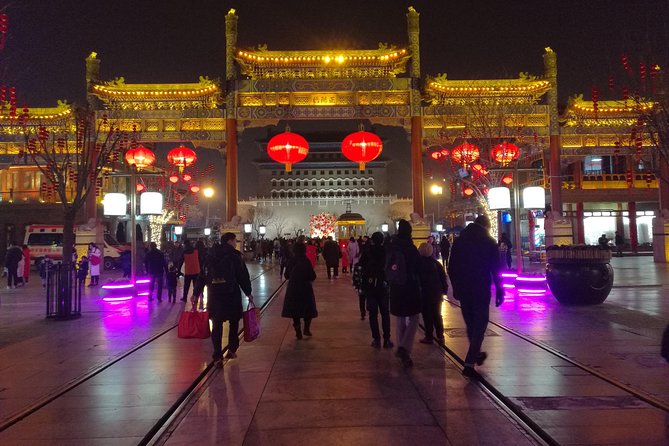
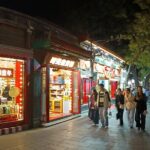
The walk then focuses on the Qianmen Street stretch. This is described as a famous pedestrian street for shopping and sightseeing, which is exactly why it works on a night tour: you get movement, faces, signage, and that “I’m in the center of things” feeling without needing a car.
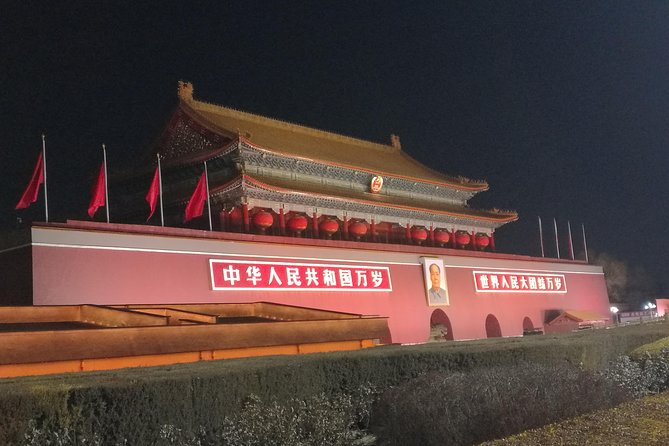
One of the best moments is the photo stop at Zhengyangmen Gate (Front Gate). A gate stop sounds simple, but it’s valuable because it gives you a concrete photo target and a landmark you can return to mentally later when you’re navigating on your own.
What to do with this time
If you like street photography, Qianmen is your area. If you’re more into history, it’s still useful because the guide can connect what you see—street layout, gate position, and commercial street placement—to why this area matters.
Keep in mind the tour is about walking and learning, not shopping time. If you want to buy souvenirs, you’ll probably need to do that before or after the tour, unless you’re okay with doing quick glances during the stroll.
Xian Yu Kou Food Street Archway: A Quick Lesson in Neighborhood Energy
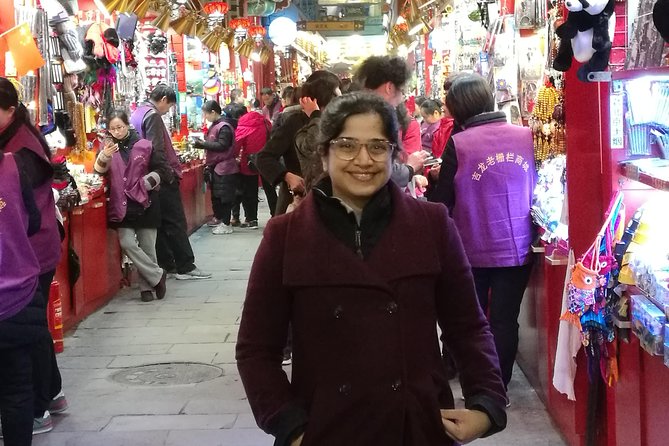
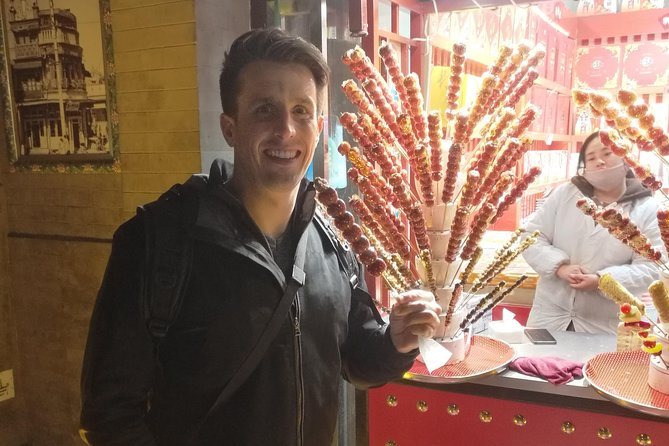
After Qianmen, you’ll see an archway area connected to Xian Yu Kou Food Street. The tour specifically calls it one of Beijing’s most famous food streets, and even if you don’t stop for a snack, the point is the neighborhood context.
Food streets are more than just places to eat. They’re where visitors and locals mix, where the city’s daily rhythm shows up in storefronts, crowds, and signage. Having a guide helps you read the scene faster—so you understand what you’re looking at instead of just guessing.
Note on food on this tour
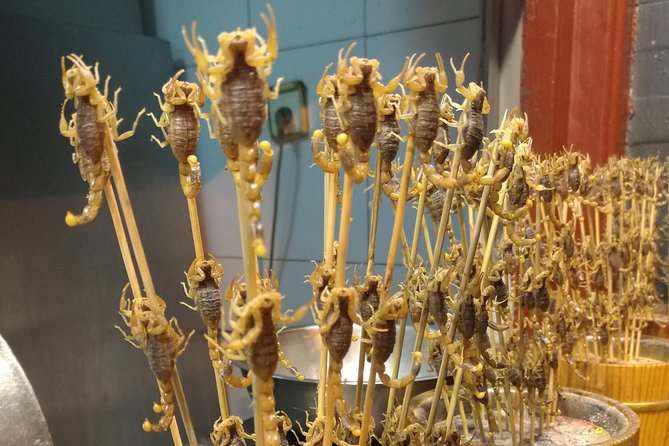
Food and drinks aren’t included. That’s fine, because it keeps the tour flexible, but it also means you should plan for hunger. If you want to eat, bring cash or plan to grab something nearby before you start—or after you finish.
Dashila Street and the National Theatre of China: From Old Commerce to Modern Culture
Next comes Dashila Street, described as one of the most ancient, famous, and distinctive commercial streets in Beijing. This is the part of the tour that feels like a living timeline. You’re walking through a street that’s meant for business and people-watching, not just monument gazing.
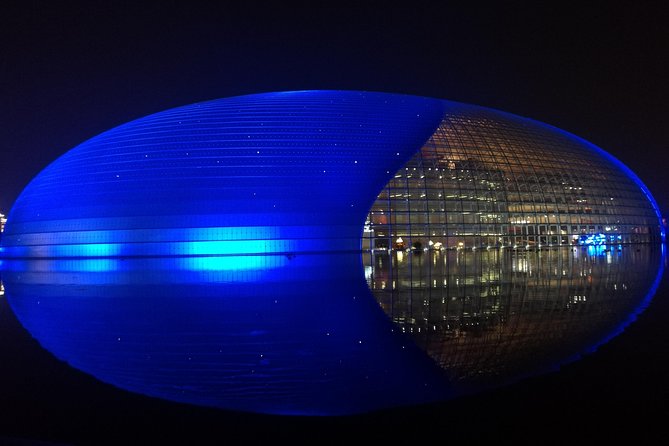
Then the route includes the National Theatre of China (NTC). The tour notes it’s affiliated with the Ministry of Culture and is a performing arts organization. Even if you’re not attending a show, it’s a useful stop because it shifts the story from “old street life” to “modern cultural Beijing.”
Why this pairing makes sense
Combining Dashila with the National Theatre gives you two sides of the same central-city coin. You see commerce and everyday street energy, then you see a major cultural institution tied to how the city presents itself.
It’s also a nice contrast for your photos: street lines and signage at one moment, then a more formal landmark feel at the next.
Price and Value: What $70 Buys You in the Real World
At $70 per person, the value mainly comes from the human part: an English guide who helps you connect the stops to meaning. You’re paying for translation, interpretation, and a route designed to make your evening easier—especially when you’re trying to see a lot without getting lost.
You’re also getting an efficient time block: about 1.5 to 2 hours. That’s a sweet spot in Beijing. You can fit it into a night program without losing half the evening to transit or extended detours.
What’s not included (so you don’t get surprised)
Food and drinks aren’t included, and tips for the guide aren’t included either. So treat the tour price as paying for the guiding experience and route, not for meals.
Small Group Walking, Metro Access, and What to Bring
This is a night walking tour with a cap of 15 travelers, near public transportation. That’s a good combo if you want something structured but not overcrowded.
You should expect to walk. The itinerary is built around street-to-street movement through central Beijing. Wear shoes you don’t mind in a busy pedestrian area, and bring a layer for night air.
Also plan your meet-up: the meeting point is Zhushikou East Street, and the guide is located via Zhushikou Station Exit A. If you’re arriving late, you may spend time searching, which defeats the point of a guided evening.
Service animals
Service animals are allowed, so if that applies to you, this tour doesn’t add friction.
Should You Book This Beijing Night Walking Tour?
Book it if you want a guided way to understand central Beijing at night, without spending your evening clicking through apps and trying to decode landmarks alone. I’d also recommend it if you like walking routes that connect famous sights—Tiananmen Square, Qianmen Street, Zhengyangmen Gate, Dashila Street, and the National Theatre of China—into one coherent evening.
Skip it or think twice if you’re not willing to bring your passport or if meeting via Metro at 7:00 pm stresses you out. And if you expect a food-focused night, remember food and drinks aren’t part of the tour price—you’ll need to plan snacks separately.
FAQ
How much does the Beijing Night Walking Tour cost?
It’s $70.00 per person.
What’s the duration of the tour?
The tour lasts about 1 hour 30 minutes to 2 hours.
What time does the tour start?
The start time is 7:00 pm.
Where do I meet the guide?
Meet at Zhushikou East Street and look for the guide at Zhushikou Station on Metro line 7 or 8, Exit A.
How do I find the guide?
The guide will be holding a sign/card with the name Roy Li.
What’s included in the tour price?
The tour includes an English guide.
Do I need to bring a passport?
Yes. The tour information states that a passport will be needed during the tour.
Is food and drink included?
No. Food and drinks are not included, and you should plan for your own snacks or dinner.
What’s the cancellation policy?
You can cancel for a full refund if you cancel at least 24 hours before the experience’s start time.
If you want, tell me your travel dates and where you’re staying, and I’ll suggest a simple plan for getting to Zhushikou by 7:00 pm and pairing the tour with dinner afterward.