REVIEW · BEIJING
Beijing: Yonghe Lama Temple Tickets with guide (optional)
Book on GetYourGuide →Operated by Chinatravelhelper · Bookable on GetYourGuide
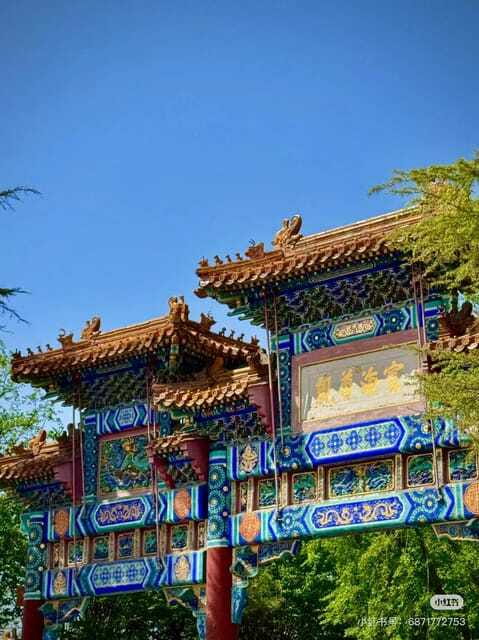
Big gates, calm incense, and a clear plan. A pre-booked ticket with an English-speaking guide makes Yonghegong Lama Temple an easy win in a busy city, and you can focus on the space instead of lining up for entry. I especially like that you get access to the full temple complex setup, including three archways and the main hall sequence.
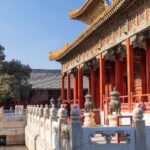
I also like the way the Tibetan Buddhism feeling blends into a classic Qing-era Beijing layout, from the courtyard rhythm to the major halls you’ll pass in order. One consideration: timing can be tight because stop-entry rules apply, and the experience is not suitable for wheelchair users, so plan your day with that in mind.
In This Review
- Key things I’d plan around
- Where Yonghegong Lama Temple fits into your Beijing day
- Price and what you’re really paying for
- What the pre-booked guided visit includes (and what it won’t)
- Walking the complex: from Zhaotai Gate to Ten Thousand Blessings
- Zhaotai Gate and the supporting towers
- Yonghe Gate as your next threshold
- The Grand Hall (Hall of Great Buddha)
- Yongyou Hall
- Hall of the Wheel of the Dharma
- Pavilion of Ten Thousand Blessings
- What makes Yonghegong special: Tibetan Buddhism meets Qing Beijing
- Timing tips: summer vs winter hours and the 16:00 stop rule
- What to expect from the English guide and small-group pace
- Rules on-site: simple things that prevent big headaches
- Who should book this Yonghegong guided ticket?
- Should you book this Yonghegong Lama Temple tour?
- FAQ
- Where is Yonghegong Lama Temple located?
- Which metro line should I take?
- What are the opening hours in summer and autumn?
- What are the opening hours in winter?
- Do I need anything to enter?
- Is alcohol allowed inside?
- Is there a guide, and what language do they speak?
- Is it wheelchair accessible?
Key things I’d plan around
- Pre-booked entry: skip on-the-spot ticket stress and use your time on-site well
- English live guide: get help interpreting what you’re looking at
- Clear route through named sights: Zhaotai Gate, Bell Tower, Drum Tower, Yonghe Gate, and the main halls
- Qing-era layout you can actually read: courtyards narrow from south to north; hall height rises
- Passport required: bring your passport or you may not be able to enter
Where Yonghegong Lama Temple fits into your Beijing day
Yonghegong Lama Temple sits in northeastern Beijing, on Yonghegong Street (No. 12 Yonghegong Street, Dongcheng District). If you’re staying anywhere central, it’s usually straightforward to reach by subway: get off at Yonghe Lama Temple station on Line 5.
The temple complex covers a big footprint—66,400 square meters—with a large internal maze-like layout (over 1,000 rooms). That matters because you’re not just popping in for one photo spot. You’re touring a whole religious compound, and your route naturally takes time as you move through gates, courtyards, and halls.
You’ll be most comfortable here if you treat it like a slow, guided walk. Give yourself breathing room between buildings, because the details work better when you’re not rushing.
You can also read our reviews of more tours and experiences in Beijing
Price and what you’re really paying for
The price is about $12 per person for a 1-day visit, and your ticket includes an information service fee. On paper, that looks simple. In practice, the value comes from three things you feel right away:
- You’re not gambling on the ticket desk. Pre-booking is the difference between arriving ready to go and losing time figuring out what’s available.
- You’re getting an English guide as part of the experience. When you’re standing in front of a complex religious site, having someone help connect the dots is worth more than just having entry.
- It’s set up as a small group. A smaller group usually keeps the pace manageable and helps you ask questions rather than just shuffle forward.
This is the kind of activity where the “how” matters as much as the “what.” A guided, pre-ticketed visit tends to make the hours feel productive.
What the pre-booked guided visit includes (and what it won’t)
Your package includes Yonghegong Lama Temple tickets plus an information service fee, and it comes with a live tour guide in English. There are also notes that it’s available as a small group.
You should plan your expectations around the fact that you’re entering a real working religious complex. That means there are boundaries on what you can do on-site:
- No alcohol and drugs
- No making fire
Also, bring your passport. The listing specifies passport is required for this activity, and that’s the one “bring this or don’t go” item that matters.
Walking the complex: from Zhaotai Gate to Ten Thousand Blessings
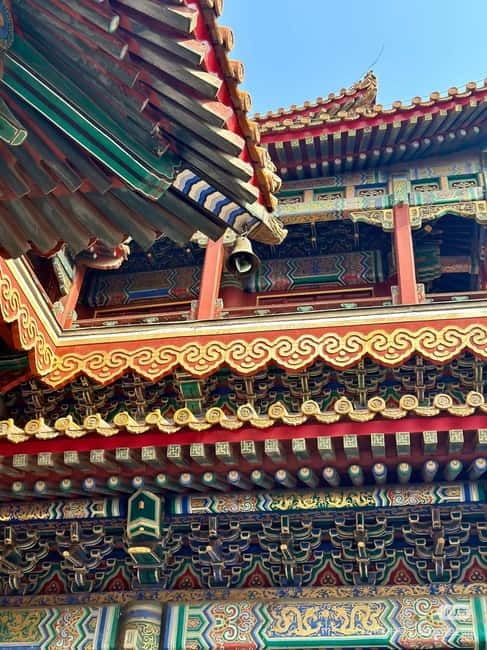
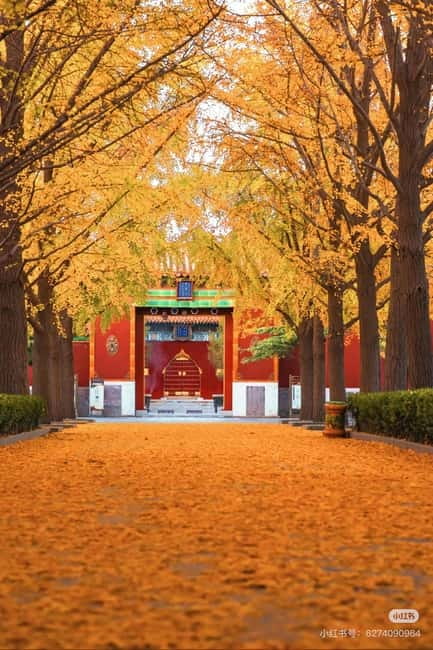
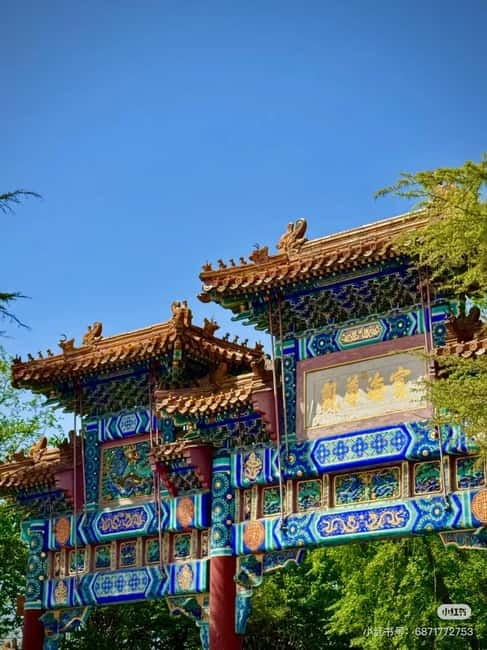
The temple complex is organized into three archways and five main halls, plus key supporting structures that help you understand the site’s flow. The good news: even if you’re not fluent in the symbolism, the architecture gives you a readable walking path.
Here’s the “what you’ll hit” route in the order your visit naturally works through:
Zhaotai Gate and the supporting towers
You typically start your major viewing sequence at Zhaotai Gate. From there, you’ll encounter the Bell Tower and Drum Tower—two of the structures that frame the compound and add that ritual-courtyard feeling. Even if you don’t know what every sound or tradition means, these buildings help you grasp that the space is designed for ceremony, not just sightseeing.
Tip: slow down here. Gates and towers are where the site starts teaching you its rules—how you move, where you stop, and what “importance” looks like in Qing-era temple design.
You can also read our reviews of more guided tours in Beijing
Yonghe Gate as your next threshold
Next comes Yonghe Gate, another major threshold in the compound. Gates matter at Yonghegong because they separate “zones.” You’re not just moving from one building to the next; you’re stepping through layers of a planned environment.
This is one of those places where a guide can help you notice the differences in how each section feels and what each major structure is meant to represent.
The Grand Hall (Hall of Great Buddha)
You then reach the Grand Hall (Hall of Great Buddha). This is one of the core moments of the visit. It’s called out as a main hall in the complex structure, and it’s part of the five main halls that define the temple’s main viewing sequence.
Think of it as your anchor stop. If you’re short on time, this is the place you’ll want to prioritize—because it represents the ceremonial center of the compound’s layout.
Yongyou Hall
After the Grand Hall, you’ll move into Yongyou Hall. This hall continues the rhythm of your walk: courtyard space, then a major building, then a new viewpoint. The guide’s English explanations help keep this from feeling repetitive, especially since you’ll be surrounded by details across multiple halls.
Hall of the Wheel of the Dharma
Next is Hall of the Wheel of the Dharma. The name alone signals the theme of teaching and movement, and you’ll feel that in the way the space is arranged around core religious ideas.
If you like architecture with meaning, this is a good stop to pause and let a guide’s explanations settle before you move on.
Pavilion of Ten Thousand Blessings
Finally, you end at the Pavilion of Ten Thousand Blessings. This is a fitting capstone because it shifts your attention from the “teaching center” feeling of the earlier halls toward a blessing-focused atmosphere that matches the compound’s ceremonial purpose.
By the time you reach this pavilion, the layout makes more sense. You’ll have seen enough gates and halls to understand why the compound is arranged the way it is.
What makes Yonghegong special: Tibetan Buddhism meets Qing Beijing
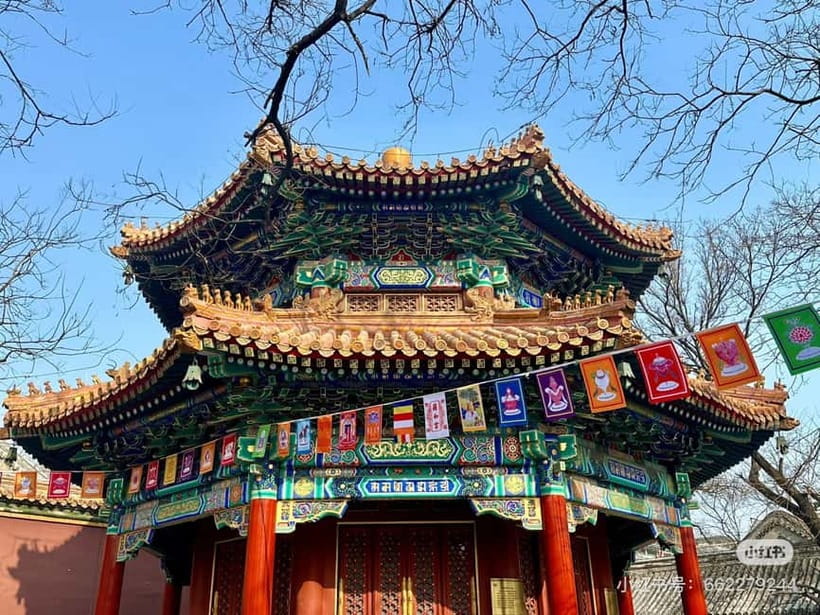
The Yonghegong Lama Temple experience isn’t just about seeing multiple buildings. It’s about noticing the blend.
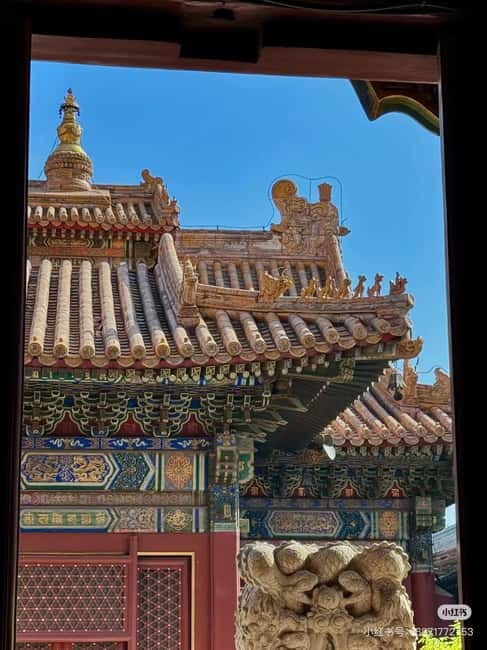
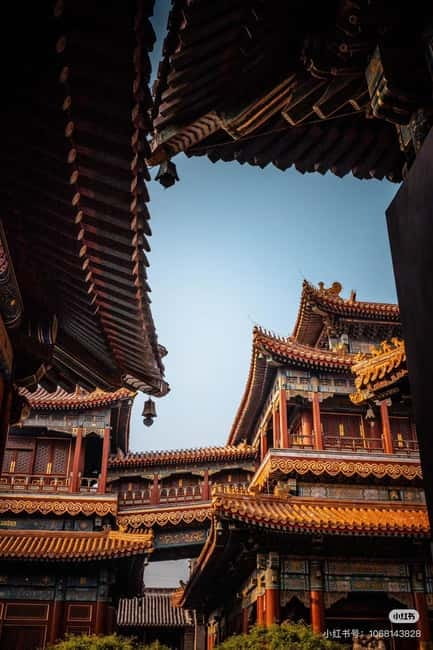
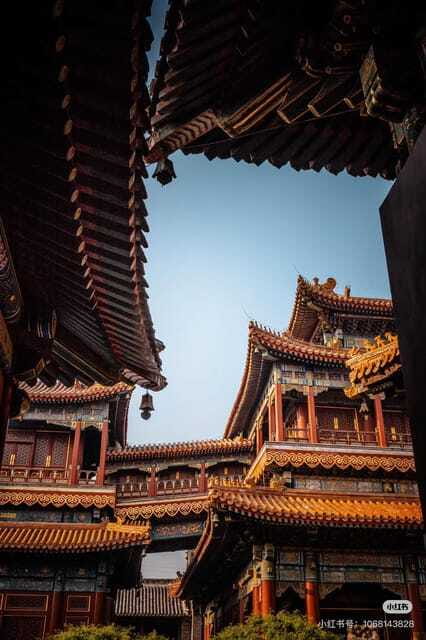
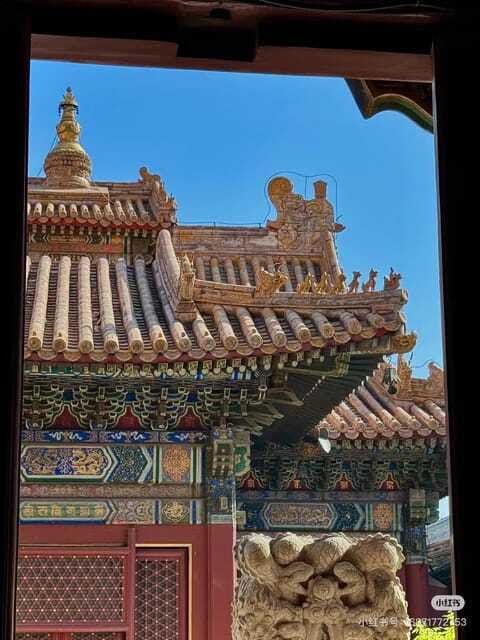
The temple was built in 1694 during the Qing Dynasty, in the 33rd year of Emperor Kangxi’s reign. It’s described as the highest-ranking Buddhist temple in the late Qing Dynasty, and its architecture is known for mixing Tibetan Buddhism with traditional Chinese architectural features.
You’ll also get a sense of cultural blending tied to multiple ethnic influences: Han, Manchu, Mongolian, and Tibetan elements are referenced in the temple’s architectural identity. That mix is one reason the site feels different from a standard “one-style” temple.
Even better, the compound has a layout you can feel while walking:
- The courtyards narrow from south to north
- The height of the halls increases in sequence
That means you’re not only viewing buildings—you’re reading a designed experience. You move from broad, open space into a more concentrated rhythm, and the halls rise as you go. It’s a physical way to guide your attention toward the most important structures.
Timing tips: summer vs winter hours and the 16:00 stop rule
Yonghegong’s opening schedule changes by season, and it affects how late you can wander.
- Summer and autumn (April 1 – October 31): 9:00 AM – 5:00 PM
- Last admission at 4:30 PM
- Entry ends and grounds are cleared by 5:00 PM
- Winter season (November 1 – March 31): 9:00 AM – 4:30 PM
- Last admission at 4:00 PM
- Entry ends and grounds are cleared by 4:30 PM
There’s also a specific note: Stop entering at 16:00. That’s not the same as last admission every season, but it’s a strong warning. If you arrive late, you might find doors closed even if your watch thinks there’s still time.
My practical advice: aim to start your visit comfortably before mid-afternoon. You’ll move through gates and halls, and you’ll want time to look, not just pass through.
What to expect from the English guide and small-group pace
The guide is listed as English, and the group is small. That combination usually helps you get more out of the walk than doing it entirely on your own.
Here’s where a guide tends to matter most at Yonghegong:
- Making sense of the three archways and five main halls so you know you’re seeing the “big” set of structures
- Connecting the Tibetan Buddhism influence to the Chinese architectural form you’re physically standing in
- Pointing out the overall compound logic—especially the south-to-north courtyard narrowing and the rising hall heights
A small group also helps because the site is spread out. If you’re in a larger crowd, you can lose your chance to stop at the exact moment you want to understand what you’re seeing.
Rules on-site: simple things that prevent big headaches
Plan to follow the basic conduct rules:
- No alcohol and drugs
- No making fire
And don’t forget the practical requirement: bring your passport. This is the one item that can derail plans fast if you leave it behind.
Also note one accessibility limitation: this experience is not suitable for wheelchair users, so if you need wheelchair access, you’ll want to look for an alternative visit that explicitly supports it.
Who should book this Yonghegong guided ticket?
This is a strong fit if:
- You want a smooth, low-friction entry via pre-booking
- You prefer a guide to help interpret a complex religious site
- You’re interested in how cultures mix—especially Tibetan Buddhism with traditional Chinese architectural design
- You’re short on time and want a guided route that covers the key named structures
It may be less ideal if:
- You need wheelchair-friendly access (wheelchair users aren’t suited for this activity)
- You’re planning to arrive late in the day and hope timing will be flexible (entry stops are clearly tied to season and a 16:00 stop rule)
Should you book this Yonghegong Lama Temple tour?
I’d book it if you value your time and want a guided, pre-ticketed route through the core structures. The $12 price feels fair when you consider you’re getting tickets plus an English live guide, and you’re avoiding the uncertainty of buying on the spot. This is also the kind of site where “having someone explain what you’re looking at” makes the hours more satisfying than a quick walk-through.
I’d hesitate only if your schedule is constantly shifting and you’re likely to arrive late—because the compound has strict entry timing by season, including a stop-entry note at 16:00. If you can plan your start time, this is an efficient way to see one of Beijing’s most distinctive Buddhist temple complexes without wasting half the day on logistics.
FAQ
Where is Yonghegong Lama Temple located?
The address is No. 12 Yonghegong Street, Dongcheng District, Beijing.
Which metro line should I take?
Take metro Line 5 and get off at Yonghe Lama Temple station.
What are the opening hours in summer and autumn?
From April 1 to October 31, it’s 9:00 AM to 5:00 PM, with last admission at 4:30 PM. Entry ends and the grounds are cleared by 5:00 PM.
What are the opening hours in winter?
From November 1 to March 31, it’s 9:00 AM to 4:30 PM, with last admission at 4:00 PM. Entry ends and the grounds are cleared by 4:30 PM.
Do I need anything to enter?
Yes. You need to bring your passport.
Is alcohol allowed inside?
No. Alcohol is not allowed.
Is there a guide, and what language do they speak?
Yes, there is a live tour guide, and the language is English.
Is it wheelchair accessible?
No. It is not suitable for wheelchair users.