REVIEW · BEIJING
Beijing Private Religious Tour: White Cloud Temple, Lama Temple, Niujie Mosque
Book on Viator →Operated by Catherine Lu Tours · Bookable on Viator
Four faith stops, one well-paced day. This private route is a smart way to understand how different traditions shaped China, because you move from Buddhism to Daoism to Islam (and the Confucian worldview behind imperial education) without sprinting. I like the no ticket-booth waiting setup, and I also like that complimentary Chinese lunch is included.
One thing to think about: this is designed around an 8-hour visit window, and an extra fee is requested if the tour goes past that mark—so plan your schedule with that in mind.
In This Review
- Key highlights you’ll feel right away
- Why this private religious tour makes sense in Beijing
- Price and what you actually get for $144 per person
- The morning flow: 8:30 start, pickup, and pre-paid entry
- Lama Temple (Yonghegong): Beijing’s best-known Buddhist landmark
- Confucius Temple and Guozijian Museum: the power of education and worship
- White Cloud Temple (Baiyunguan): Daoism’s Quanzhen legacy
- Niujie Mosque: Islam in one of Beijing’s older neighborhoods
- Lunch at a local restaurant: why it’s more than a perk
- The guide’s role: clear English and stories that stick
- Timing and pacing: 8 hours is a sweet spot
- Who this tour suits best (and who might want to adjust expectations)
- Should you book this private religious tour?
- FAQ
- What time does the tour start?
- How long is the tour?
- Is hotel pickup included?
- Is lunch included?
- Are entrance tickets included?
- Is this tour private?
- Is there an extra fee if the tour runs longer than 8 hours?
- Can I cancel for a full refund?
Key highlights you’ll feel right away
- Ticket handling in advance means less time standing in line and more time looking around
- Hotel pickup plus a private driver keeps the day smooth between sites
- Four religious monuments in one loop helps you compare how each tradition shows up in Beijing
- English explanations can be very clear, with guides like Peter and Stephen mentioned for strong storytelling and explanations
- Lunch included so you’re not hunting for food between temples
Why this private religious tour makes sense in Beijing
Beijing can feel like a museum marathon. Big sights are packed close together on paper, but in real life you lose time to getting oriented, buying tickets, and negotiating transport. This tour is built for the opposite rhythm: fewer stress points, more time with one guide’s explanation, and a clear line between religions and ideas that shaped the city.
What makes it especially useful is the mix. You’re not doing a single faith theme. You’re seeing a cluster: Lama Temple for Buddhism, the Confucius Temple and Guozijian Museum for Confucianism’s influence on education and state life, White Cloud Temple for Daoism, and Niujie Mosque for Islam. After a day like this, you tend to connect the dots faster—how values, rituals, and community spaces look different, yet all leave a visible mark in architecture and daily practice.
You can also read our reviews of more private tours in Beijing
Price and what you actually get for $144 per person
At $144 per person for about 8 hours, this isn’t a budget sightseeing add-on—and it also isn’t just paying for driving and ticket entry. The value is the bundle:
- English-speaking guide service fee
- Air-conditioned vehicle with a private driver
- Gas, toll, and parking lot fees
- Lunch at a local restaurant
- Entrance tickets included for the sights
You’re also getting hotel pickup and drop-off, plus a mobile ticket. Put all that together and the biggest savings is hidden: you’re not spending time figuring out logistics, and you’re not buying separate tickets site by site.
If you’ve ever spent a full day in Beijing bouncing between landmarks with partial translations, this kind of guided, organized flow can be worth it. You pay for time you would otherwise lose.
The morning flow: 8:30 start, pickup, and pre-paid entry
The day starts at 8:30 am, with your guide and driver meeting you in your hotel lobby at the planning time. Then you head out to the first major stop.
A small detail that matters: entry is arranged so you don’t wait at the ticket booth. The tour operator pays entry fees in advance, which cuts down on friction. You can spend that time doing the more interesting part—looking, reading signage at your own pace, and listening to the guide’s explanations.
You’ll also notice how much easier it is to stay focused when there’s a driver waiting and a plan already set. Instead of juggling directions, you can concentrate on the monuments themselves.
Lama Temple (Yonghegong): Beijing’s best-known Buddhist landmark
Lama Temple, also known as Yonghegong, is usually the kind of site that sets the tone for a religious tour. It’s described as the most celebrated Buddhist temple in Beijing and one of the largest and most influential. That size and reputation matter. It means you’re not looking at a small chapel—you’re walking through a major spiritual center where visitors expect to spend real time.
What I’d pay attention to here is the way Buddhism is represented through the physical layout and ceremonial atmosphere. A private guide helps because you’re not left guessing what you’re seeing. With the English explanations, you can connect decorative elements to religious meaning and understand the roles these spaces play.
A practical note: since you start with this stop, it’s often easier to settle into the day’s pace. Your brain is fresh, and you have the guide’s full attention early on.
Confucius Temple and Guozijian Museum: the power of education and worship
The next stop combines two linked stories in one area: the Confucius Temple and the Guozijian Museum. What makes this pairing smart is the way Confucianism shows up in imperial China, not only as philosophy, but as a system.
Here’s the key distinction your guide will likely highlight: the Guozijian complex was an ancient university complex that trained scholar-officials—people who ran imperial China. Next to that, there’s a place to worship Confucius. So you’re seeing how an idea became both an education pathway and a spiritual figurehead.
This is the part of the tour that often gives visitors a fresh perspective on how religions and state life were tied together. Even if you’re not a scholar, the guide’s explanation helps you see why certain halls, spaces, and symbols mattered to the culture of governance.
If you like places that connect architecture with real-world institutions (schools, exams, government roles), this stop will likely feel especially relevant.
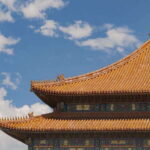
White Cloud Temple (Baiyunguan): Daoism’s Quanzhen legacy
White Cloud Temple is one of the standout stops on a route like this because it’s explicitly tied to Daoist history and schools. It’s identified as Baiyunguan Taoist Temple and one of the Three Great Ancestral Courts of the Quanzhen School of Daoism.
You’ll also hear it referred to with a dramatic title: The First Temple under Heaven. The site is said to have been first founded in the mid-8th century. Even without memorizing dates, those facts give you a sense of continuity—this isn’t a modern attraction. It’s a long-running spiritual landmark.
Why I think this stop works on a private tour: the guide can translate what makes Daoism feel different from Buddhism when you look at details. You get help noticing shifts in symbolism and sacred intent, instead of just seeing ornate buildings.
Also, White Cloud Temple sits well in the day because you’ve already encountered major religious focus at Lama Temple. By the time you reach the Taoist site, you’re ready to compare. You’ll likely catch how the tone changes as you move from one tradition’s idea of sacred space to another.
Niujie Mosque: Islam in one of Beijing’s older neighborhoods
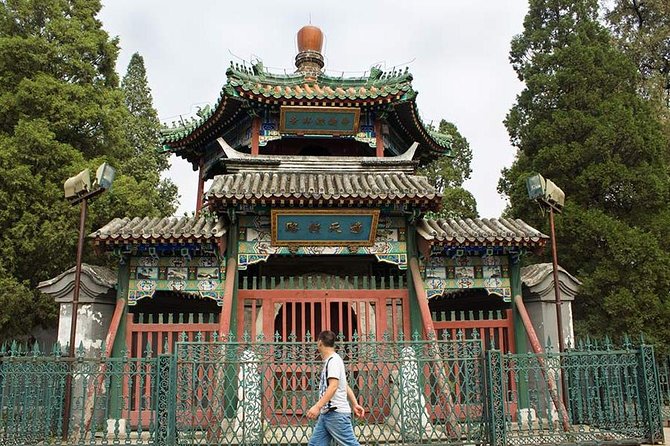
Then you move to Niujie Mosque, described as an ancient mosque thought to be among the oldest and most important in China. It’s also called the largest mosque in Beijing, which signals scale and significance.
This stop adds a different dimension to the tour. Instead of focusing on the history of one single empire-era institution, you’re looking at a living religious community expressed through a major place of worship. Your guide’s storytelling helps connect the monument to Islam’s presence in China more broadly, rather than treating it like a standalone photo spot.
Here’s a practical way to make the most of Niujie Mosque: keep an eye out for how the space is used. Religious buildings tend to reflect daily rhythm—entry, prayer-related areas, and how people move through the site. Even when you’re only there for about an hour, you can still notice the difference between a ceremonial monument and a community-centered place.
If you want your day to feel balanced—history plus present-day meaning—this mosque stop is a strong anchor.
Lunch at a local restaurant: why it’s more than a perk
Lunch is included, and it’s at a local restaurant. That matters more than you might think on a day packed with monuments.
First, it reduces decision fatigue. You don’t have to hunt for food between sites, and you don’t lose guide time to logistics. Second, lunch time often becomes part of the learning. With a guide speaking English and explaining religious context all day, you’re usually well positioned to ask simple questions—how the traditions relate, how these communities coexist, or what to notice later while you explore on your own.
I also like that the tour doesn’t treat food as an afterthought. A Chinese lunch included in the price helps the day feel complete instead of assembled from separate tasks.
The guide’s role: clear English and stories that stick
One of the most praised parts of this tour is the quality of explanation. People have highlighted guides such as Peter for complete explanations in English with very clear communication, and Stephen for being awesome and sharing a wealth of Chinese fables and folklore alongside the site details.
That storytelling piece is exactly what makes a religious tour memorable. Temples and historic buildings can blur together if you only focus on photos. But when the guide weaves meaning—why a place looks the way it does, what traditions try to express—everything clicks.
If you’re the type who likes learning on the go (not reading a guidebook for hours), this is a good match. And because it’s private, you’re more likely to get explanations at a pace that fits you.
Timing and pacing: 8 hours is a sweet spot
At around 8 hours, you’re getting enough time for each stop to matter without turning the day into a never-ending schedule. Each main site gets about one hour, which keeps things structured: you see what you came for, you hear the explanation, and you still have time to look around.
The day is also described as flexible, so your route can adjust based on interests, weather, or unexpected conditions. That flexibility is valuable in Beijing, where crowds and weather can mess with even good plans.
Just remember the earlier caution: if you go past the 8-hour window, an extra fee is requested. If you want a long day of temple wandering, plan your expectations around that.
Who this tour suits best (and who might want to adjust expectations)
This is a great fit if:
- you want context, not just sightseeing
- you like learning about Buddhism, Daoism, Islam, and how Confucianism shaped society
- you prefer a private driver so you’re not wrestling transit while tired
- you want tickets handled and time saved at entrances
It may be less ideal if:
- you’re hoping for a very slow, unstructured day with long breaks (the schedule is built around set stops)
- you’re the type who likes adding extra hours spontaneously, since there’s an extra fee after 8 hours
- you want mostly free time with minimal guidance (this tour is clearly built around the guide)
Should you book this private religious tour?
If your goal is to understand Beijing’s religious monuments in a way that feels organized and meaningful, I’d lean yes. You get the practical perks that make a big difference—hotel pickup, a private driver, entrance tickets included, and a no ticket-booth wait approach—while still covering a smart mix of temples and faiths.
I’d book it especially if you care about the stories behind the buildings and want clear English explanations that help you connect one tradition to another. If you’re short on time or tired of logistical headaches, this tour is a clean solution.
If you tell me your travel dates and your hotel area, I can also suggest how to plan the rest of your day around the 8:30 am start.
FAQ
What time does the tour start?
The tour starts at 8:30 am.
How long is the tour?
It’s about 8 hours.
Is hotel pickup included?
Yes. The tour includes hotel pickup and drop-off.
Is lunch included?
Yes. A complimentary Chinese lunch at a local restaurant is included.
Are entrance tickets included?
Yes. Entrance tickets for the sights are included, and you won’t have to wait at the ticket booth because entry fees are paid in advance.
Is this tour private?
Yes. It’s a private tour/activity, so only your group participates.
Is there an extra fee if the tour runs longer than 8 hours?
Yes. An extra fee is requested after the 8-hour tour mark.
Can I cancel for a full refund?
Yes. You can cancel up to 24 hours in advance for a full refund.