REVIEW · BEIJING
Beijing: Private Biking Tour Along Central Axis of Beijing
Book on GetYourGuide →Operated by JTB Travel Agency · Bookable on GetYourGuide
Pedal the Dragon’s Backbone in Beijing. This Central Axis ride is one of the most efficient ways to understand how imperial power, fengshui, and everyday life line up in the city. I like that you get close to Tian’anmen Square and the gate with Mao’s portrait, and I also like the mix of monumental sights plus side hutongs where ordinary people live.
One thing to consider: bike sizing can feel tight for some riders, so if you’re between sizes, be ready to ask for the best fit at the start.
In This Review
- Key things to know before you ride
- Why the Beijing Central Axis bike route is such good value
- Meeting at Ci Qi Kou: your 3-hour plan starts on the right street
- Tian’anmen Square and the Mao portrait: the stop with the most gravity
- The Forbidden City edge: formal entrance, moat, and corner turrets
- How hutongs fit the imperial story (instead of being random side streets)
- Drum & Bell Towers: the “time announcer” moment
- Jing-hang Canal: a scenic pause with history in the background
- How the 3 hours and ~20 km ride actually feels
- Price and what you really get for $67 per person
- What kind of traveler should book this?
- Final call: should you book this Central Axis biking tour?
- FAQ
- How long is the Beijing private biking tour along the Central Axis?
- Where is the meeting point?
- What language is the guide?
- How many people are in the group?
- Is pickup included?
- Are tickets for attractions included?
- Is there bottled water during the tour?
- Is free cancellation available?
- Is the tour wheelchair accessible?
Key things to know before you ride
- Central Axis route: A fengshui line that runs north to south through Beijing’s key imperial landmarks
- Tian’anmen sights on the way: Square views plus the gate area with Mao’s portrait
- Forbidden City edge views: The huge formal entrance, city moat, and corner turrets from the outside
- Hutongs for real local texture: Side lanes that connect back to the “main spine” of the city
- Drum & Bell Towers + canal moments: Time-keeping tower area and Jing-hang Canal scenery
Why the Beijing Central Axis bike route is such good value
Beijing’s Central Axis is the city’s built-in “straight line story.” It’s a 7.8-kilometer axial layout that runs through the old city, linking major imperial buildings and guiding how neighborhoods were planned around power. The route stretches from the Bell and Drum Towers in the north down toward Yongdingmen Gate in the south, passing landmarks like Wanning Bridge, Jingshan Hill, and the Imperial Palace area.
A bus or taxi can get you to stops, but it doesn’t teach you alignment. Biking does. You feel the city’s geometry as you move—especially as you shift from big ceremonial spaces to calmer side streets. That’s the big “aha” moment: you’re not just seeing famous places, you’re seeing how the city’s planning makes them relate to each other.
Also, this tour is priced in a way that makes sense for people who want guidance but don’t want to spend all day in ticket queues. At $67 per person for 3 hours, the guide + bike + water combo helps you get more big sights per hour than doing everything on your own.
You can also read our reviews of more cycling tours in Beijing
Meeting at Ci Qi Kou: your 3-hour plan starts on the right street
You’ll meet at Exit D of Ci Qi Kou Station on Line 5. If you’re using a taxi, the simplest approach is to set your destination in Alipay to: Exit D of Ci Qi Kou station of Line 5, then show the driver the Chinese text 磁器口地铁站D出口.
Once you hook up with the guide, the tour quickly gets moving. That matters because the Central Axis route is long enough that you’ll want an efficient start and a relaxed rhythm after that. The group is small (limited to 8 participants), and that’s a real advantage here—on narrow lanes and at photo stops, you’re less likely to feel like you’re being herded.
You’ll get a shared bike per person and mineral water. I’d still treat water and snacks as a personal thing. The included water helps, but you’ll burn energy cycling, and you might want a little extra comfort if you’re sensitive to heat or wind.
Tian’anmen Square and the Mao portrait: the stop with the most gravity
You’ll ride to Tian’anmen Square, one of the most iconic places in China, and then to the Tian’anmen gate area where you can see the portrait of Chairman Mao. You also pass buildings around the square such as the parliament building and the National Museum.
Here’s why biking is especially smart for this area: the views unfold as you ride, rather than coming from one fixed curb spot. You get multiple angles of the gate complex and the surrounding ceremonial framing. Even if you’ve seen photos before, moving around the perimeter helps you understand the scale—how the space is designed for crowds and processions, not just sightseeing.
Practical note: this tour focuses on what you can see along the route. It doesn’t include tickets, so if you plan to enter major sites, you’ll need separate arrangements for those specific entrances.
The Forbidden City edge: formal entrance, moat, and corner turrets
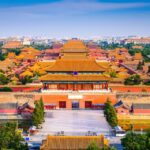
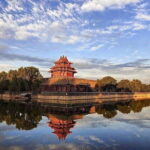
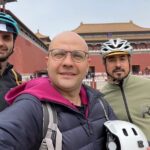
One of the tour’s strongest moments is the approach area at the Forbidden City, especially the huge formal entrance and the dramatic setting of the city moat. You’ll also see the corner turrets, which are great for photos because they show up clearly against the rest of the walls and buildings.
These features can look flat when you’re standing far away. On a bike, you can position yourself better—closer, smoother, and without taking up the same space as foot traffic at the busiest points. And since you’re moving along the Central Axis logic, it feels like you’re getting the “stage design” before stepping onto it.
Even if you don’t enter the Forbidden City during the tour, you still get the important context: the sense of control, order, and ceremony that comes from the gate-and-moat geometry. That’s the kind of visual understanding you can’t easily fake with just reading captions.
How hutongs fit the imperial story (instead of being random side streets)
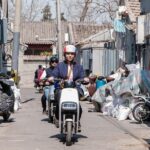
This is not just a straight-line monument tour. You’ll also explore hutongs—the side lanes where ordinary residents live—and you’ll connect those neighborhoods back to the main route’s power and planning.
I like this part because hutongs give you contrast. The Central Axis is about order and spectacle; hutongs are about daily routine. When you cycle from the ceremonial spine into smaller lanes, the city stops feeling like a museum and starts feeling like a living place.
This section also tends to be where you’ll notice details like street-scale activity and the rhythm of local life. The route is described as including ancient commercial streets along the way, too, which adds another layer. You’re seeing a city that has traded, traveled, and evolved for centuries—without turning everything into a theme park.
You can also read our reviews of more private tours in Beijing
Drum & Bell Towers: the “time announcer” moment
Beijing’s north end of the Central Axis is tied to timekeeping symbolism. The ride is built around the Bell and Drum Towers, often framed as the ancient “time announcer” twin towers. You’ll get that sense of the city marking hours in a very physical way—two towers, two roles, one idea of structured time.
Even if you only get views from the cycling route, the timing symbolism matters. It reinforces the same theme you see everywhere along the axis: power is built into space, and space is built to organize life.
If you’re the type who likes your sightseeing to have meaning (not just photos), this stop will likely be one of your favorites.
Jing-hang Canal: a scenic pause with history in the background
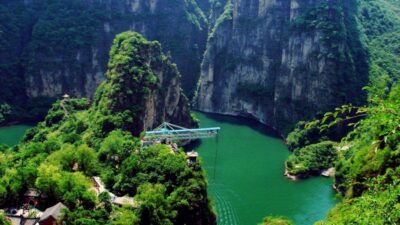
Another strong highlight is the Jing-hang Canal, described as the longest manmade canal in the world, with temples and stores beside it. This canal segment adds variety after you’ve been focused on large ceremonial architecture.
Here’s what you can expect to enjoy: a different tempo. The canal area gives you “everyday infrastructure” energy—places built for movement of goods and people, not for ceremonies alone. When you pair that with what you see on the Central Axis, the city starts to make more sense as a complete system: governance, religion, commerce, and daily living all tie into the same broader layout.
How the 3 hours and ~20 km ride actually feels
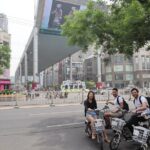
This tour is listed as a 3-hour ride, with biking around 20 km along the Central Axis. That’s enough distance to feel like you “did something,” but not so much that you’ll be totally wiped out if you’re generally healthy.
The pacing is supported by the small group size (limited to 8). With fewer people, the guide can slow down for important photo points and keep the group together on tighter turns and lane changes.
One consideration: some riders have mentioned that the bikes were small. That’s worth taking seriously. If you’re taller or you prefer a longer seat position, check the bike fit early. A good fit can be the difference between a comfortable city ride and an awkward one.
Price and what you really get for $67 per person
At $67 per person for 3 hours, this tour is best understood as a “guided access and efficiency” deal. You get:
- English-speaking guide
- Pick up service from the meeting point
- Shared bike per person
- Mineral water
Tickets are not included, which is the main cost you might need to plan for separately. If you’re the kind of traveler who wants to enter multiple major sights, your total trip budget will rise. If you’re happy with route-based views and want the structure of a guide-led ride, you’ll likely feel this is good value.
The other value angle is guidance. The Central Axis can feel intimidating if you’re walking or trying to self-navigate in traffic. Having a guide means you spend time seeing, not wandering.
What kind of traveler should book this?
This tour is a great match if you:
- want a first-time Beijing experience that hits major landmarks efficiently
- like the idea of architectural alignment and fengshui planning
- want both monuments and hutongs in the same outing
- prefer a small group over big coach crowds
It might be less ideal if you want hours inside museums or long, slow wandering in one site. The ride is short by design, and it’s about moving along a specific axis with quick context at each stop.
Also, because it’s a biking tour, it suits people who are comfortable cycling in an urban environment. If you’re unsure about your stamina, choose your “comfort level” ahead of time and be realistic about a ~20 km day.
Final call: should you book this Central Axis biking tour?
I’d book it if you want the simplest route to understanding Beijing’s “straight-line logic.” For $67, you get the guide structure, bikes, and enough time to see the big ceremonial anchors—Tian’anmen, the Forbidden City entrance setting, and the drum and bell tower symbolism—while also getting into hutongs for everyday contrast.
If you’re picky about bike fit or you plan to enter ticketed sights, do your homework on entrances and plan extra budget for tickets. Otherwise, this tour is one of the smartest ways to get a lot of Beijing meaning into a short morning or afternoon.
FAQ
How long is the Beijing private biking tour along the Central Axis?
The tour lasts 3 hours.
Where is the meeting point?
You meet at Exit D of Ci Qi Kou Station (Line 5).
What language is the guide?
The tour includes an English-speaking guide.
How many people are in the group?
It’s a small group, limited to 8 participants.
Is pickup included?
Yes, there is pick up service from the meeting point.
Are tickets for attractions included?
No. Tickets for any tourist sights are not included.
Is there bottled water during the tour?
Yes, you get mineral water included.
Is free cancellation available?
Yes. Cancel up to 24 hours in advance for a full refund.
Is the tour wheelchair accessible?
Yes, it is listed as wheelchair accessible.