REVIEW · BEIJING
Beijing: Highlights of Forbidden City+Options Tour
Book on Viator →Operated by beijingtourcompany · Bookable on Viator
Courtyard rules made simple. This Forbidden City highlights tour turns a maze of timing and ticket rules into a clear, walkable route through Ming and Qing-era symbolism. You’ll start at Meridian Gate, then move hall to hall, palace to palace, and finish at the Gate of Divine Prowess with Tiananmen Square right after.
Two things I like a lot: first, the guaranteed entry style of planning. Second, the way the guide connects what you see to what it meant, with story-like explanations that even work well if you’re visiting with kids. I’ve seen guides highlighted by name such as Linda and Amber, and the common thread is patient, friendly answering of questions.
One consideration: this is a fast 4-hour highlight route. You’ll cover a lot of named locations, so if you want deep, slow wandering (or extra museums), you may feel a bit rushed. Also, the tour covers the main palace sites, but tickets for other stops like the Jewelry and Clock museums aren’t included.
In This Review
- Key points at a glance
- A 4-Hour Forbidden City + Tiananmen Loop That Actually Works
- Meeting point, pickup, and why guaranteed entry matters
- Meridian Gate: the starting point that sets the tone
- Hall of Great Harmony, Middle Harmony, Preserving Harmony: power shown in three levels
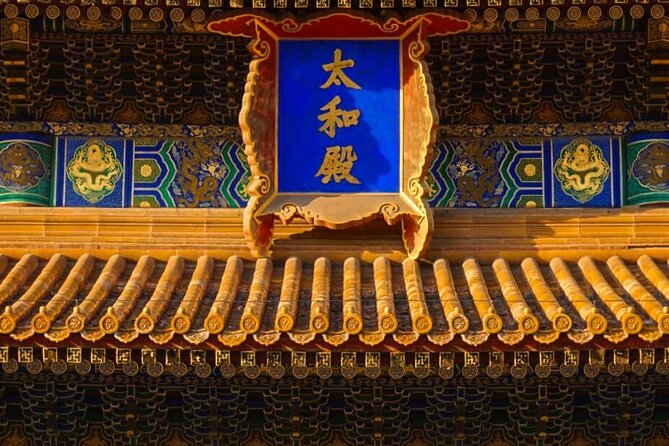
- Hall of Great Harmony (Taihe Dian)
- Hall of Middle Harmony (Zhonghe Dian)
- Hall of Preserving Harmony (Baohedian)
- Palace of Heavenly Purity: the inner court and the Qing harem system
- Hall of Union: where emperor and empress meet
- Palace of Earthly Tranquility: living spaces and a honeymoon room detail
- Imperial Garden: the quiet contrast with the formal halls
- Gate of Divine Prowess exit, then Tiananmen Square
- Price and what you really get for $30
- What to expect from the guide style (and why it matters)
- Who this tour suits best
- Should you book this Forbidden City highlights tour?
- FAQ
- How long is the Forbidden City highlights + Tiananmen Square tour?
- What’s the price per person?
- Is admission included?
- Do I need to print tickets?
- Is pickup included?
- How big is the group?
- Are tickets to the Jewelry and Clock museums included?
- Is the guide English-speaking?
- Is there free cancellation?
Key points at a glance
- Guaranteed entry so your visit starts smoother and you spend less time stuck on ticket logistics.
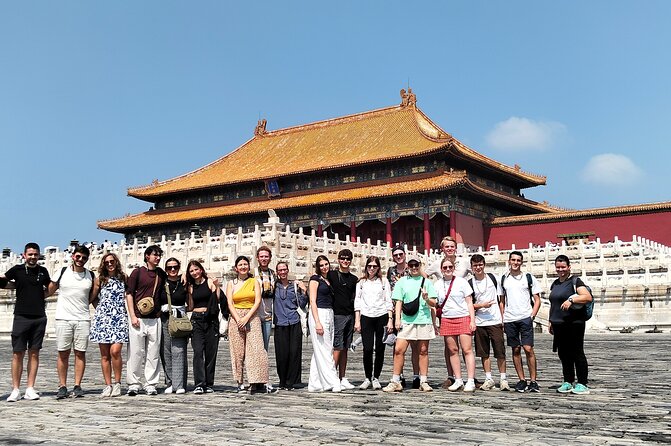
- Max 12 people, which keeps the pace manageable and makes questions feel doable.
- English-speaking guide with strong explanations, including the three harmony halls and court-life rooms.
- A logical route from Meridian Gate to Gate of Divine Prowess, then straight to Tiananmen Square.
- Mobile ticket delivery, which helps if you’re traveling light.
- Admissions included for the listed palace halls and areas, with Tiananmen Square time built in.
A 4-Hour Forbidden City + Tiananmen Loop That Actually Works

This tour is built for people who want the headline moments of Beijing’s most famous palace complex without spending half the day figuring out what’s open and where to stand. The total time is about 4 hours, including travel, and that matters because the Forbidden City is big enough that “quick sightseeing” can turn into “where did my day go?”
The route is also designed to feel chronological in a practical way. You don’t bounce around randomly. You start at the formal entrance area, move through key halls tied to imperial authority and ceremony, then shift into inner-palace spaces connected to the Qing court, and finish with the imperial exit before stepping out toward Tiananmen Square.
And yes, Tiananmen Square is included as a practical add-on: you get 30 minutes there, and it’s free for visitors during your stop.
You can also read our reviews of more city tours in Beijing

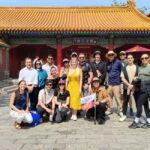
Meeting point, pickup, and why guaranteed entry matters
You’ll be picked up from a fixed meeting point, and you’ll have a professional English-speaking guide. That’s helpful in Beijing, where even “simple” plans can turn into confusion fast if you’re not used to local timing and rules.
You also get mobile tickets, which is a convenience when you’re juggling maps, transit, and the rest of your day. Plus, the entrance tickets for the palace sites on the route are included with guaranteed entries. That’s the value: you’re buying time and stress reduction, not just a ticket.
This is a small group tour with a maximum of 12 travelers. Small groups matter inside the Forbidden City because you need to keep moving, but you also need to understand what you’re looking at. With a bigger group, explanations get thin and the walk feels louder. Here, the format is set up so the guide can actually guide.
Meridian Gate: the starting point that sets the tone
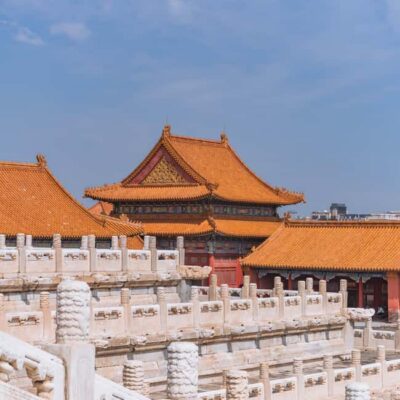
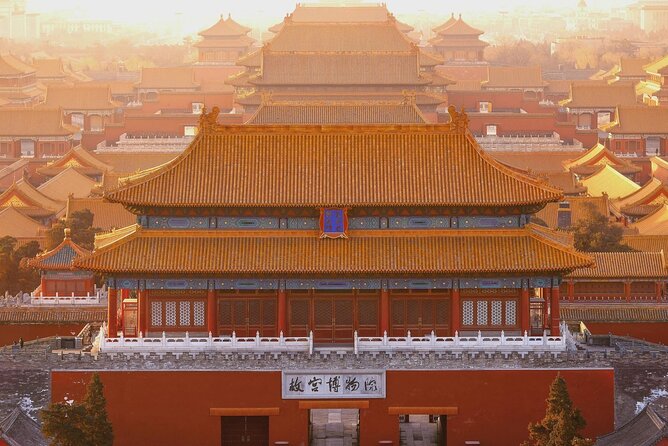
Your first stop is Meridian Gate (Wu Men), and it’s the right place to start because it’s framed as the beginning of the Forbidden City route. You’ll learn the basics fast: the complex was constructed from 1406 through 1420 during the Ming Dynasty, and it’s described as the world’s largest wooden palaces complex.
This opening hour is your “orientation moment.” When you arrive without context, the space can feel like one big monument. When you arrive with context, the architecture becomes a language. From Meridian Gate, the symbolism of hierarchy and authority starts to make sense before you even get to the big halls.
Expect about 1 hour here, with admission included.
Hall of Great Harmony, Middle Harmony, Preserving Harmony: power shown in three levels
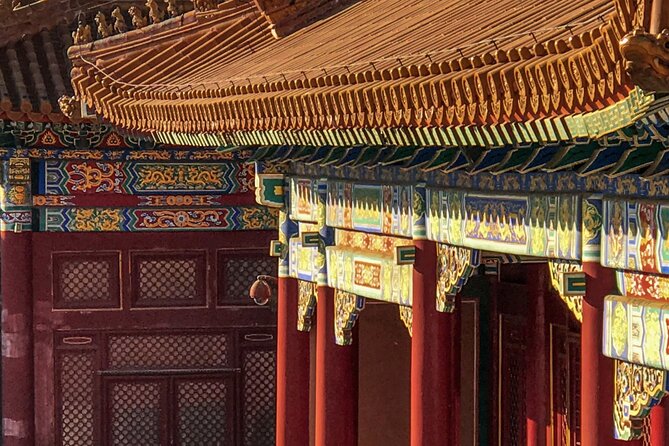
After Meridian Gate, the tour focuses on the three harmony halls—the kind of places that look impressive even if you don’t know anything yet. The idea is simple: you see the major ceremonial spaces and you learn how they connect to what emperors were meant to represent.
Hall of Great Harmony (Taihe Dian)
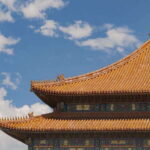
This stop comes with about 15 minutes. Here, your guide shows three harmony halls, including the Hall of Superem Harmony (the tour describes it as sharing emperors’ duties and holy role in the feudual dynasty). You’ll also hear about an ancient architecture ranking system and related knowledge.
Why this matters: if you just take photos here, you miss the “why.” These halls weren’t just buildings. They were designed to signal status and order. The guide’s job is to translate that into something you can actually notice—proportions, layout, and what the court expected visitors to understand.


Hall of Middle Harmony (Zhonghe Dian)
This one is shorter—about 10 minutes. The key detail is that the emperor did rehearsals here.
That little piece changes how you look. Instead of thinking of the hall as frozen in time, you start imagining the human routine behind the ceremony—preparation, repetition, and performance.
Hall of Preserving Harmony (Baohedian)
Again, about 10 minutes. This stop is tied to imperial exams.
This is where the tour gives you a useful contrast. If you think of emperors and you only picture authority, the exam connection reminds you that power also depended on knowledge systems and official selection.
All three of these harmony-hall moments include admission as part of the tour.
Palace of Heavenly Purity: the inner court and the Qing harem system
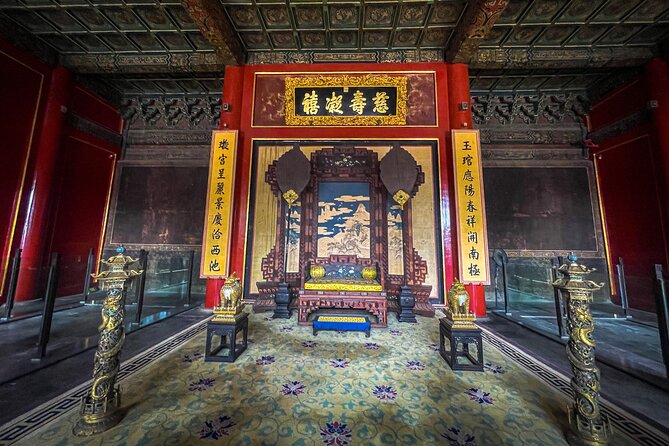
Next you head to Palace of Heavenly Purity, and the tour expands beyond ceremony into what you might call the “living logic” of the court. The route then links additional connected spaces, including the Hall of Union and Palace of Earthly Tranquility.
You’ll spend about 30 minutes at Palace of Heavenly Purity. The emphasis here is on learning the system of the Imperial Harem of the Qing Dynasty. The guide also focuses on details hiding in the corners—small cues that you usually overlook if you’re just scanning for the biggest photo angles.
That corner-detail approach is practical. The Forbidden City rewards slow looking, but most people don’t have time. A good guide helps you borrow their attention so you can spot what matters without spending hours guessing.
Hall of Union: where emperor and empress meet
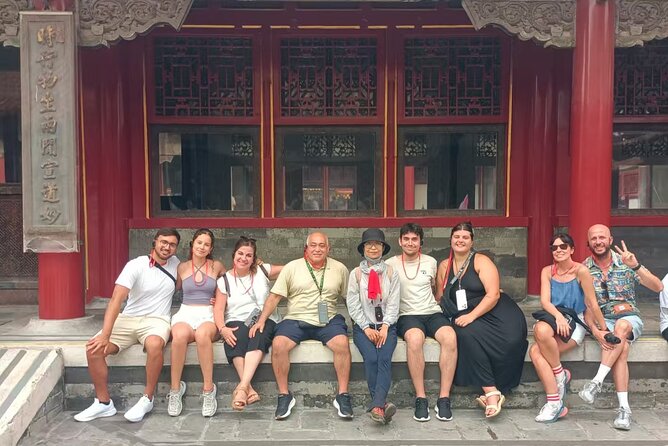
The next stop is Hall of Union, about 10 minutes. It’s described as the place where emperor and empress meet each other.
This is one of those brief stops that still changes your mental map. You start thinking of the inner palace as a system of roles and relationships, not just a museum of rooms. Even if the time here is short, the guide’s framing helps you connect what came before—formal authority—to what was more personal and court-managed.
Admission is included.
Palace of Earthly Tranquility: living spaces and a honeymoon room detail
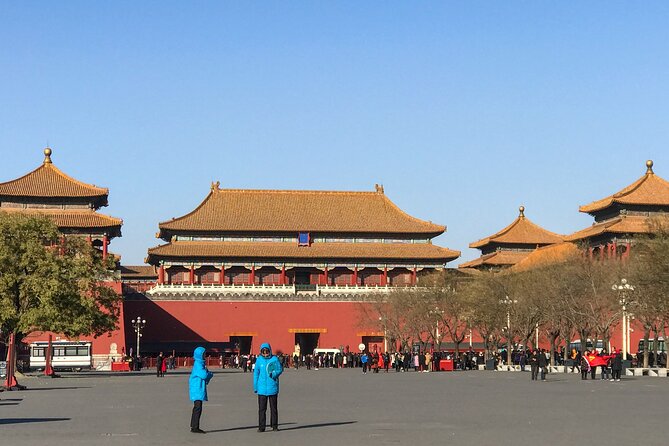
Then comes Palace of Earthly Tranquility, where the tour gives a very specific, memorable detail: it’s where the empress lived and it’s described as the honeymoon room for emperor and empress during the late Qing dynasty. You’ll have about 15 minutes here, including admission.
Is it the kind of detail you’d guess from the architecture alone? Not always. But that’s the point of this tour’s style. It uses real, named places and then adds the court-life context that makes the room feel like part of a story.
If you’re traveling with kids, this kind of room-specific anecdote is often what turns “more hall names” into something they can actually follow.
Imperial Garden: the quiet contrast with the formal halls
After the main buildings, the route includes the Imperial Garden of the Palace Museum. You’ll spend about 20 minutes here, with admission included.
The description emphasizes that it combines almost ancient garden art of China. Even without getting overly technical, gardens create contrast. You’re coming from large ceremonial halls where everything signals power. Then the garden reminds you that court life wasn’t only performance—it also included designed leisure and aesthetics.
This stop is short, but it breaks the emotional rhythm. You get a moment to breathe and reset before your exit.
Gate of Divine Prowess exit, then Tiananmen Square
The tour ends the palace route at Gate of Divine Prowess, described as the exit of the Forbidden City. This segment is about 5 minutes, and you’ll finish there. Your guide then advises you on how to get to your next stop.
From there, the plan adds Tiananmen Square for about 30 minutes. The tour frames Tiananmen Square as the iconic place of Beijing, sitting in the center of Beijing since 1420 of the Ming Dynasty till today. It also says the square witnessed changing of late feudal dynasties and key events of revolutions and reformations of modern China.
Practical advice: this is not enough time to read everything, stand everywhere, or do a full deep tour of Tiananmen. But it is a good way to round out your day. You leave the Forbidden City with a sense of imperial court space, then you walk into the larger political symbol of the city.
Tiananmen Square time is listed as free, so you’re not adding another ticket cost for that stop.
Price and what you really get for $30
At $30 per person, this tour is priced to feel like a budget-friendly “must-see hits” package, especially because admission ticket cost with guaranteed entries is included. That matters in places like this. If you had to buy tickets and then try to navigate timing alone, the saved cost might disappear into wasted time.
Here’s what you should know about value:
Included:
- Pickup from a fixed meeting point
- Professional English-speaking guiding service
- Entrance ticket cost with guaranteed entries
Not included:
- Tips for the guide
- Tickets to the Jewelry and Clock museums
- Hotel pick up and drop off services
So the real value isn’t only the ticket. It’s the way the guide manages your route through the named highlights. That reduces your guesswork. It also helps you spend your limited sightseeing hours actually learning what you’re looking at.
On top of that, there’s a small-group cap of 12. For many people, that’s a big quality lever. You’re not just paying for entry—you’re paying for a focused, guided pace.
Also, the tour is usually booked about 26 days in advance on average. If you’re traveling soon, that suggests demand is steady. I’d treat this as something to book early rather than waiting until the last week.
What to expect from the guide style (and why it matters)
The guide role here is central. You’re not just walking. You’re getting explanations tied to specific named locations: Meridian Gate, Hall of Great Harmony, Hall of Middle Harmony, Hall of Preserving Harmony, Palace of Heavenly Purity, Hall of Union, Palace of Earthly Tranquility, and the Imperial Garden.
In practice, that means the guide helps you notice things you’d otherwise miss. Examples that stand out in the tour description include:
- corner details in the inner-palace area
- the emperor rehearsal idea in Hall of Middle Harmony
- the exam connection in Hall of Preserving Harmony
- court-life framing, including the Imperial Harem system of the Qing Dynasty
- the honeymoon-room detail in Palace of Earthly Tranquility
And from the guide names that have been referenced in past experiences—like Linda, Amber, Melodie, Angel, and Harper—the common theme is clear English, punctual arrival, and patience answering questions. That’s not a small thing. The Forbidden City is overwhelming if you feel lost. A patient guide keeps you moving and keeps you oriented.
Who this tour suits best
This is a strong fit if:
- you want the big Forbidden City highlights without turning it into a whole-day ordeal
- you like a guided narrative that ties architecture to court life
- you’re traveling with kids and need story-driven explanations that hold attention
- you want a manageable group size (up to 12)
It might be less ideal if:
- you want to spend long hours in exactly one area
- you’re hoping to include extra museums like the Jewelry and Clock museums as part of this day
- you prefer fully self-guided wandering with no fixed pacing
Should you book this Forbidden City highlights tour?
Yes—if your goal is a clean, guided route through the Forbidden City’s most recognizable ceremonial and inner-court spaces, plus Tiananmen Square in the same half-day block, this tour is a practical choice. The pricing works because admission and guaranteed entry are part of the package, and the structure keeps you from wasting time sorting logistics inside the complex.
Book it especially if you’re the type who wants to understand what you’re looking at rather than just collect photos. And if you’re traveling with family, the tour’s mix of halls, rooms, and memorable court-life details is the kind of storytelling that tends to land well.
If you want a slower, more personal pace, consider pairing this with a separate free-time plan for one extra area after you finish—because this route is designed to cover a lot, not to linger.
FAQ
How long is the Forbidden City highlights + Tiananmen Square tour?
It’s about 4 hours in total, and that includes travel time between stops.
What’s the price per person?
The price is $30.00 per person.
Is admission included?
Yes. Entrance ticket costs for the included palace halls and areas are included with guaranteed entries. Tiananmen Square entry is listed as free during the stop.
Do I need to print tickets?
No. You’ll receive mobile tickets.
Is pickup included?
Yes. You’ll be picked up from a fixed meeting point. Hotel pick up and drop off services are not included.
How big is the group?
The maximum group size is 12 travelers.
Are tickets to the Jewelry and Clock museums included?
No. Tickets to the Jewelry and Clock museums are not included.
Is the guide English-speaking?
Yes. The tour includes a professional English-speaking guiding service.
Is there free cancellation?
Yes. You can cancel up to 24 hours in advance for a full refund.