REVIEW · BEIJING
Private 4-Day Tour: Beijing, Xi’an, Chengdu & Shanghai
Book on Viator →Bookable on Viator
Four days, four icons, and zero map stress. This private route strings together Beijing, Xi’an, Chengdu, and Shanghai with a guide leading the way, plus bullet trains and flights already planned. You’re not just seeing landmarks—you’re moving between them with less hassle and more time on the ground.
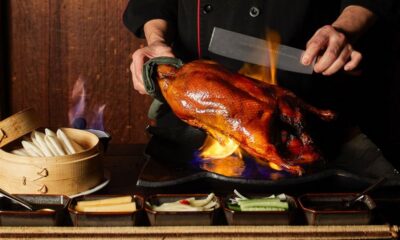
I really like how the tour turns the big “must-sees” into guided, understandable visits: Mutianyu Great Wall by cable car, then a curated walk through the Forbidden City, Tiananmen Square, and Temple of Heaven. I also like the China-food built into the schedule, from Peking roast duck around Xi’an’s Muslim Quarter to Sichuan hot pot in Chengdu. And the human touch matters—guides such as Julia, Vicky, and Mollie in Beijing, plus Owen in Xi’an, are specifically named as standouts.
The main trade-off is pace. You start early (8:00 am), and you’ll switch cities by train and plane, so this works best if you’re happy to keep moving and let the logistics run in the background. There’s also a built-in calendar note: Forbidden City is closed on Mondays, so the plan adjusts.
In This Review
- Quick take: the best parts of this private highlight tour
- The value in doing Beijing, Xi’an, Chengdu, and Shanghai in 4 days
- Mutianyu Great Wall by cable car: an easier start with great payoff
- Summer Palace in one smooth afternoon: royal gardens without the museum feel
- Tiananmen Square, the Forbidden City, and Temple of Heaven: the classics explained
- Peking roast duck and the Muslim Quarter: eating your way through Xi’an
- Xi’an City Wall and Terracotta Warriors: world-famous, but still worth slowing down
- Bullet train to Chengdu and Wenshu Temple tea tasting
- Panda time at the breeding research base, then straight to Shanghai
- Hotels, meals, and transport: what is included and what you’ll still budget for
- Who this tour is best for (and who should pick a slower plan)
- Should you book this private 4-day China highlight tour?
- FAQ
- What time does the tour start?
- Does the tour include hotel pickup and transfers?
- Are flights and bullet trains included?
- Is the Forbidden City always included?
- What are the hotel standards?
- Is this tour refundable or changeable?
Quick take: the best parts of this private highlight tour
- Mutianyu Great Wall with round-trip cable car: less crowd stress and big views.
- Guided access to the Forbidden City and Temple of Heaven: you get meaning, not just photos.
- Bullet train between major cities: you avoid long overland days.
- Food stops that fit the theme: Peking duck in Beijing/Xi’an area and hot pot in Chengdu.
- Panda visit early in the morning: best odds for active panda behavior.
- Private vehicle in each city: your day stays on schedule.
The value in doing Beijing, Xi’an, Chengdu, and Shanghai in 4 days
Trying to DIY this kind of route can turn into a timing headache. You’d need to book trains, sort city transfers, line up entrance tickets, and still hope your guide-free days don’t get eaten by waiting. This tour solves that by stacking the major transport legs (bullet trains plus flights) and then adding private, air-conditioned driving within each city.
The price—$2,180 per person—sounds steep until you price the moving parts separately. You’re getting two hotel nights in China (Xi’an at 5-star, Chengdu at 4-star), meals (4 lunches and 1 dinner), an English-speaking guide service in Beijing, Xi’an, and Chengdu, entrance fees for the listed sites, plus intercity transportation. For many couples or small groups, that “everything handled” factor is exactly what makes the cost feel fair.
What you’ll want to check emotionally is whether you’re okay with a fast timeline. If you want slow evenings and zero pressure, you might prefer a longer stay in one or two cities. If you want the headline sites without spending days logistics-spotting, this is a strong fit.
You can also read our reviews of more private tours in Beijing
Mutianyu Great Wall by cable car: an easier start with great payoff
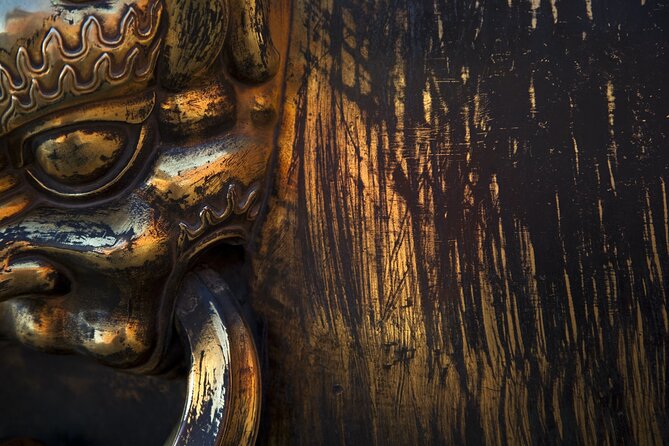
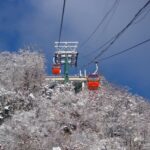
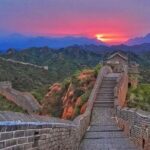
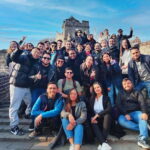
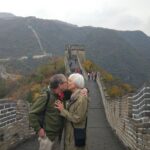
The tour begins in downtown Beijing in the morning with pickup, then heads to Mutianyu Great Wall. This is one of the best-preserved wall sections near Beijing, and it tends to feel calmer than the most famous Wall areas. The real win here is the cable car: you get round-trip cable car rides, which cuts down on the uphill slog and keeps your energy for the viewpoints.
On the Wall, go slow and look for the details. You’ll see watchtowers and restoration work that make this part of the Great Wall feel more “ready to read,” especially compared with rougher stretches. With a guide, you also get the why behind the Wall’s layout rather than just a photo stop.
After your Wall time, you’ll have lunch at a popular local restaurant. That’s not an afterthought—it’s a practical buffer so you don’t spend your best daylight hours hunting for food. Expect a long day in China to work better when lunch is built in.
Summer Palace in one smooth afternoon: royal gardens without the museum feel
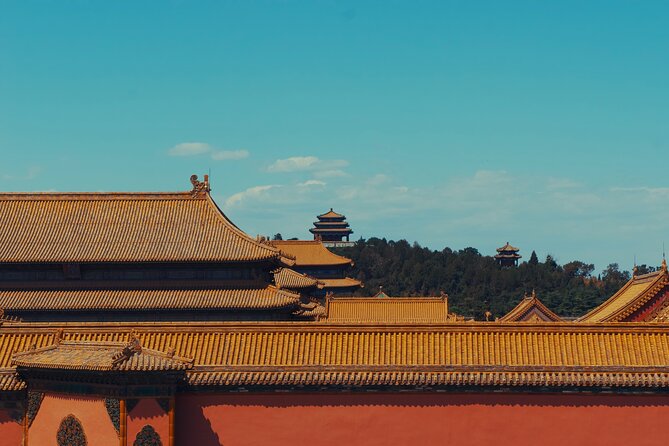
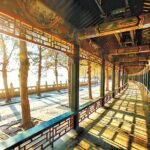
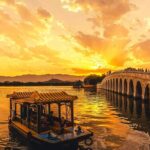
Next up is the Summer Palace (Yiheyuan). This royal park is described as China’s largest and best-preserved royal gardens, shaped by natural views and formal landscape design. In practice, that means you get a mix of architecture, waterways, and walking paths—good for people who want something scenic but still historically anchored.
Because entrance fees are included, you can focus on pacing rather than ticket logistics. Also, your schedule tends to put Summer Palace after lunch, which helps keep the afternoon from feeling rushed in the way parks often do.
A small consideration: you’re on private time, but the palace is still a place where you’ll walk. Wear shoes you trust. If you’re sensitive to stairs or uneven paths, consider taking breaks and letting your guide steer you toward less strenuous viewpoints.
Tiananmen Square, the Forbidden City, and Temple of Heaven: the classics explained
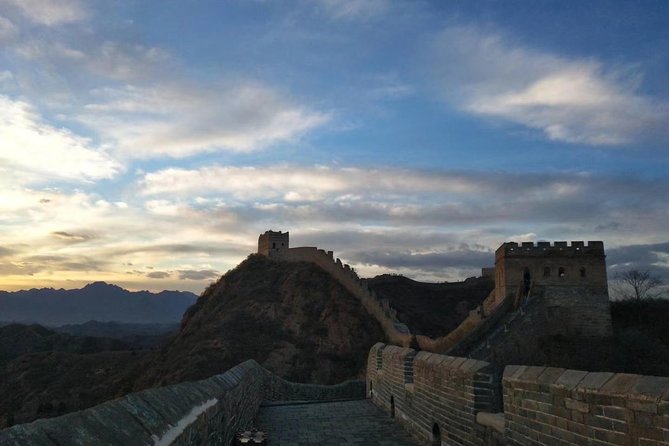
Beijing’s government core and imperial center can feel intimidating if you don’t have context. The tour tackles this with a guided visit plan built around Tiananmen Square first, then Forbidden City (Palace Museum), and finally Temple of Heaven.
Tiananmen Square is the largest square in the world, and the guide-led context helps you connect monuments to events—down to the Chairman Mao memorial museum and the China Congress Building listed as part of the area’s landmarks. You’ll also see how the square’s role changed from part of the imperial complex to a revolutionary-era public space.
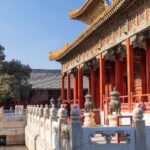
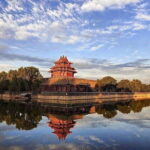
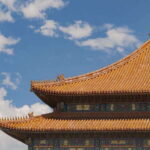
Then comes the Forbidden City. It’s huge—built around the Ming Dynasty, serving emperors from the Ming and Qing periods, with thousands of rooms across front working halls and back residential areas. A guide is the difference between wandering randomly and understanding what you’re looking at.
One important calendar note: the Forbidden City is closed on Mondays, and the plan replaces it with Summer Palace or Lama temple. If your dates land on a Monday, ask your operator which replacement you’ll get so expectations match.
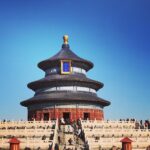
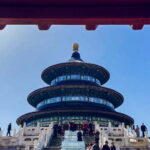
Temple of Heaven is the third UNESCO stop in Beijing. This one works because it’s not just architecture—you also get the idea of prayer and harvest rites tied to the start of each year. The surrounding park is where locals practice Tai Chi and other arts, and even if you don’t join in, it gives the area a more lived-in feel than a pure stone-and-hall museum.
Peking roast duck and the Muslim Quarter: eating your way through Xi’an
After Beijing, you fly to Xi’an, and once you land, a guide and driver pick you up at the airport exit. That matters because airport-to-city transfers can eat hours if you’re doing them alone.
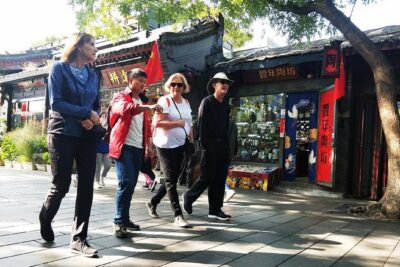
In Xi’an, you’ll head to the Muslim Quarter, a downtown area rooted in Silk Road history and Muslim merchant communities. The practical way this experience is handled is simple: you explore the area and then have dinner there, sampling representative snacks and dishes. The food isn’t just a side mission—it’s the best way to feel how Xi’an differs from Beijing.
Dinner here also creates a smooth transition into hotel time. You’ll be driven to your included accommodation and get a buffet breakfast for the next morning. That breakfast piece is a quiet win on a trip where you’ll be walking and timing transport carefully.
Xi’an City Wall and Terracotta Warriors: world-famous, but still worth slowing down
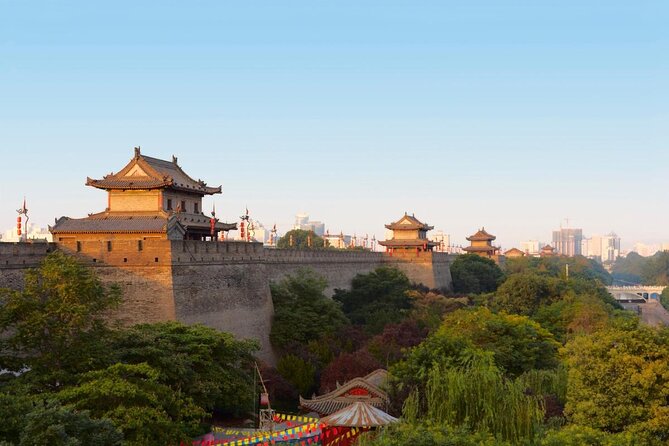
In the morning, you’ll visit the Xi’an City Wall, constructed in the early Ming Dynasty period and described as the best-preserved and longest city wall in China. The wall’s scale is hard to imagine until you’re standing near it: roughly 14 kilometers long, with a wide top and thicker base. The guide context helps here—this wasn’t only defense, it also shaped how people moved through the city.
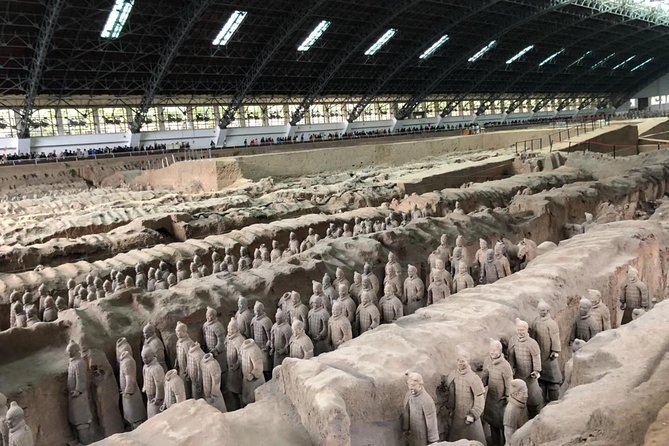
Next, you’ll go to the Museum of Qin Terra-cotta Warriors and Horses. This is the big one: more than 8,000 life-sized terracotta figures found in multiple burial pits, built to guard the first Chinese emperor in the afterlife. The story is famous for a reason, including the discovery in 1974 while digging a water well.
This is where your guide really earns their fee. With context, the museum stops being a “wow” and starts becoming understandable: different pits, the purpose of the underground army, and how this shifted what historians could prove about the Qin period.
One travel note: you’ll likely do a lot of indoor walking and standing. If you’re the type who gets museum fatigue, plan on using your guide to choose key areas first, and don’t feel bad about moving at a steady pace rather than sprinting for every room.
Bullet train to Chengdu and Wenshu Temple tea tasting
After Xi’an, you take the bullet train to Chengdu (about 4 hours, traveling through the Qinling mountain range). The comfort of a high-speed ride is a big part of why this itinerary works at all—you arrive in fewer hours than older routes would allow.
Once you reach Chengdu, the guide and driver meet you, then you head to Wenshu Temple (Wenshu Yuan). This temple is noted as one of the oldest in Chengdu, dating back to the Sui Dynasty era. The centerpiece experience here is a traditional tea tasting, which is a nice counterweight after heavy sightseeing earlier in the trip.
Sichuan is known for food with a reputation, and Chengdu is famous for a slower lifestyle. Tea and temple time fits that vibe because it’s a calmer pace, not another ticket line.
For dinner, you’ll try Sichuan hot pot at a popular local restaurant. If you don’t do spicy, you can request a non-spicy hot pot, which keeps the experience comfortable without feeling like a compromise.
Then you check into your included 4-star hotel and get breakfast again the next morning.
Panda time at the breeding research base, then straight to Shanghai
The tour’s early start is on purpose. You visit the Giant Panda Breeding Research Base (Xiongmao Jidi) in the morning. The schedule mentions that pandas tend to be more active then, which improves your chances of seeing them eating bamboo for breakfast and playing. You’ll have time for photos, but the better goal is watching behavior rather than only getting shots.
Because your visit is early and guided, you’re more likely to see the animals during active moments rather than during slow periods. If you’ve ever spent half a day in a panda crowd with no luck, you’ll appreciate the logic here.
After the panda visit, you fly to Shanghai. When you arrive at Pudong International Airport, a driver meets you and takes you to where you need to be—your own pre-booked hotel, train station, or port—so you can start the next part of your trip without guessing transportation.
Hotels, meals, and transport: what is included and what you’ll still budget for
Here’s what you can count on, and why it matters:
- Hotels: 1 night in Xi’an (5-star) and 1 night in Chengdu (4-star), both with buffet breakfast.
- Transport: bullet trains for Beijing→Xi’an and Xi’an→Chengdu, plus a flight from Chengdu→Shanghai. Private vehicles with professional drivers handle transfers inside each city.
- Guides and tickets: professional English-speaking guide service in Beijing, Xi’an, and Chengdu, plus admission fees for the listed sights.
- Meals: 4 lunches and 1 dinner included, plus breakfasts at the hotel.
The one extra cost to plan for is optional gratuities to your guide and driver. The tour data calls it optional, but in practice, it’s a good habit to budget a little.
Who this tour is best for (and who should pick a slower plan)
This works best if you want the big names in China without turning your trip into a scheduling project. It’s especially good for couples and small groups who like a plan that still includes room for photos and walking.
If you’re someone who enjoys deep, slow exploration in one city—like staying multiple days around just Beijing’s historic center—this might feel too compressed. Also, if early mornings and frequent city moves drain you, consider a longer tour with fewer transitions.
Should you book this private 4-day China highlight tour?
I’d book it if your top priority is smart coverage of Beijing, Xi’an, Chengdu, and Shanghai with private guidance, ticketed highlights, and major transport already handled. The value comes from the way the schedule removes the stress points: getting from point A to B, entering the right sites at the right times, and having someone explain what you’re seeing.
I’d think twice if you want a relaxed pace or you’re visiting on a Monday and you’re specifically set on the Forbidden City with no alternatives. But even then, the plan includes a swap (Summer Palace or Lama temple), so it’s not a dead-end.
FAQ
What time does the tour start?
The start time is 8:00 am.
Does the tour include hotel pickup and transfers?
Pickup is offered for the first day in Beijing (you share your booked hotel info), and on the last day in Shanghai there is an airport transfer to your booked hotel, train station, or port. Private vehicles and drivers are also included in the cities you visit.
Are flights and bullet trains included?
Yes. Bullet trains are included for Beijing to Xi’an and Xi’an to Chengdu, and a flight is included from Chengdu to Shanghai.
Is the Forbidden City always included?
No. The Forbidden City is closed on Mondays, and the tour replaces it with Summer Palace or Lama temple on those days.
What are the hotel standards?
You get one night in Xi’an at a 5-star hotel (with breakfast buffet) and one night in Chengdu at a 4-star hotel (with breakfast buffet). Rooms are described as standard rooms.
Is this tour refundable or changeable?
No. It is non-refundable and cannot be changed for any reason; if you cancel or request an amendment, the amount paid is not refunded.