REVIEW · BEIJING
Ming Tombs Sacred Way & Underground Palace & Water Wall P Tour
Book on Viator →Operated by Mark's Guide & Driver Service Beijing · Bookable on Viator
A day trip with two very different kinds of wow. I love the Ming Tombs Sacred Way for its big, meaningful statues and easy pacing, and I also love the Huanghuacheng Water Great Wall hike where the wall meets the man-made lake views. One thing to consider: this is still a real walking and climbing day, so comfortable shoes matter, and the underground section can feel cool.
This private tour is built for people who want classic imperial sights plus a Great Wall area that feels less crowded and more natural. You’ll get hotel pickup, an air-conditioned car, a provided lunch, and entrance tickets, but you should plan that the driver handles logistics rather than acting as your inside-site guide.
In This Review
- Key highlights to look forward to
- Ming Tombs and the Sacred Way: statues, symbols, and good flow
- Dingling Underground Palace: Emperor Wanli’s tomb 89 feet down
- Lunch and the drive toward Huanghuacheng
- Huanghuacheng Water Great Wall: a wild walk with lake views
- How the guide handles the climb (and why it matters)
- Price and value: what $150 buys you here
- What this day trip feels like in real life
- Who should book this tour
- Should you book Ming Tombs Sacred Way + Underground Palace + Water Wall?
- FAQ
- What time does the tour start?
- How long is the tour?
- Where is the tour located?
- Is hotel pickup and drop-off included?
- What entrance fees are covered?
- Is lunch included?
- Do I need an English-speaking tour guide inside the attractions?
- What should I wear?
- What is the minimum age?
- Is the tour private?
Key highlights to look forward to
- Spirit Way statues you can actually understand: lions, camels, elephants, xiezhis, and even a mythological unicorn, with on-the-spot explanations.
- Dingling at 89 feet underground: Emperor Wanli’s tomb is unusually accessible to the public and designed around five rooms.
- Wanli’s long reign, in a physical place: you’ll visit the burial site of the Ming emperor who ruled for 48 years.
- Huanghuacheng’s less-restored, wild feel: an older inner-wall section that stays more original than many rebuilt stretches.
- Water Wall views tied to geography: the wall crossed a valley that was flooded by the Xishuiyu Dam and later reappeared above the lake.
- A guided route up the ramparts: you’re shown where to climb and how to move safely for the best scenery.
Ming Tombs and the Sacred Way: statues, symbols, and good flow
Your morning starts with hotel pickup around 8:30 am and a direct drive out of the city, about 1.5 hours to the Ming Tombs area. The grounds cover about 30 acres (12 ha), so even though this is a day trip, you’re not just making quick photo stops. The pacing is sensible: you spend real time at the main experience, then move on to the underground palace, and later the Great Wall hike.
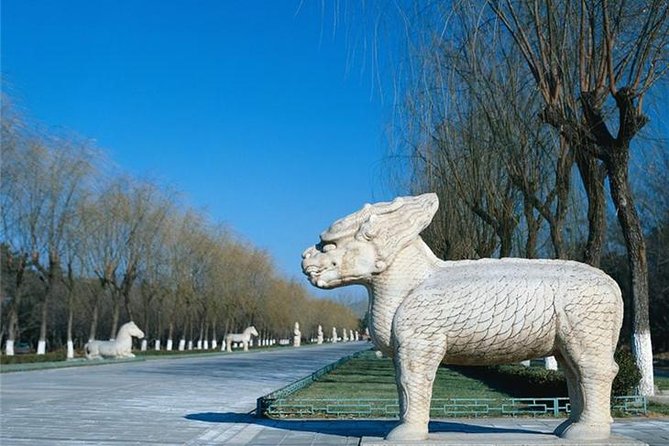
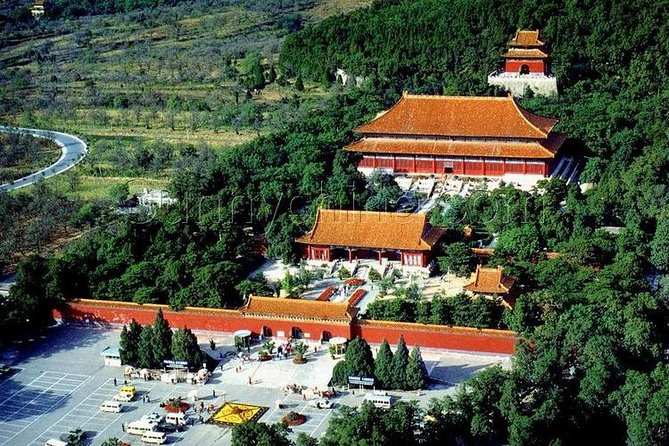
The first major stop is the Stone Animal area and then, right away, the walk that people remember most: the Sacred or Spirit Way. This decorative walkway is lined with around 36 large statues, and what makes it worth your time is the meaning behind the animals and figures. You’re looking at a line-up of power and protection symbols: lions, camels, elephants, xiezhis (a mythical creature), and even a unicorn-like figure tied to legend. With your guide explaining what each one represents, you end up seeing the statues as a message, not just scenery.
Practical tip: wear shoes with real grip. The Spirit Way is mostly walkable, but you’ll still cover some ground, and you want your footing for stairs and uneven patches near entrances.
One drawback to keep in mind: this part is very popular within the tomb complex. Even so, the tour design helps because you’re not doing it solo with a wandering plan. The day is set up so you can focus on the sights rather than figuring out timing.
You can also read our reviews of more tours and experiences in Beijing.

Dingling Underground Palace: Emperor Wanli’s tomb 89 feet down
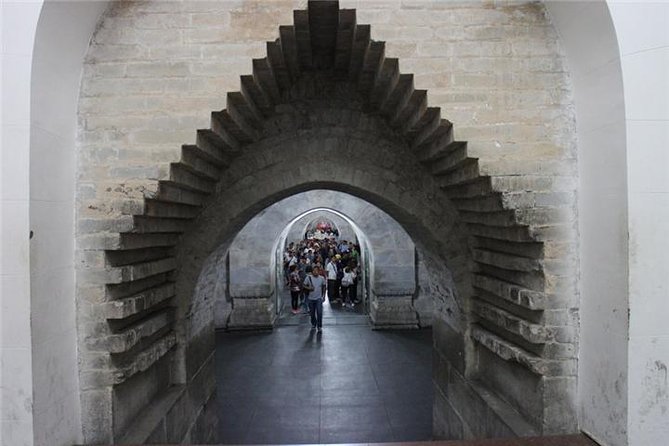
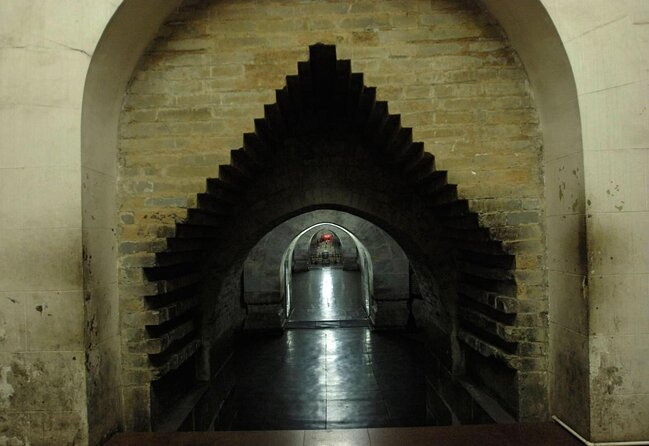
Next you go to Dingling Underground Palace, the key reason this tour is appealing if you want something more than a surface-level tomb visit. This is the only Ming tomb open to the public, and it’s far from superficial. The burial palace sits about 89 feet below ground, so you’re going from bright daylight into a cooler, more enclosed space.
Dingling is associated with Emperor Wanli, the 13th Ming emperor. The name matters here: his reign lasted 48 years, and the tomb reflects that long, established imperial confidence. Inside, you’ll find that the underground palace is arranged in five rooms. That’s an important detail because it gives the visit structure; you’re not just walking through one big corridor and moving on. You can take in artifacts and understand what you’re seeing as part of a planned layout.
The tomb also has displays of some of the emperor’s jewels and other artifacts. Even if you don’t read every label, the combination of preserved architecture and shown objects helps you make sense of how burial practices were designed to project authority.
A practical note: underground sites can feel cooler than expected. If you tend to get cold easily, bring a light layer. And since the tour includes lunch after this stop, you’ll usually have time to reset before the next leg.
Lunch and the drive toward Huanghuacheng
After the underground visit, you break for Chinese lunch at a local restaurant. Lunch here is included, which is one of the biggest value boosts of the day. You’re not spending time searching for food between major sites, and you’re less likely to get stuck waiting for a table or navigating menus when your schedule is tight.
Once you’ve eaten, you transfer by car to the Great Wall area at Huanghuacheng. This is where the day changes tone. The Ming Tombs are formal and sculptural; the Great Wall hike is active and scenic, with more of a “move through the land” feeling.
If you like your travel days to stay efficient without feeling rushed, this is a good handoff point. The drive gets you ready to hike, and lunch keeps your energy steady for the ramparts later.
Huanghuacheng Water Great Wall: a wild walk with lake views
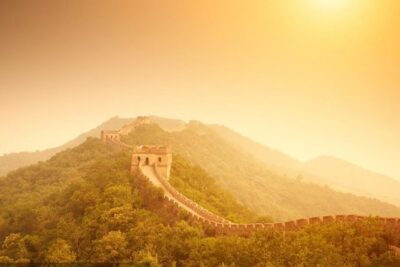
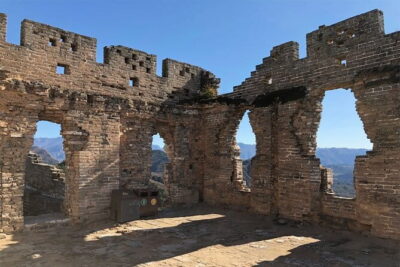
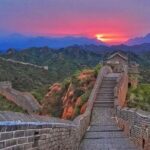
The afternoon highlight is the Water Great Wall at Huanghuacheng. This section is often less visited than the famous, restored stretches, and the difference shows immediately once you’re on it. You’re hiking along terrain that feels more “native” to the landscape—mountainous, with that natural unevenness that makes the wall feel real instead of staged.
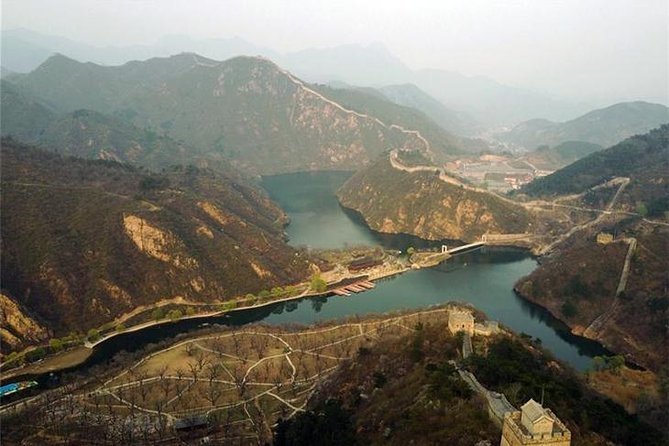
This matters because you’re seeing an older Ming Dynasty inner wall section that stayed more original and less restored. The wall’s relationship to water is the star feature. This stretch is close to a man-made lake, and when the Xishuiyu Dam was built, the valley area where the wall crossed got flooded. Later, the wall re-emerged above the water surface along the undulating mountain terrain. The result is a wall that can look like it’s flowing into the lake.
What you’ll remember most is the view of the wall cascading into the water below. It’s not just a single lookout point; it’s multiple sightlines as you move along the ramparts and change elevation. And because this route is close to the lake, you can often see the wall’s shape against the shoreline rather than only seeing it stretching away.
Season detail you can plan around: in summer, the area below can turn into a sea of wild yellow flowers. The name linked to the flowers is huanghua, and that’s part of why this section is called Huanghuacheng. If you’re traveling in other seasons, you’ll still get the core advantage: fewer crowds than more famous wall areas, and cooler mountain air compared with central Beijing.
A small practical consideration: the “wild” aspect means there’s less modern polish. Expect uneven ground and stairs, and take it slow on any slippery patches. Your guide helps with route choice, but your legs still do the work.
How the guide handles the climb (and why it matters)
On this tour, you’re not just being dropped at a gate and left alone. Your guide shows you the best path to ascend the ramparts and helps you navigate the section safely. That makes a big difference at Huanghuacheng because you’ll be hiking mountainous terrain where stepping mistakes are easy to make if you’re rushing or guessing.
This is especially helpful if you’re not sure which parts are easiest or where the best angles to the lake are. The day is set up so you spend time walking the meaningful section instead of zigzagging randomly.
After you come back down, you get time to wander around by the lake. That “slow down and look” part is worth protecting. It’s often where the photos come together, because you can see how the wall sits in the water setting from different levels.
Price and value: what $150 buys you here
At $150 per person for an 8-hour private day, the price makes sense when you count what’s handled for you. You get:
- Hotel pickup and drop-off
- Private transportation in an air-conditioned car
- English-speaking driver (and no need to sort out transit between sites)
- Entrance fees included
- Chinese lunch included
That combination is the value play. A lot of Beijing day trips look cheap until you add entrances, transport, and meals. Here, most of the must-haves are covered, so you can focus on the sights instead of budgeting mid-day.
The one “watch your expectations” point: your English-speaking driver is the main language support for the trip, while the tour doesn’t list an English-speaking guide inside attractions. In practice, that can still work well if you’re comfortable with a more flexible explanation style and you care most about the sites themselves. If you need an expert guide inside every museum-like room, you might feel you want more interpretation on certain parts.
What this day trip feels like in real life
Here’s the overall rhythm: a structured morning at the tomb complex, then lunch, then a hike-style Great Wall afternoon. That’s a smart mix. It gives you both cultural depth (Spirit Way symbolism, Dingling palace design) and physical payoff (ramparts and panoramic lake views).
It also reduces the common Beijing day-trip problem: too much time in transit and not enough time where it counts. The timing is built around the major experiences, so you’re not constantly waiting around.
If you care about authenticity, the Huanghuacheng angle is especially attractive. The less-restored, wild condition gives you that older feel, and the water setting makes it different from the typical wall photographs.
Who should book this tour
This tour is a great fit if you want:
- A private day without dealing with public transport between major sights
- The combination of Ming tomb symbolism plus a Great Wall hike with lake scenery
- A guide-led route that helps you navigate safely on the ramparts
It may not be the best fit if:
- You want a fully guided, museum-style interpretation inside every room
- You can’t handle walking and climbing for a full day, even if the tour is paced sensibly
Should you book Ming Tombs Sacred Way + Underground Palace + Water Wall?
If your short list for Beijing includes both imperial tombs and a less-crowded Great Wall experience, I’d book this. The Ming Tombs portion gives you the visual storytelling of the Spirit Way plus the rare underground access at Dingling. Then Huanghuacheng delivers the different kind of Great Wall day: wild terrain, fewer crowds, and those signature lake views where the wall seems to spill into the water.
The strongest reasons to choose it are practical: the entrances and lunch are handled, pickup is included, and your route is set up for the best hike experience. If you’re comfortable with a hiking shoes day and you’re okay with an English-speaking driver approach rather than a full guide inside every site, this is a solid value way to see a meaningful slice of China’s imperial world and one of the Great Wall settings that actually looks like it belongs to the landscape.
FAQ
What time does the tour start?
The start time is 8:30 am.
How long is the tour?
The tour duration is about 8 hours.
Where is the tour located?
It’s in Beijing, China, covering the Ming Tombs area and the Great Wall section at Huanghuacheng.
Is hotel pickup and drop-off included?
Yes. Hotel pickup and drop-off are included.
What entrance fees are covered?
The tour includes admission ticket(s) for the included tomb and Great Wall stops listed in the itinerary.
Is lunch included?
Yes. Chinese lunch is included.
Do I need an English-speaking tour guide inside the attractions?
The tour includes an English-speaking driver, but it does not include an English-speaking tour guide inside tourist attractions.
What should I wear?
You should wear comfortable hiking shoes.
What is the minimum age?
The minimum age is 10 years.
Is the tour private?
Yes. It’s a private tour/activity, and only your group participates.