REVIEW · BEIJING
Beijing:Tiananmen Square tickets (guide optional)
Book on GetYourGuide →Operated by Chinatravelhelper · Bookable on GetYourGuide
A morning at Tiananmen Square starts with a line. The payoff is seeing one of Beijing’s most iconic spaces up close, with clear time windows and a guided plan if you choose the guide option. I like the pre-reservation approach because it saves you from the worst of the scramble, and I also like that you get the big-picture context so the architecture and scale actually make sense. The main consideration: if you skip the optional guide, you may feel a bit on your own once you’re at the square.
Tiananmen Square sits dead center in Beijing and covers an enormous footprint. It runs 880 meters north to south and 500 meters east to west, about 440,000 square meters total—so even when you’re surrounded by people, the layout helps you keep your bearings. If you choose a time slot like the morning or afternoon window, you’ll have a more comfortable rhythm than trying to wing it on the fly.
One drawback to consider is that the square can feel strict and controlled, with a lot of security activity. Also, people who expected a guided experience were less happy when they ended up without one—so if you want interpretation, make sure you select the guide option.
In This Review
- Key things to know before you go
- Why pre-booking Tiananmen Square saves your day
- Picking your time slot: flag ceremony vs day visits
- Flag ceremony: early, dramatic, and very time-tight
- Morning, afternoon, evening: your flexibility lever
- Getting to the meeting point: two metro stations, one plan
- What you’ll see at Tiananmen Square: scale you can feel
- Nearby landmarks that connect the dots
- The optional guide: when it’s worth it (and when it isn’t)
- Small-group advantages: limited to 8 people
- What to bring and what to avoid
- Reservation timing: do it before 10:00 PM the day before
- Value check: ticket cost plus optional guide
- Nearby sightseeing ideas for after Tiananmen Square
- Who this Tiananmen Square visit is best for
- Should you book this Tiananmen Square ticket with optional guide?
- FAQ
- What’s the reservation deadline?
- Where is the meeting point?
- Which metro station is recommended for getting close to Tiananmen?
- Do I need a passport?
- What visit times are available?
- Is an English guide included?
- How long is the experience?
- How big is the group?
- What items are not allowed?
Key things to know before you go
- Pre-reserved entry: designed to cut the time and stress of getting into the square area
- Time-slot choices: flag-ceremony window plus morning, afternoon, and evening visits
- English live guide option: choose the guide if you want context, not just photos
- Passport required: you’ll need the exact passport info in your reservation
- Small group: limited to 8 participants for a more manageable experience
- Security time is real: plan for a checkpoint process and a limited time inside once admitted
Why pre-booking Tiananmen Square saves your day

Tiananmen Square is the kind of place where timing matters. The square itself is massive and famous, but the real bottleneck is usually what happens right before you get to see it: security checks and controlled entry.
That’s why I’m a fan of the pre-reservation style ticket here. Instead of arriving and guessing what the flow will look like, you lock in a specific visit window (morning, afternoon, evening, or the flag ceremony). In practical terms, it means less time standing around and more time experiencing the site.
There’s also good value in the way this is packaged. Tickets are included, and an English guide is optional. At a price listed as about $2.23 per person, you’re paying mainly for the entry access, not a heavy production. If you want help making sense of what you’re looking at, the add-on guide fee is where you can turn the visit from scenery into a story.
You can also read our reviews of more tours and experiences in Beijing


Picking your time slot: flag ceremony vs day visits
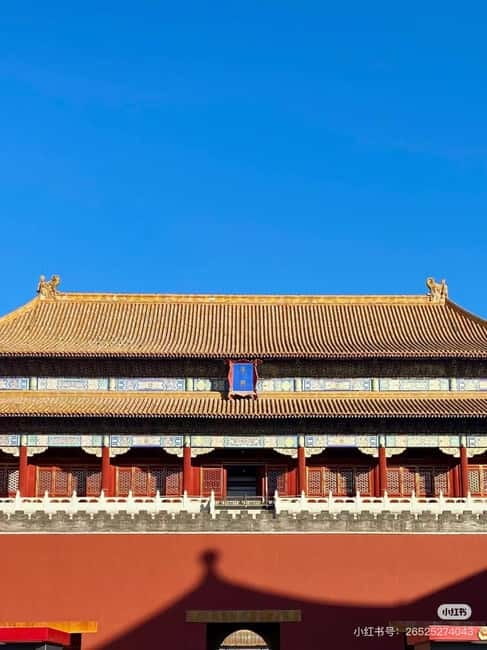
This experience is built around a few set windows, and choosing correctly can make the difference between an easy morning and a rushed one.
Here are your options:
- Flag-rising ceremony: 5:30–7:00
- Morning: 7:00–12:00
- Afternoon: 12:00–15:00
- Evening: 15:00–19:00
Flag ceremony: early, dramatic, and very time-tight
If you’re tempted by the flag ceremony window, treat it as a full early-morning event. You’ll be up before most people are out of bed, and the experience is inherently time-sensitive because you’re aiming for that ceremony period.
The upside is obvious: you’re not just seeing architecture, you’re seeing a ritual tied to the site. If you like ceremonies, national monuments, or you simply enjoy watching how places work, this is a strong choice.
Morning, afternoon, evening: your flexibility lever
If you’d rather avoid the super-early wake-up, morning is usually the best blend of clear visibility and manageable crowds. Afternoon can work well too, especially if your other plans in Beijing are built around museums or nearby sights. Evening gives a later option, though you should still expect security procedures and that your actual time inside may be limited once you’re admitted.
One useful real-world detail from someone who visited around 9:00 is that it took about an hour at the security checkpoint, and then they stayed inside for roughly an hour. Your exact timing can vary, but it’s a solid reminder that the checkpoint is part of the “tour,” not a quick formality.
Getting to the meeting point: two metro stations, one plan
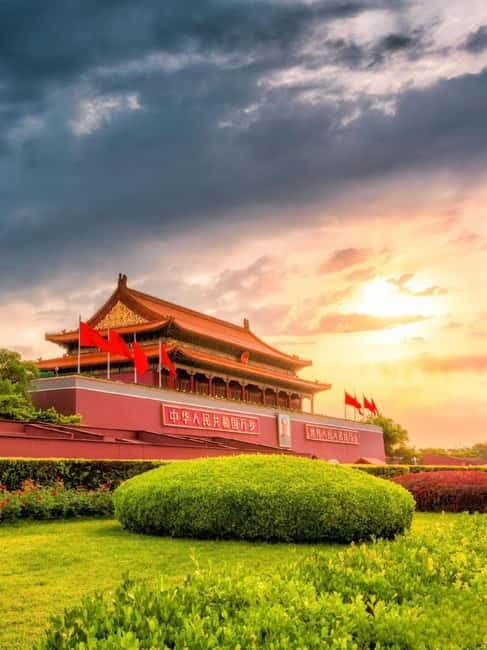
For transit, the information you’re given includes a couple of metro references, and it’s easy to get confused if you don’t slow down and read carefully.
- Meeting point: Qianqiao Station, Line 8
- Transport hint: get off at Tian’anmendong Station, Line 1
Here’s how I’d handle it: use your confirmation details as the final word for where you should meet, because the meeting point is the one tied to the group logistics. And if you’re planning your own walking route, know that Tian’anmendong on Line 1 is a common way to approach the Tiananmen area.
Either way, give yourself some buffer. Beijing metro connections are fine, but security lines and crowd density can make a “quick change” turn into a longer day than you planned.
You can also read our reviews of more guided tours in Beijing






What you’ll see at Tiananmen Square: scale you can feel
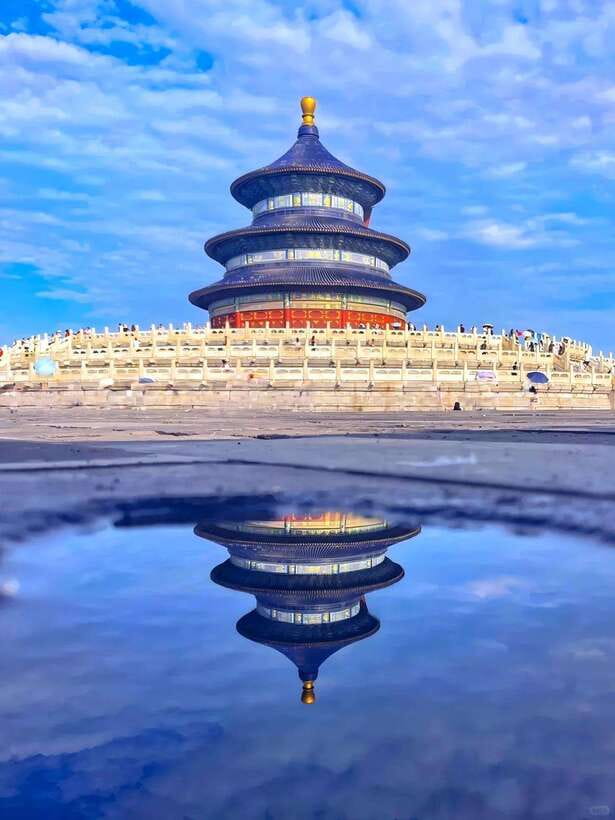
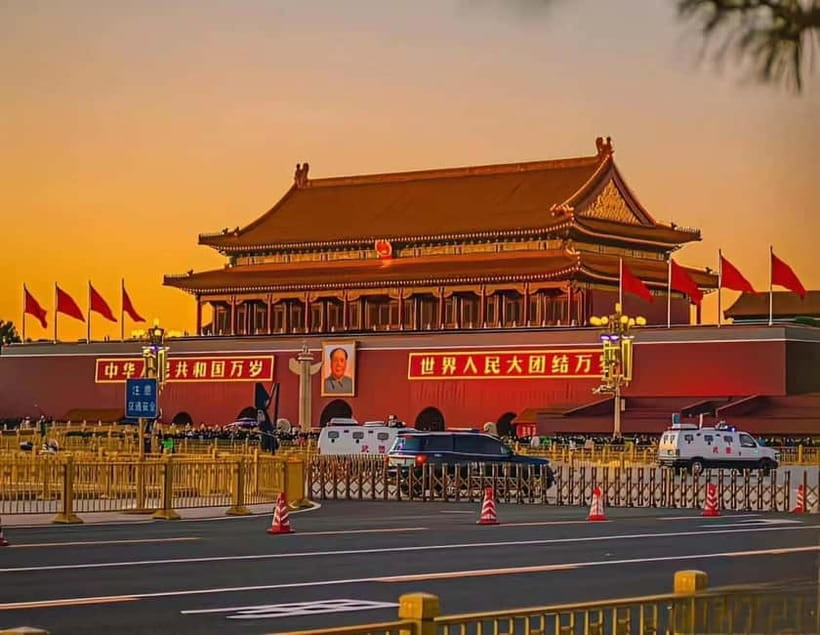
Once you’re past the checkpoint, Tiananmen Square is all about scale and symmetry. The site stretches 880 meters north to south and 500 meters east to west, covering about 440,000 square meters. That’s not trivia—it’s the reason the place feels both grand and slightly overwhelming.
You’ll notice the layout almost immediately:
- The open space is designed for wide views and clear sightlines.
- The architecture surrounding the square makes it feel like a stage, even when you’re standing among people.
And here’s the key: if you only walk in and take photos, you might miss why it’s so significant. That’s where the optional English guide can help. With context, you’re not just looking at buildings; you’re understanding how the square connects to modern China’s public life and historical identity.
Nearby landmarks that connect the dots
Even if your focus is Tiananmen Square, you’re in a prime cluster of top Beijing sights. Three major nearby options are:
- Beihai Park
- National Museum of China
- Forbidden City
If you want to build a smooth day, think in zones. For example, you can pair Tiananmen Square with a museum stop so the time you spent learning doesn’t evaporate once you exit. Or, if you’re doing Forbidden City anyway, time your day so you’re not zig-zagging across the city under a tight schedule.
The optional guide: when it’s worth it (and when it isn’t)

This is one of the biggest practical decisions you’ll make before you go.
The ticket includes entry to Tiananmen Square. The guide fee is optional, and if you select it you’ll get a live English guide.
Based on what I’ve seen in real visitor experiences, the most frustrating scenario is arriving expecting an English guide and getting none. So if you want the history explained in plain language—what you’re looking at, why it matters, and how to read the space—choose the guide option.
When a guide is part of the plan, the visit becomes easier in two ways:
- You’re less likely to wander aimlessly in a huge open area.
- You get immediate context, which helps you enjoy the architecture beyond taking pictures.
If you’re the type who just wants the visuals and doesn’t mind reading on your phone or using your own background knowledge, you might feel fine without the guide. But if interpretation is your goal, don’t leave it to chance.
Small-group advantages: limited to 8 people
This is set up as a small group experience, limited to 8 participants. That matters more than you might think at a controlled site.
Smaller groups usually mean:
- less crowding around your meeting point
- easier communication with the guide (if you booked one)
- fewer problems staying together when security procedures slow things down
In a place as famous as this, crowd management is part of the experience. A small group helps you keep your momentum, especially once you’re inside the entry flow.
What to bring and what to avoid

This is not a “pack whatever” day. You need your essentials ready before you start standing in line.
Bring:
- Passport (the reservation information needs to match your passport)
What to avoid:
- Smoking
- Making fire
Also, pay attention to the reservation details. The needed info includes your full name, passport number (the details say only the number is essential), sex, age, nationality, and which visit time you choose.
If you ever felt that Chinese ticketing can be fussy, this one is consistent with that style. The good news is that once you handle the paperwork correctly, you’re set up for a smoother on-the-ground day.
Reservation timing: do it before 10:00 PM the day before
The reservation rule is simple but strict: make your reservation no later than 10:00 PM (Beijing time) the day before.
That matters because the time windows are pre-set. If you’re booking last minute, you may not get the exact slot you want. If you know your general sightseeing schedule, pick a time window that fits your other plans and commit early.
A small tip: if you’re doing multiple major sights close together, build your day around Tiananmen Square’s time window. It’s the one that tends to dictate your pace more than anything else.
Value check: ticket cost plus optional guide
Let’s talk money in a useful way.
You’re paying about $2.23 per person for Tiananmen Square tickets. That number signals this is ticket-focused rather than a premium add-on experience. You aren’t buying luxury here—you’re buying access and time-slot structure.
Then you decide whether to add the guide. If you select the English guide option, you’re essentially paying to convert your visit from looking at a famous place to understanding it while you’re there.
So the value equation is:
- If you want structure and history: add the guide
- If you want a low-cost ticket with flexible sightseeing afterward: you can keep it minimal
Either way, the small group setup and time-slot planning are the real “value levers,” because they reduce wasted time.
Nearby sightseeing ideas for after Tiananmen Square
If you have extra time on the same day, you’re in an ideal spot to stack your sightseeing without long commutes.
Here are sensible follow-ons:
- Beihai Park: great if you want a calmer pace after the intensity of security and crowds
- National Museum of China: a natural pairing if you want context and exhibits right after the monument
- Forbidden City: a classic combo, especially if you plan to explore imperial-era Beijing
The big strategy is to keep your day coherent. Tiananmen Square gives you the modern political center stage; nearby museums or historic sites can balance that with deeper context. If your schedule allows only one add-on, pick the one that matches your travel mood that day: calm walk, museum focus, or grand historic scale.
Who this Tiananmen Square visit is best for
This experience works best for:
- First-time visitors who want the iconic Tiananmen Square sight with fewer logistics headaches
- People who like guided context and clear time windows
- Travelers who prefer smaller groups (limited to 8)
It may be less satisfying for you if:
- You hate early starts and are considering the flag ceremony window
- You mainly want a relaxed, unguided wander with no security-related time pressure
- You’re expecting a tour feel but you book only the ticket portion without choosing the guide option
If you want the square to make sense quickly, book the slot that matches your body clock and add the guide.
Should you book this Tiananmen Square ticket with optional guide?
If your goal is to see Tiananmen Square without gambling on entry timing, I’d book it. The pre-reservation structure, the English guide option, and the small group size are practical upgrades over arriving and hoping for the best.
I’d especially book with the guide if you want history and architecture explained in plain terms during the visit. The negative experiences usually point back to one thing: people felt they didn’t get the guidance they expected.
If you’re cost-conscious and don’t need interpretation, the ticket-only option can still be a good deal—just go in knowing the real experience includes security time and that your time inside may be limited once admitted.
FAQ
What’s the reservation deadline?
You need to make your reservation no later than 10:00 PM (Beijing time) the day before.
Where is the meeting point?
Get off at Qianqiao Station, metro Line 8.
Which metro station is recommended for getting close to Tiananmen?
You’re instructed to get off at Tian’anmendong Station, metro Line 1.
Do I need a passport?
Yes. You should bring your passport, and reservation details are tied to it.
What visit times are available?
You can choose the flag-rising ceremony (5:30–7:00), morning (7:00–12:00), afternoon (12:00–15:00), or evening (15:00–19:00).
Is an English guide included?
Tickets are included, and a live English guide is available as an optional add-on.
How long is the experience?
It’s listed as 6 hours to 1 day, depending on the time slot you choose and availability.
How big is the group?
The group is limited to 8 participants.
What items are not allowed?
Smoking and making fire are not allowed.