REVIEW · BEIJING
Beijing Tai Chi and Tea Ceremony Experience
Book on Viator →Operated by Beijing San Feng Tai Chi Club · Bookable on Viator
Tai chi and tea pair well in Beijing. This 3-hour morning with Beijing San Feng Tai Chi Club turns calm movement and Chinese tea culture into something you can actually practice after you leave. I like that the Tai Chi coach, Eric, teaches with patience and checks your level before shaping the lesson, and I also like that the tea segment is led by Alice in a hands-on way, not just a demo. One possible drawback: food isn’t included, so plan to eat afterward if you get hungry after the class.
You start at Jixiaolan Former Residence, then spend about an hour on Tai Chi basics tied to Taoist ideas about Qi and relaxation. After that, you move into a tea house for a guided tasting of about 4–5 teas (plus 3–5 snacks), where you learn how to observe tea quality and how to slow down with a Kungfu-style ceremony.
In This Review
- Key Things I’d Highlight Before You Go
- Meet at Jixiaolan Former Residence: Start Your Morning in the Right Place
- What to do before you arrive
- Eric’s Tai Chi Lesson: Taoism, Relaxation, and Basic Movements
- How the class feels in practice
- Presence Work You Can Use Immediately: Mind, Eyes, and Body
- The Taoist connection (and why it helps)
- Transition to the Tea House: From Movement to a Slower Mind
- Alice’s Kungfu Tea Ceremony: Taste 4–5 Teas and Learn What You’re Drinking
- What you’ll do during tea tasting
- Snacks are included, but don’t over-plan meals
- Understanding Tea Through the Taoist Lens: Shen and Temperament
- Duration and Logistics That Affect Your Day Plan
- Private in the sense that matters
- Price and Value: Is $95 for a Tai Chi + Tea Session Fair?
- Who this feels most worth it for
- Best For Who: Beginners, Calm-Seeking Mornings, and Temple of Heaven Days
- What to Expect When You Show Up
- Should You Book This Beijing Tai Chi and Tea Ceremony Experience?
- FAQ
- How long is the Beijing Tai Chi and Tea Ceremony experience?
- What does the Tai Chi lesson include?
- How many teas do I taste, and is tea included?
- Is food included?
- Where does it start, and when?
- Is it a private tour, and can I cancel?
Key Things I’d Highlight Before You Go
- Eric adjusts the Tai Chi lesson to your experience level, so beginners aren’t lost.
- You practice more than forms, including basic relaxation work and self-massage methods.
- Alice leads the tea part with clear context about tea culture and how to taste thoughtfully.
- You taste multiple teas (4–5 types) rather than sampling just one.
- The format is structured but relaxed, with learning tied to doing, not just watching.
Meet at Jixiaolan Former Residence: Start Your Morning in the Right Place
The experience begins at Ji Xiao Lan Former Residence (Ji Xiao Lan Gu Ju) in Beijing’s Xicheng District, near public transportation. Starting at 9:00 am helps you catch calmer streets and a more peaceful pace before the city ramps up.
This meeting point matters because it sets the tone: you’re not bouncing from one landmark to another. Instead, you’re stepping into a quiet morning routine—movement first, then tea—so the day feels intentional rather than hurried.
You can also read our reviews of more tours and experiences in Beijing.



What to do before you arrive
Wear comfortable walking shoes. Even though the core of the tour is seated or studio-style during tea, you’ll still be moving around enough that stiff shoes can make the session feel longer than it should.
Eric’s Tai Chi Lesson: Taoism, Relaxation, and Basic Movements
The Tai Chi portion is about 1 hour, and it’s not just about learning choreography. Eric explains the Taoist angle—how Tai Chi is linked to cultivating Qi through relaxation work—and that framework makes the practice feel more meaningful than a fitness class.
You’ll go through basic relaxation forms, typical Tai Chi movements, and self-massage methods. That combination is useful because you’re not only learning external motion; you’re also learning ways to settle your body and pay attention from the inside out.
How the class feels in practice
Eric’s approach (as described in the experience) is to keep things beginner-friendly and structured. He checks your experience level, then organizes the lesson accordingly, which is exactly what you want if you’ve never done Tai Chi before.
You may find that Tai Chi instruction works best when you focus on slow, controlled movements rather than trying to “get it right” immediately. The whole point is to build comfort with the rhythm and posture, not to perform perfectly on your first morning.
Presence Work You Can Use Immediately: Mind, Eyes, and Body
One of the most memorable parts of the Tai Chi session is how it trains presence. The teaching emphasizes coordinated awareness—mind, eyes, and body—so you’re not drifting while you move.
Even if you only catch pieces at first, the practice can still do what you came for: make you feel steadier. Tai Chi is often praised for stress reduction, but the practical value here is that it gives you a simple method: slow down, align attention, and move with control.


The Taoist connection (and why it helps)
The tour explains that Taoist practice aims to improve overall health by encouraging the free flow of Qi and bringing harmony between man and nature. Whether or not you buy into the philosophy fully, the structure supports a common-sense outcome: slower breathing, less tension, and more intentional movement.
Transition to the Tea House: From Movement to a Slower Mind
After Tai Chi, the pacing shifts. You move into the tea house environment where the focus becomes sensory and calm rather than physical.
This transition is part of the value. If you only learn Tai Chi, you might treat it like a workout you’ll forget later. If you only do tea tasting, it can feel like a food activity. Put them together and you get a full “mind-body” routine: movement and then reflection.
Alice’s Kungfu Tea Ceremony: Taste 4–5 Teas and Learn What You’re Drinking
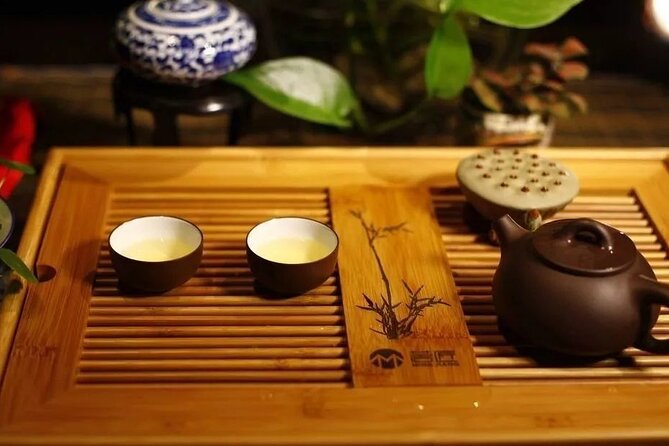
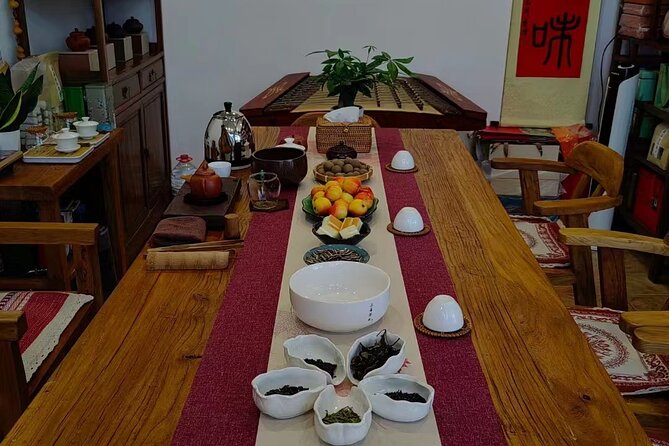
The tea session is led by Alice, and it’s a guided tasting rather than a quick sip-and-go. You’ll taste 4–5 types of Chinese tea and enjoy 3–5 snacks, guided by Alice as you learn how to distinguish tea quality.
You also participate in a Kungfu tea ceremony. That matters because Kungfu tea tends to emphasize careful brewing steps and attention to taste and aroma. Even if you don’t remember every detail, you’ll likely remember the feeling: fewer distractions, more patience, and a clearer sense that tea has layers.
What you’ll do during tea tasting
You’ll learn tea culture and how to observe tea quality for yourself. In other words, you’re not just being told which tea is “best.” You’ll get tools to taste more deliberately—especially useful if you normally drink tea without thinking about it.
Snacks are included, but don’t over-plan meals
The snacks are part of the tea experience, but the tour still doesn’t count as a full meal. If you’re prone to getting hungry in the morning, consider eating a light breakfast before you start, or plan for a meal right afterward.
Understanding Tea Through the Taoist Lens: Shen and Temperament
The overview connects tea to Taoist practice. It describes Chinese tea as important for Taoism because it can enhance Shen and help cultivate stable temperament and good moral conduct. It also frames tea as assisting internal cultivation.
Now, you don’t have to accept the terminology to benefit from the experience. What you can take away is the behavior pattern the ceremony encourages: slowing down, reflecting, and sipping with awareness. That’s the practical bridge between a Tai Chi class and a tea house lesson.
If you like wellness experiences that are more quiet ritual than loud “self-improvement,” this structure fits nicely.
Duration and Logistics That Affect Your Day Plan
The tour runs for about 3 hours, starting at 9:00 am and ending back at the meeting point. That makes it easy to plug into a morning itinerary without eating up your whole day.
It’s also noted as near public transportation, so you’re not forced to book a taxi just to get there. Private transportation is not included, which usually means you should plan to arrive using transit or your own means.
Private in the sense that matters
It’s described as a private tour/activity where only your group participates. Practically, that usually means less waiting around and more chance for instruction to fit your pace, especially for Tai Chi where body mechanics matter.
Price and Value: Is $95 for a Tai Chi + Tea Session Fair?
At $95 per person for roughly 3 hours, the price makes sense if you value two guided experiences in one package: a structured Tai Chi lesson and a guided tea ceremony tasting with multiple teas.
You’re paying for:
- An English-speaking master-style Tai Chi instruction (Eric in the experiences shared)
- A tea master-led tasting with 4–5 tea types and snacks
- Included coffee and/or tea, plus all fees and taxes
- A private format for your group
You’re not paying for:
- Food beyond the tea snacks
- Private transportation
- Anything beyond what’s listed as included
Who this feels most worth it for
If you want a local cultural routine that’s more hands-on than museum-style sightseeing, this is strong value. If you’re looking for a long food crawl or a full-day sightseeing plan, this may feel short—because it’s designed to be focused and calming.
Best For Who: Beginners, Calm-Seeking Mornings, and Temple of Heaven Days
This experience is a great fit for beginners because Eric checks your level and explains basic forms in a patient, organized way. Tai Chi can feel intimidating if someone throws too much at you, but the lesson is structured to keep you oriented.
It also pairs well with a classic Beijing morning routine. One of the experiences highlighted how it can be a great start when planning time around the Temple of Heaven. Since you’re starting at 9:00 am and you’ll be done in about 3 hours, you’ll likely have time to continue your day nearby.
What to Expect When You Show Up
You can expect a calm, teach-and-practice session rather than a lecture-only tour. You’ll have guidance on movement and relaxation, then you’ll have guidance on how to taste tea and understand tea culture.
Because confirmation is received at booking and the experience ends at the meeting point, you don’t need to worry about complicated routes during the session itself. Just show up ready to move slowly and pay attention.
Should You Book This Beijing Tai Chi and Tea Ceremony Experience?
Book it if you want a morning in Beijing that feels thoughtful and practical: Tai Chi with a real instructor, followed by a tea ceremony where you taste and learn, not just observe. The private format and the two-teacher setup (Eric for Tai Chi, Alice for tea) make it feel like a guided routine, not a quick stop.
Skip it (or reconsider) if you need a lot of food or you prefer nonstop sightseeing. Since food isn’t included beyond tea snacks, it’s best for mornings when you can handle a light early meal and then eat later.
If you’re the type who enjoys cultural activities you can repeat at home—slow movement, simple attention habits, and tea tasting with more awareness—this is an easy yes.
FAQ
How long is the Beijing Tai Chi and Tea Ceremony experience?
It’s about 3 hours total, with approximately 1 hour for the Tai Chi part.
What does the Tai Chi lesson include?
You’ll learn Tai Chi Taoism knowledge, basic relaxation forms, typical Tai Chi movements, and self-massage methods, guided by an English-speaking master.
How many teas do I taste, and is tea included?
You’ll have a chance to taste 4–5 types of Chinese tea. Coffee and/or tea are included.
Is food included?
No full food meal is included, but you do get 3–5 snacks during the tea house portion.
Where does it start, and when?
It starts at Jixiaolan Former Residence (Ji Xiao Lan Gu Ju) and begins at 9:00 am. The activity ends back at the meeting point.
Is it a private tour, and can I cancel?
It’s described as private, meaning only your group participates. Free cancellation is available up to 24 hours in advance for a full refund.