REVIEW · BEIJING
Beijing Summer Palace Ticket Booking
Book on Viator →Operated by Lily's Tour Company · Bookable on Viator
Two hours here feels like a whole day.
This Summer Palace (Yiheyuan) ticket is a simple way to get straight in and spend your time where the real magic lives: Kunming Lake, Longevity Hill, and the Qing-era halls and courtyards tied to emperors like Qianlong and residents like Empress Dowager Cixi. The site covers 3.008 square kilometers, with about three-fourths water, so even a short walk can feel like a scenic reset.
I like the practical payoff: your admission is covered, and with the QR code you can use the security check and enter at the east gate. I also love the built-in flow of the visit, which naturally strings together the Hall of Benevolence and Longevity, Kunming Lake, the Hall of Happiness and Longevity, and the Long Corridor.
One drawback to plan around: this is not a hotel-to-palace service. You’ll handle your own getting there, and the ticket is tied to the exact day you book.
In This Review
- Key things that make this ticket service worth a look
- A self-guided Summer Palace route: what your $7.80 ticket really covers
- Getting in at the East Gate with your QR code (and why your passport matters)
- Hall of Benevolence and Longevity: 1750 power in plain sight
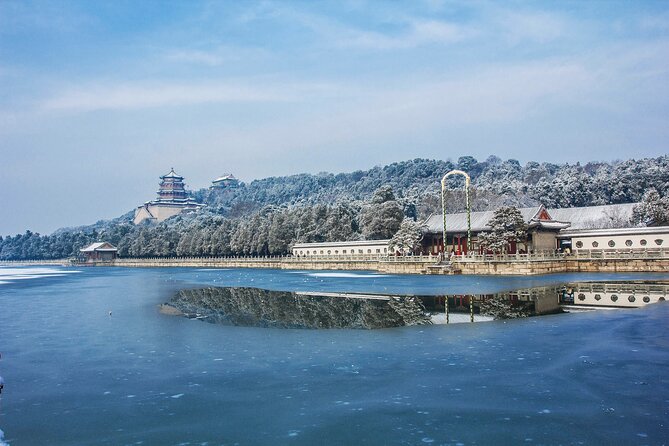
- Kunming Lake and Longevity Hill viewpoints: why the lake dominates the whole place
- Hall of Happiness and Longevity: Cixi’s residence in wood and daylight
- Long Corridor (728 meters) and Suzhou Market Street: the stroll that changes your pace
- Long Corridor: 728 meters of covered promenade
- Suzhou Market Street: Qing-era style outside the palace walls
- Crowds and weather: how to make the visit feel calmer
- Value for $7.80: when prebooking is a smart move (and when it might not be)
- Should you book this Summer Palace ticket service?
- FAQ
- Do I need hotel pickup or a guide for this ticket?
- How long does a typical Summer Palace visit take with this ticket?
- Is food or drinks included?
- Where do I enter Summer Palace with this service?
- Do I need my passport for this ticket?
- When will I receive the QR code?
- Is the ticket valid on other dates?
Key things that make this ticket service worth a look
- East Gate QR code entry after security checks, not waiting in the wrong line
- Covers core Summer Palace highlights like Kunming Lake, Cixi’s living area, and the Long Corridor
- Suggested 2–5 hour route so you don’t wander too far or try to rush everything
- Low-cost admission at $7.80 per person for a major Beijing landmark
- Passport name and number required at booking, then passport checked on the day
- Small maximum group size (up to 10) for this pre-booking ticket service
A self-guided Summer Palace route: what your $7.80 ticket really covers
Think of this as direct admission to the Summer Palace, not a guided tour with a set script. That’s good news if you like moving at your own pace. The typical visit window is about 2 to 5 hours, which matches how the grounds are laid out: you’ll spend time walking, stopping for views, and peeking into the key structures that matter most.
Your visit centers on the big trio of experiences. First, you get the grand imperial setting—halls and residences built for governance and court life. Second, you get the water-and-hill scenery through Kunming Lake and the surrounding paths. Third, you get the iconic promenade moments, especially the Long Corridor.
Along the way, you’ll hit a logical sequence. I’d plan roughly like this: start at the main grounds, spend around 2 hours getting your bearings, then add shorter stops for specific highlights—about 30 minutes each at places like the Hall of Benevolence and Longevity and Kunming Lake, around 20 minutes at the Hall of Happiness and Longevity, and 40 minutes for the Long Corridor. The whole point is to give you enough time for the sights without turning it into a forced march.
Also note what’s not included: there’s no food and drinks, and there’s no hotel pickup/drop-off. You’ll want to bring water and snacks and build in time for your commute. Optional extra activities on site—like boat tours—aren’t part of the admission ticket, so budget time and money if you want them.
You can also read our reviews of more tours and experiences in Beijing



Getting in at the East Gate with your QR code (and why your passport matters)

The entry process here is straightforward, and that’s the main reason prebooking can feel worth it. After you arrive at the east gate, you pass through security and then show your QR code.
Two details matter more than you might expect:
- Your booking requires your passport name and number for all participants.
- On the day of travel, passport is required for checking.
That means you can’t treat this like a loose ticket you can swap at the last second. If your passport doesn’t match what you booked, you may run into trouble at check-in. It’s one of those small admin steps that saves you from a headache.
Timing also matters. This service is a pre-booking setup. If they secure the ticket, you receive the QR code about 7 days in advance. You’ll also want to remember the ticket is valid only on the day you book. So pick your visit day carefully, and don’t plan to wing it if rain or schedule chaos is likely.
Finally, there’s a comfort factor. Summer Palace involves walking on grounds and between buildings, so a moderate fitness level helps. If you’re visiting with kids, they need an adult with them.
Hall of Benevolence and Longevity: 1750 power in plain sight
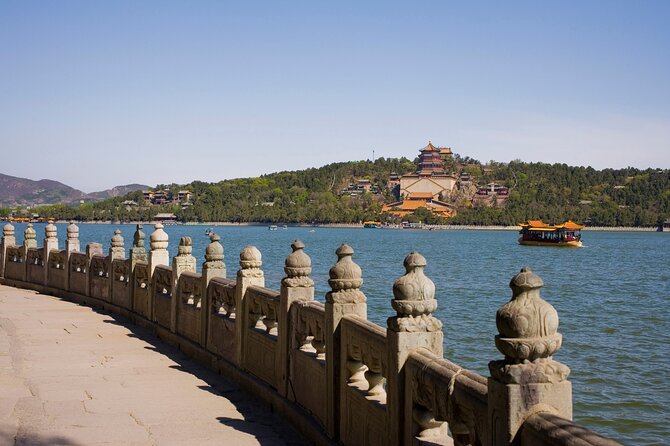
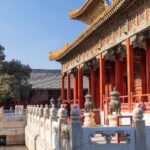
This is one of the stops that helps the palace feel real instead of just scenic. The Hall of Benevolence and Longevity was built in 1750. It was originally known as the Hall of Industrious Government, which tells you a lot about what imperial leaders wanted to project: order, work, and control.
There’s also a naming story tied to Emperor Qianlong. The ruler decided that the halls where monarchs attended to state affairs would take names connected to that authority. In other words, the building isn’t just a pretty shell. It’s part of the language of rule.
When you visit, give yourself a few minutes to notice the atmosphere: this is a place that reads like administration. The hall connects to how the Qing court framed governance as ongoing duty rather than occasional spectacle. Even if you don’t read every sign, the building’s purpose comes through.
Practical tip: keep this stop at the front half of your visit, when you still have energy. It’s easy to feel “palaced-out” by midday, and this hall is one of the better places to re-focus your attention.
Kunming Lake and Longevity Hill viewpoints: why the lake dominates the whole place
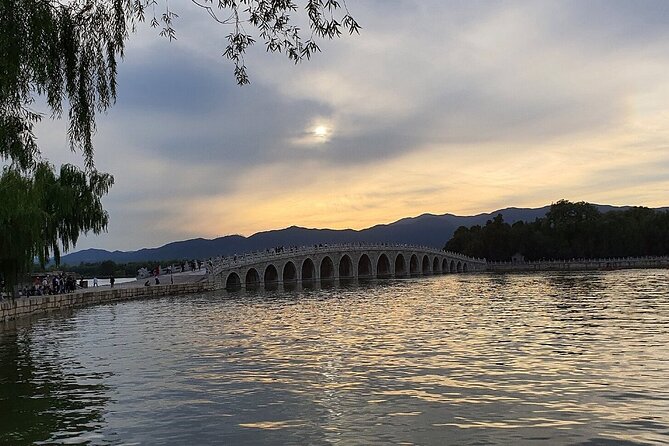
Kunming Lake is the backbone of the Summer Palace experience. The broader grounds cover 3.008 square kilometers, with about three-fourths water. That’s not a marketing line—it helps explain why the entire palace feels like a floating world of bridges, paths, and reflections.
Kunming Lake was originally built during the Qing dynasty in the early 18th century and was first named Wengshan Lake. Later it was renamed Kunming Lake to commemorate the emperor’s hometown of Kunming. It’s a nice reminder that the imperial imagination could turn geography into identity.
In a typical visit, you’ll spend about 30 minutes here. That can be enough if your goal is viewpoint-to-viewpoint. But if the weather is good (or even if it’s just forgiving), I’d treat Kunming Lake as a pause point rather than a checklist stop. Sit for a bit, watch the movement around the shore, and let the scale sink in.
One caution: crowds. Even when the sky is cloudy, you may still run into heavy foot traffic. Plan for delays around the busiest paths, and don’t lock your day down with tight connections right after your palace time.
Hall of Happiness and Longevity: Cixi’s residence in wood and daylight

If you want one stop that feels personal, choose Hall of Happiness and Longevity. This is described as a major structure within the living quarters and tied to Empress Dowager Cixi. That connection shifts the energy. You’re no longer only imagining government. You’re imagining daily life in an imperial residence.
The compound is also described as being largely made of wood, with a design that supports ventilation and lighting. That’s a detail worth noticing. It changes how you picture the place across seasons, and it explains why some palace interiors can feel bright and breathable compared to stone-only complexes.
In a visit plan, you’ll likely spend around 20 minutes here. I’d use that time to slow down just a little. Read what you can, look for how spaces connect, and pay attention to how the hall sits within the overall living-area layout. Even at a fast pace, this stop helps you understand how power and comfort sat side by side.
And yes, this is where you might find yourself thinking: the Qing court wasn’t only about ceremonies. It was about residences, routine, and atmosphere.

Long Corridor (728 meters) and Suzhou Market Street: the stroll that changes your pace

Two of the most memorable parts of the Summer Palace are meant for walking: the Long Corridor and Suzhou Market Street.
Long Corridor: 728 meters of covered promenade
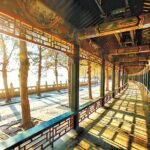
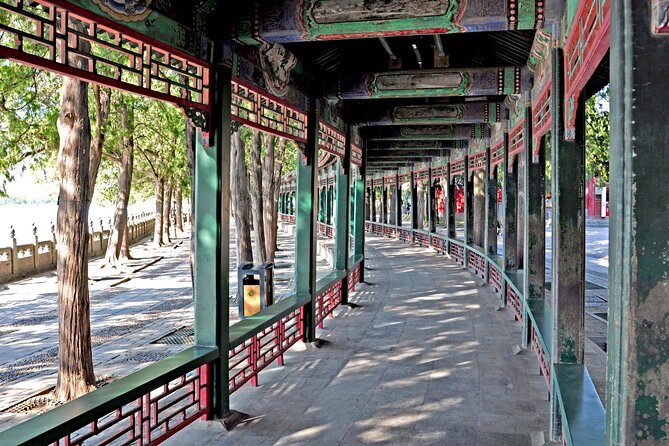
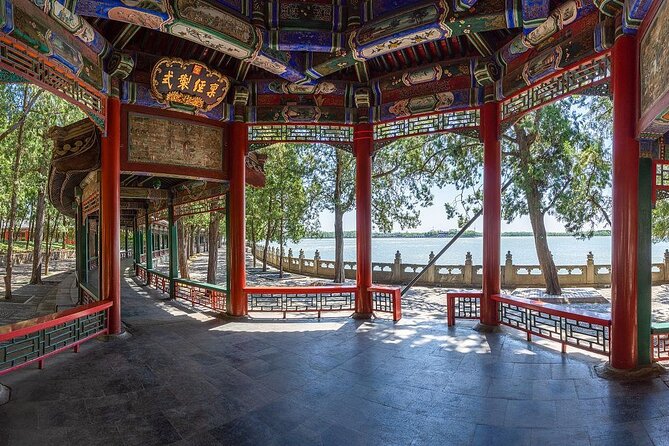
The Long Corridor is described as the longest garden corridor in China and one of the oldest structures in the Summer Palace. It runs for 728 meters along the northern shore of Kunming Lake. Since it’s covered, it can be a lifesaver when the weather shifts—too sunny, too hot, or when clouds roll in.
Give this the kind of time it asks for: about 40 minutes in the suggested flow. Don’t treat it like a hallway you just cross. Walk sections, stop periodically to orient yourself back toward the lake, and let the corridor slow you down.
Suzhou Market Street: Qing-era style outside the palace walls
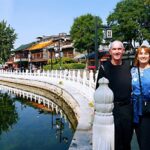
Then there’s Suzhou Market Street, built in the style of South China towns from Jiangsu and Zhejiang, during the Qing dynasty around 1750. It’s described as a place for emperors and empresses to take leisurely strolls.
In the visit flow, you’ll likely spend about 20 minutes here. That’s about right. You’re not looking for a full day of shopping. You’re looking for the contrast: palace grounds plus a town-style street experience built to match imperial leisure.
If you like details, this is one of the places to linger. It helps you feel how the Qing court imagined everyday-style spaces inside an imperial setting.
Crowds and weather: how to make the visit feel calmer
You can get unlucky with timing. One common pattern is heavy crowds even in less-than-ideal weather. Cloudy days can still draw lines, and if you’re expecting a quiet stroll, you might feel the pressure.
Here’s how I’d manage it:
- Start earlier if you can. The Summer Palace is huge, and early entry helps you avoid the worst congestion at key chokepoints.
- Wear shoes you can walk in for 2 to 5 hours. The grounds involve constant movement between lake paths and buildings.
- Keep a flexible plan. If one area is packed, shift to another highlight nearby rather than fighting the crowd.
- Don’t overbook your day right after. The palace is not a quick stop. It takes time to reach and time to enjoy.
Also, build your day around how you handle sun and shade. The corridor can help with shade, but open lake areas will still feel exposed. If you’re sensitive to heat or glare, keep a hat and a plan for hydration.
Value for $7.80: when prebooking is a smart move (and when it might not be)
At $7.80 per person, this is priced like a ticket service for a major attraction. The big value isn’t only the cost. It’s the reduction in friction.
Prebooking can be worth it when:
- Tickets might be busy or sell out on the day you want.
- You prefer a smoother arrival plan, especially when you’re trying to coordinate a limited Beijing schedule.
- You want the QR code so your entry moment is quick once you reach the east gate.
On the flip side, there’s a fair consideration: if it’s easy to buy admission on the day you arrive, prebooking may feel like paying extra for convenience. And because this has rules tied to your booking day and passport check, it’s not the best choice if your schedule is highly uncertain.
My rule of thumb: if you’re visiting on a date that’s likely popular, or you hate surprises, prebooking wins. If you’re flexible, going on a slower day, and you don’t mind a bit of onsite effort, you might not need the service.
One more small planning point: you can cancel for a refund as long as you cancel at least 24 hours before the experience start time. That gives you some safety if your plans shift, as long as you act in time.
Should you book this Summer Palace ticket service?
Book it if you want direct admission access with QR code entry and you’re okay doing basic passport setup. This is a good fit for couples, solo travelers, families with kids who can handle walking, and anyone who wants to spend time at the Summer Palace without a complicated tour schedule.
Skip prebooking only if you’re very flexible and you’re comfortable handling admission onsite. The main risk of skipping is missing the day you want if tickets become limited.
If you do book, treat it like this: pick your visit day, double-check your passport details match, arrive at the east gate, and then let the palace do its job. Walk the 728-meter Long Corridor, pause by Kunming Lake, and stop in the Hall of Happiness and Longevity long enough to feel how imperial life could be both official and personal.
FAQ
Do I need hotel pickup or a guide for this ticket?
No. The ticket includes admission only. Hotel pickup and drop-off are not included.
How long does a typical Summer Palace visit take with this ticket?
The suggested duration is about 2 to 5 hours.
Is food or drinks included?
No. Food and drinks are not included.
Where do I enter Summer Palace with this service?
You enter through the east gate, then go through security and show your QR code.
Do I need my passport for this ticket?
Yes. Passport name and number are required at booking, and the passport is required on the day of travel for checking.
When will I receive the QR code?
It’s a pre-booking service. If the ticket is secured, you’ll receive the QR code about 7 days in advance.
Is the ticket valid on other dates?
No. The ticket is only valid on the specific day you book to travel.